Buyers ask us this question more often than almost any other. It sounds simple, but it carries a real decision underneath: should I risk a container order on parts sourced from China, or should I pay more for European alternatives and hope the margins still work?
The honest answer is that the question cannot be answered as asked. Quality in this category is not a function of national origin. It is a function of three variables: which part type, which grade, and which supplier verification process. Skip any one of those variables and you are not making a quality judgment. You are gambling.
Why the Question Itself Is a Trap
Procurement managers in West Africa, Southeast Asia, and the Middle East often frame the question as China versus Europe. That frame is understandable — it comes from real field failures. But the frame misleads buyers into making country-level decisions about part-level problems.
The parts that fail in the field are rarely failing because they were manufactured in China. They fail because the buyer ordered the wrong grade, accepted an unverifiable part number, or trusted a supplier who could not produce a single inspection document. When we dig into the specifics of a complaint, the problem is almost always a sourcing discipline issue, not a manufacturing country issue.
Understanding why that is true requires understanding how "Chinese parts" is not one category. It is at least five.
Five Tiers That All Get Called Chinese Parts
Every tier from factory-original to outright fake gets sold under the same national label. A buyer who does not distinguish these tiers cannot evaluate risk.
Here is how to tell them apart:
Tier 1 — OEM-spec genuine parts. These are components manufactured in China for the original vehicle assembler, often by the same factory supplying the OEM line. They carry the OEM part number stamped on the component and on the packaging. Documentation traces back to the OEM assembly system. Price sits at or near OEM catalog level.
Tier 2 — Licensed OEM-alternative parts. A manufacturer holds a license or long-term supply agreement with an OEM or a tier-1 system supplier. The part is not stamped with the OEM's own brand, but it meets published specification tolerances. The supplier can produce a license document or specification sheet, and the reference number should be traceable the same way customs and trade authorities classify goods by code rather than by label.[1] Price runs 20–40% below OEM.
Tier 3 — Tier-1 aftermarket. No OEM license, but the manufacturer has verifiable quality management documentation (ISO 9001 is the most common), consistent part numbering, and a physical presence that can be audited. These brands compete on value and have reputational skin in the game. Packaging is professional, part numbers are consistent batch to batch.
Tier 4 — Unbranded commodity parts. No consistent branding, no traceable part number, no documentation. These are typically sourced from small workshops, consolidated by trading companies, and sold at the lowest visible price. Some commodity parts perform adequately in low-load applications. Many do not. The buyer has no mechanism to verify which outcome applies before the parts reach the field.
Tier 5 — Counterfeit parts. These are parts manufactured to look like a specific OEM or tier-1 brand but with no production relationship to that brand. The packaging copies the original. The part number stamp may copy the original. The internal material and tolerance specifications do not. Counterfeit parts in brake and driveline systems are a documented safety risk, and customs authorities treat counterfeit goods as a seizure category rather than a quality complaint.[2]
A supplier who cannot tell you which tier a part belongs to, or who becomes vague when you ask for documentation, is not a supplier who can reduce your risk.
Most Failures Are Grade Mismatches, Not Bad Manufacturing
Buyers often ask us after a failure: "Was it because it was Chinese?" We have learned to ask a different question back: "Did you send us the application spec before ordering?"
The most common failure pattern we see reported by buyers is not a manufacturing defect in a legitimate part. It is a part that was the wrong grade for the application — wrong heat treatment for the torque load, wrong seal compound for the operating temperature, or a part number that cross-references close but not exactly.
This matters because it completely changes what a buyer should do. If the risk were bad manufacturing, the solution would be to buy European. But if the risk is grade mismatch, the solution is better sourcing discipline on any origin: confirm the application, confirm the OEM cross-reference, confirm the tier, and demand documentation before the order ships.
That is a solvable problem. It does not require paying three times more for a European part in a market where the local repair ecosystem runs entirely on Chinese-brand trucks.
What a Buyer Should Verify Before a Container Order
Before placing an order at Caanass, or at any supplier, a buyer should be able to get clear answers to four verification questions.
1. What is the OEM part number, and where is it stamped on the component? A supplier who can only quote a cross-reference catalog number but cannot show you the stamped number on the physical part is not offering traceability.
2. What tier does the supplier classify this part as, and what documentation supports that classification? This should produce a spec sheet, a packaging photo, or a supplier audit record — not a verbal assurance.
3. What inspection was performed on this batch, and can you see the records? For engine and driveline parts especially, this should include dimensional check records. For engines, it should include a run test record, and the inspection should be logged the way a fleet logs its own maintenance and repair records.[3]
4. What is the return and replacement process if a part fails within an agreed warranty period? A supplier with no answer to this question is a supplier whose confidence in the product stops at the moment of sale.
Which Parts Fit Which Market
"Good enough" is a real and legitimate concept in procurement — but it requires context. A fleet operator in West Africa running Weichai-powered HOWO trucks has a different quality threshold than a European workshop with access to authorized dealers and warranty infrastructure.
In high-utilization, remote-repair markets — which describes most of our buyers across Africa, Central Asia, and Southeast Asia — the relevant quality criteria are: does the part fit the OEM spec, is it available in volume, and does a local mechanic recognize the part number. Tier-1 aftermarket and licensed OEM-alternative parts often satisfy all three criteria at a price point that makes fleet economics work.
In markets with stricter regulatory environments or longer warranty obligations, the threshold shifts toward OEM-spec genuine. Buyers in those markets should expect to pay accordingly and should ask for the documentation that justifies the price.
The worst outcome in any market is paying tier-1 prices for tier-4 parts because neither the buyer nor the supplier checked. That outcome is preventable.
Reference Numbers to Compare First
The table below lists five parts we regularly ship. It shows the reference number, the tier classification, and what a buyer should ask to verify before ordering. All five part pages include additional specification details.
| Part | Reference we stock | Tier note | What to verify |
|---|---|---|---|
| Turbocharger, Sinotruk HOWO | VG1246110020 | Licensed OEM-alternative | OEM number stamp on housing; supplier spec sheet |
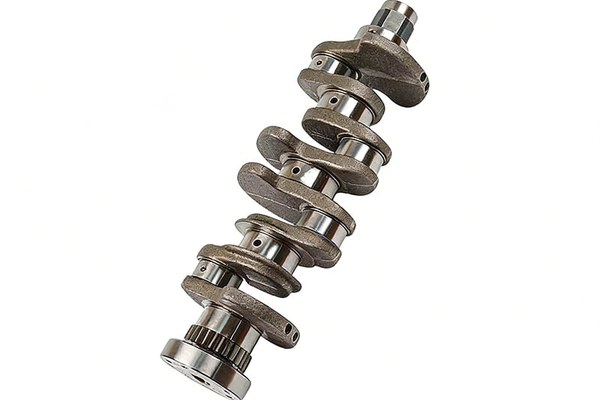
| Crankshaft, Foton | 5264231 / 5443207 | Tier-1 aftermarket | Dimensional inspection record; heat treatment documentation |
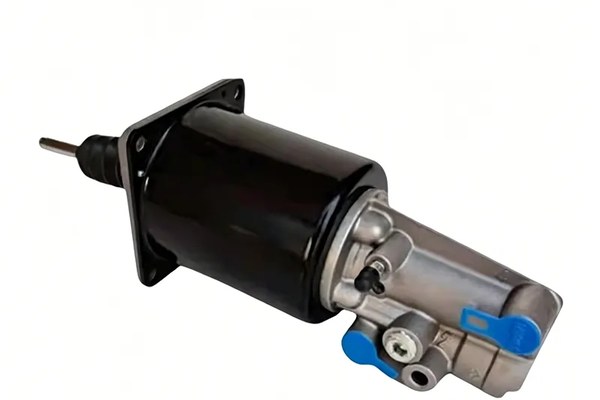
| Clutch booster, HOWO | 16080540130 | Tier-1 aftermarket | Pressure test record; seal compound grade |
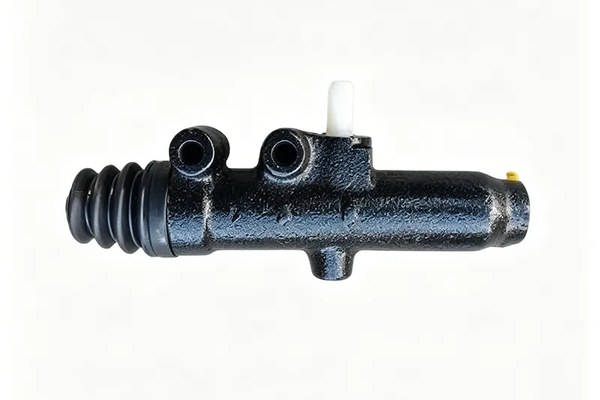
| Clutch master pump, HOWO | 5202950006 | Tier-1 aftermarket | OEM cross-reference confirmation; batch consistency |
| Brake camshaft, Shacman | DZ9100440517 | Licensed OEM-alternative | Hardness verification; part number stamp location |
Frequently Asked Questions
How do I know if a Chinese part is genuine OEM or a copy?
Ask the supplier to show you the OEM part number stamped directly on the component and to provide a packaging photo with batch traceability. A genuine or licensed part will have consistent stamping. A copy typically has an inconsistent or absent stamp, or packaging that mimics the OEM brand without documentation to support it.
Is a tier-1 aftermarket part safe to use in a heavy-duty application?
It depends on the application and the part category. For many driveline and body parts, a tier-1 aftermarket part that meets the OEM dimensional specification performs adequately. For safety-critical parts such as brake components, we recommend confirming the inspection record and specification sheet before ordering, regardless of the stated tier.
Why do prices for the same part number vary so much between suppliers?
Price variation is usually a tier signal. The same part number can exist across tier-1 aftermarket, unbranded commodity, and counterfeit sources. A significantly lower price without documentation to support it is a reasonable signal that the part is from a lower tier than advertised.
Can I mix Chinese and European parts in the same vehicle?
Mechanically, compatibility depends on the OEM specification, not the origin. If the Chinese part meets the same dimensional and material specification as the European original, it can function in the same assembly. Confirm the OEM cross-reference, not just the catalog cross-reference, before mixing.
What should I send a supplier before placing a container order?
Send the OEM part number, the vehicle model and year, and photos of the original part if available — particularly any stamped numbers and the mounting geometry. This allows a supplier to confirm fitment rather than guess. A supplier who does not ask for this information before confirming compatibility is a risk.
Conclusion
The question "are Chinese auto parts any good?" does not have a yes or no answer — and any supplier who gives you one without qualification is not helping you manage risk. The answer depends on part type, grade tier, and supplier verification process. Those three variables determine whether a part will perform in the field or fail 10,000 kilometers from the nearest workshop.
At Caanass, we work through these variables on every inquiry. If you have a part number, a vehicle application, and photos of the original component, send them to us before you order. We will confirm the tier, the cross-reference, and the inspection protocol — so you are making a sourcing decision, not a guess.
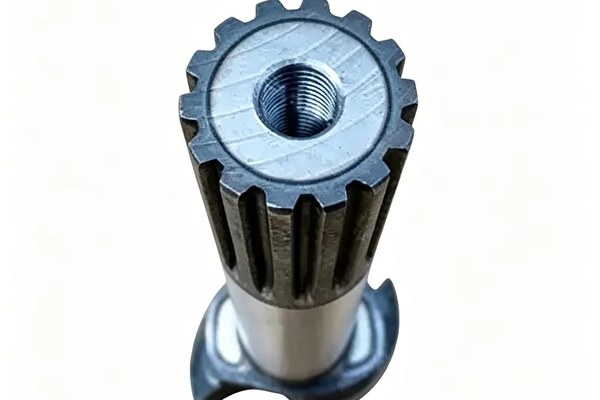
Image credits
All photographs are of our own stock, taken in our Guangzhou warehouse and on our inspection bench. No third-party images are used.
References
[1] World Customs Organization, "WCO Trade Tools" — https://www.wcotradetools.org/en/ — Evidence role: official classification and origin reference. Source type: intergovernmental organisation database. Supports: the point that a part is identified by its reference number and classification, not by a national label. Scope note: covers customs classification and origin rules only, not product quality.
[2] U.S. Customs and Border Protection, "Basic Importing and Exporting" — https://www.cbp.gov/trade/basic-import-export — Evidence role: official enforcement and import reference. Source type: government agency guidance. Supports: counterfeit goods are handled as an enforcement category by customs authorities. Scope note: describes US import enforcement practice, not a quality standard for legitimate parts.
[3] Cornell Legal Information Institute, "49 CFR 396.3 — Inspection, repair, and maintenance" — https://www.law.cornell.edu/cfr/text/49/396.3 — Evidence role: regulatory reference for record keeping. Source type: US federal regulation (as republished by Cornell LII). Supports: parts fitted to a vehicle are expected to be documented in inspection and maintenance records. Scope note: US regulation text; other jurisdictions set their own record-keeping rules.