Before this comparison goes any further, one foundational point needs to be clear: an AMT is not an automatic transmission. This confusion comes up constantly in buyer conversations at Caanass, and it changes every downstream conclusion.
An Automated Manual Transmission (AMT) is a conventional mechanical gearbox — the same gear pairs, synchros, and shift forks you find in a standard manual — fitted with an electronic clutch actuator and an automated shift mechanism. There is no torque converter. There is no hydraulic planetary gearset. When an AMT shifts, it is physically disengaging a dry clutch and moving a selector fork, exactly as a driver would do manually. The automation is in the control layer, not in the mechanical architecture.
That distinction matters enormously when the question turns to maintenance.
What an AMT Actually Is
Many buyers arrive at the used-truck market assuming AMT means smoother, easier, and more "automatic" in the passenger-car sense. That assumption leads to wrong expectations about fuel efficiency gains, drivability in off-highway conditions, and — most critically — repair complexity.
An AMT is a manual gearbox with a computer managing the clutch and gear selection. The mechanical wear parts are almost identical to those in a standard manual transmission. The difference is the electronic control unit (ECU), the shift actuator, and the clutch actuator — components a standard diesel mechanic may never have worked on.
Understanding this architecture is the first step in evaluating which transmission your market can actually support.
AMT technology became dominant on European long-haul trucks (Volvo I-Shift, Mercedes-Benz PowerShift, Scania Opticruise, ZF TraXon) because those vehicles operate on predictable highway duty cycles with dealer service networks nearby. Chinese heavy trucks — HOWO, SHACMAN, FAW — adopted AMT progressively through the 2010s, with with FAST (Shaanxi Fast Gear) as one of the main suppliers of automated gearboxes in that segment. The underlying gearbox in many Chinese AMT trucks is mechanically similar to the FAST 9-speed or 12-speed manual series. The automation package sits on top.
This means that when something fails in an AMT, the fault could be:
- Mechanical — a synchro, a bearing, a shift fork (diagnosable by any experienced gearbox mechanic)
- Electromechanical — a faulty actuator solenoid or position sensor (requires basic diagnostic tools)
- Electronic — an ECU fault code, a CAN bus communication error, a software calibration issue (requires manufacturer-specific diagnostic software)
The third category is where maintenance risk concentrates in markets without established dealer networks.
Where the Maintenance Risk Really Sits
The real question is not whether AMT is mechanically fragile. It is not. The real question is: when your truck stops moving, who in your area can tell you why — and fix it?
Based on the parts inquiries we receive at Caanass from buyers in Sub-Saharan Africa, Central Asia, and Southeast Asia, the pattern is consistent. Manual gearbox failures generate requests for specific, identifiable parts: synchros, bearings, clutch kits, shift forks. AMT-related failures often start with a question that sounds like this: "The truck won't shift and there's a warning light — what part do I need?"
That question is structurally different. It requires fault code reading before a part can be identified.
The Diagnostic Gap in Maintenance-Limited Markets
In a market where diesel mechanics are skilled and plentiful but electronic diagnostic tools are scarce, an AMT fault that takes 30 minutes to diagnose with a laptop can produce days or weeks of downtime without one. The gearbox itself may be physically intact. The truck is still stranded.
This is not a hypothetical. It reflects what buyers describe when they contact us after operating AMT trucks in environments where dealership infrastructure does not exist.
Manual transmissions fail in ways that are more visible and more locally solvable:
- Clutch slip → measure clutch plate thickness, replace clutch kit
- Hard shifting → inspect synchros, check shift linkage
- Gear jump-out → check shift fork wear, assess selector wear
- Noise under load → bearing inspection
None of these require proprietary software. A competent mechanic with hand tools and a parts catalog can work through the diagnosis. That repairability advantage is not about quality; it is about where the repair chain breaks.
Construction and Mining Duty Cycles
For off-highway fleets — quarry haul trucks, construction dump trucks, pit-work vehicles — the duty cycle further skews the risk calculation. AMT systems are optimized for highway logistics: relatively constant speed, predictable load, long shift intervals. Repeated low-speed, high-torque maneuvering — the kind common on construction sites — accelerates wear on actuator components in ways that are harder to predict and schedule.
An experienced driver operating a manual transmission in a pit environment will often out-manage an AMT system in terms of clutch longevity, simply because they modulate engagement based on feel rather than sensor input.
Which Parts Differ Between a Manual and an AMT
The mechanical wear parts in the driveline overlap heavily between manual and AMT configurations. The critical difference is that in an AMT, some of those parts interact with actuators and sensors, so a worn mechanical component can trigger an electronic fault rather than a straightforward mechanical symptom.
The table below lists key driveline parts relevant to this decision. Fitment must always be confirmed against the gearbox identification plate and the vehicle's specific configuration — these references do not apply universally across all model years or variants.[1]
| Part | OE Reference | Typical Fitment | Why It Matters in the AMT-vs-Manual Decision |
|---|---|---|---|
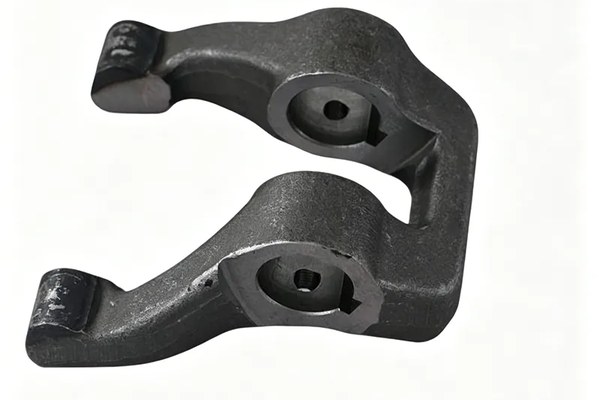
| Clutch release fork | AZ2214260001 | Sinotruk HOWO | In an AMT, this fork is moved by an actuator, not a pedal. Wear or misalignment can trigger actuator fault codes rather than a simple hard-pedal symptom. |
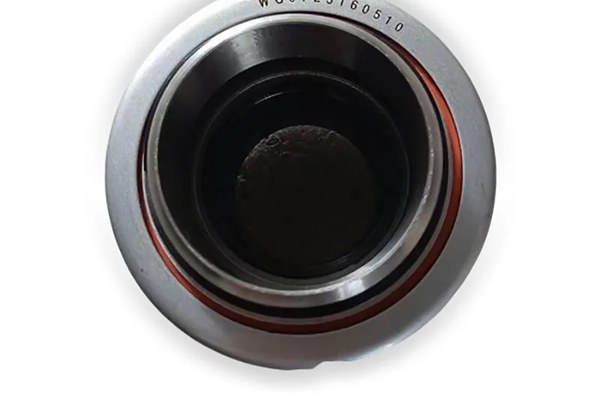
| Clutch separation bearing | WG9725160510 | Sinotruk HOWO | Bearing failure feels the same in both configurations, but in AMT it may read as an engagement error before audible noise develops. |
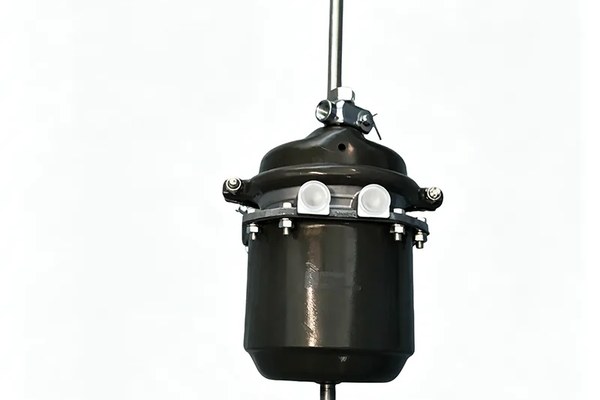
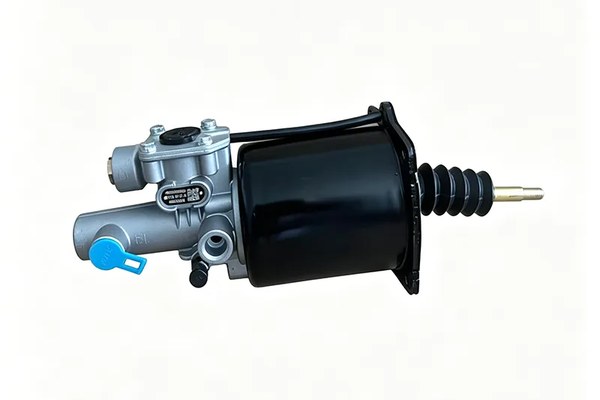
| Clutch booster cylinder | WG9725230041 | Sinotruk HOWO | The booster is present in both manual and AMT layouts; in AMT it works in conjunction with the electronic actuator and must meet tighter pressure tolerances. |
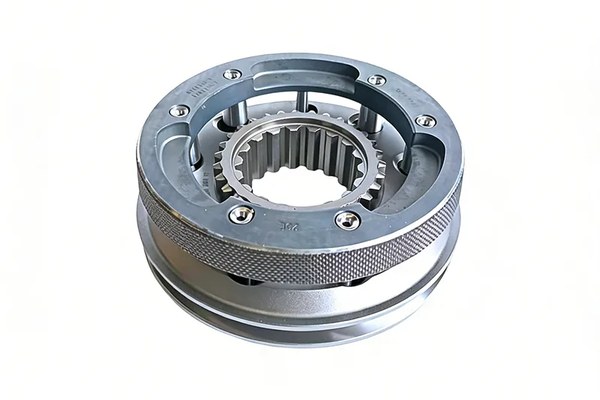
| Synchronizer assembly | RTD11609A-1707140 | Shacman | Synchro wear produces similar symptoms in both — gear crunch, difficulty engaging — but AMT can mask early synchro damage behind shift-retry logic, delaying diagnosis. |
| Transmission support rod | WG2229210041 | Sinotruk HOWO | Structural component common to both configurations; vibration-induced wear can generate CAN sensor noise in AMT trucks, producing false fault codes. |
What to Check Before You Choose
Choosing between a manual and an AMT truck is not a question with a universal answer. It is a question about your operating environment. Here is a practical framework based on what buyers ask us before committing to a purchase.
1. What diagnostic tools exist within your service radius?
If your nearest workshop with manufacturer-approved diagnostic software is more than a half-day's drive away, AMT fault resolution will be slow. That downtime cost compounds across a fleet.
2. What is your driver pool's training level?
AMT reduces driver error on highway runs. But if your drivers are already experienced with manual transmissions and your routes involve mixed terrain, the AMT's advantage is smaller and its electronic risk is larger.
3. What does your spare parts supply chain look like?
Mechanical clutch and synchro parts for HOWO and SHACMAN trucks are widely stocked across most markets we serve. AMT actuators and ECUs are ordered less frequently, stocked less broadly, and lead times are less predictable. Browse the Caanass product catalog to check current stock before committing to a configuration.[2]
4. What is the duty cycle?
Highway freight → AMT is a reasonable choice if service infrastructure exists. Construction, quarrying, mixed off-highway work → Manual is lower-risk for most markets.
5. Can you read the gearbox identification plate before purchase?
The gearbox plate confirms the exact model, variant, and production series. Never order driveline parts without it.[1]
Frequently Asked Questions
Is an AMT more fuel-efficient than a manual transmission?
In controlled highway conditions, AMT can reduce fuel consumption by optimizing shift points — the size of that gain depends on the route, the load, and how the transmission is calibrated. In variable-load, low-speed, or off-highway conditions, the difference narrows significantly. Buyers should treat manufacturer fuel claims as highway-cycle figures, not universal performance guarantees.
Can a local mechanic repair an AMT gearbox?
The mechanical components of an AMT — gears, synchros, bearings, clutch — can be serviced by an experienced gearbox mechanic. Faults in the ECU, shift actuator, or position sensors require electronic diagnostic tools and, in many cases, manufacturer-specific software. This is the central maintenance risk in markets with limited dealer infrastructure.
How do I confirm which gearbox a used truck has before buying?
Request the gearbox identification plate number, the vehicle VIN, and any available service records.[3] Cross-reference the plate number with the manufacturer's parts manual to confirm the exact series. Do not rely on the cab badge or salesperson description alone — the same truck model is sold with different transmission configurations in different markets and model years.
Are FAST AMT gearboxes the same as ZF AMT gearboxes?
No. FAST (Shaanxi Fast Gear) AMT units and ZF TraXon units share the same architectural concept — automated shift and clutch actuation on a manual gearbox — but they use different ECUs, different actuator systems, different diagnostic protocols, and largely different spare parts. Parts are not interchangeable across brands.
What is the typical failure signal for an AMT vs. a manual gearbox?
A manual gearbox typically signals failure through physical symptoms: noise, vibration, hard shift, slip, or jump-out. An AMT will often flag a fault code before physical symptoms become severe — which is an advantage if you have diagnostic tools and a disadvantage if you do not.
Conclusion
The manual-vs-AMT decision for heavy trucks is not a question of which transmission is technically superior. Both are mature, capable technologies. The real question is which one your market can support when it fails — and that depends on your repair ecosystem, your duty cycle, your driver training, and your parts supply chain.
For buyers operating in markets with strong dealer networks and trained technicians, AMT offers genuine advantages in driver efficiency and shift optimization on highway routes. For buyers in markets where diagnostic infrastructure is limited, where off-highway work dominates, or where downtime costs are severe, the manual transmission's simpler failure modes and broader local repairability represent a lower total-risk choice.
Before ordering driveline parts for either configuration, confirm the following:
- [ ] Gearbox identification plate number recorded and verified
- [ ] Part references cross-checked against plate number and vehicle configuration
- [ ] Fitment confirmed for your specific model year and market variant
- [ ] Local diagnostic tool availability assessed for AMT-specific fault resolution
- [ ] Parts lead times checked against operational downtime tolerance
If you are sourcing clutch components, synchros, or gearbox hardware for HOWO or SHACMAN trucks, the references in the table above are a practical starting point. Confirm fitment before ordering, and contact Caanass directly if you need help matching parts to a specific gearbox configuration.
Image credits — All photographs in this article are our own product photographs. No third-party images are used.
References
[1] U.S. Code of Federal Regulations, 49 CFR §396.3 "Inspection, repair, and maintenance", via Cornell LII, https://www.law.cornell.edu/cfr/text/49/396.3. Evidence role: federal maintenance regulation. Supports: heavy-vehicle maintenance must be recorded and systemically inspected, which is why the gearbox plate and service records matter when a driveline part is ordered. Scope note: U.S. requirement; used here for the record-keeping principle only.
[2] GOV.UK, "Vehicle registration: vehicle identification numbers (VIN)", https://www.gov.uk/vehicle-registration/vehicle-identification-numbers. Evidence role: government registration guidance. Supports: the VIN identifies an individual vehicle rather than a model, so build-year and configuration data cannot be inferred from the model name alone. Scope note: UK registration context; the identification principle is general.
[3] SAE International, J1939 "Serial Control and Communications Heavy Duty Vehicle Network", https://www.sae.org/standards/content/j1939_201808/. Evidence role: industry standard index. Supports: heavy commercial vehicles use a defined serial network for electronic control units, so diagnostic capability — not just mechanical skill — is part of a transmission choice. Scope note: standards index page; no claim about any specific gearbox calibration.