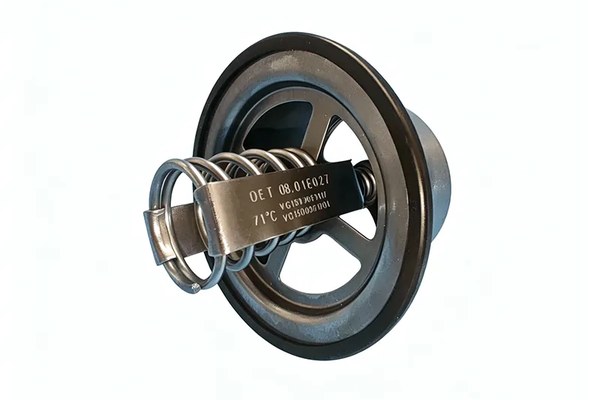
Searching Reddit for a Chinese truck parts supplier is a reasonable first step — the platform surfaces real buyer conversations, country-specific threads, and candid complaints that Google's first page often buries. The problem starts when a buyer treats upvotes and comment frequency as a proxy for operational reliability. Those two things are not the same, and the gap between them can cost a purchasing manager a container's worth of wrong or missing parts.
This article is written from the supplier side. In the inquiries we handle at Caanass, we regularly speak with buyers who arrive with a supplier name from a Reddit thread and no independent way to check whether that name corresponds to a physical warehouse, a brokerage account, or a one-person reseller. What follows is a structured method for closing that gap — before you wire a deposit.
Why a Reddit recommendation is not a trust signal
Reddit's voting mechanics reward visibility, not warehouse capacity. A supplier who monitors industry subreddits, replies quickly to new posts, and seeds positive mentions can accumulate a strong comment record without holding a single pallet of genuine stock. Upvotes reflect engagement; they do not reflect whether a supplier can ship 50 units of a Weichai fuel injector within 14 days.
The core problem: recommendation threads optimize for social proof, not procurement evidence. A buyer optimizing for the most-mentioned name is using the wrong signal entirely.
This is not an argument against using Reddit. Buyers have told us that forum threads helped them identify supplier categories, understand common failure parts for specific truck models, and find terminology they needed for sourcing conversations. That research value is real. What Reddit cannot give you is verified stock depth, documented inspection practice, or confirmed export capability — and those are the variables that determine whether a transaction succeeds.
Treat any name you find on Reddit as a lead, not a shortlist. The verification work starts after you have the name.
What "warehouse-based supplier" actually means
The phrase "warehouse-based supplier" appears on most Chinese parts export websites. It is easy to write and hard to verify from a distance. A genuine warehouse-based operation means something specific: physical storage with identifiable stock, engineers who can answer part-level questions, and a logistics chain capable of moving that stock across a border on a confirmed schedule.
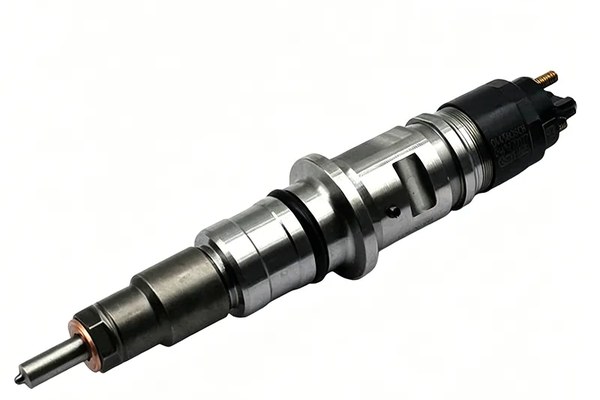
A middleman, by contrast, sources from third parties after receiving your order. The delay between your inquiry and their response on stock availability is usually the first indicator. A warehouse-based supplier can tell you immediately how many units of a specific part reference are on the shelf. A middleman needs to check with someone else first.
What genuine warehouse capacity looks like in practice
- Instant stock answers. Ask: "How many units of VG1560118229 do you have available to ship in the next seven days?" A real supplier answers with a number. A middleman says "let me check" and comes back a day later.
- Physical footage on request. A warehouse-based supplier can provide a live video call or a recent walkthrough video showing labelled shelving, identifiable part categories, and actual scale. Catalog photos prove nothing.
- Named personnel. A capable supplier can identify the engineer responsible for pre-shipment inspection and confirm that person's availability for your order. Anonymous quality-control claims are not checkable.
- Container loading evidence. Completed container load photos — showing part count, packaging condition, and load configuration — are a standard output of a real export operation. If a supplier cannot produce these from a recent shipment, ask why.
The distinction between a warehouse-based supplier and a middleman is invisible on a website or in a Reddit thread. It only becomes visible when you ask the right operational questions.
The five checks that separate a real supplier from a middleman
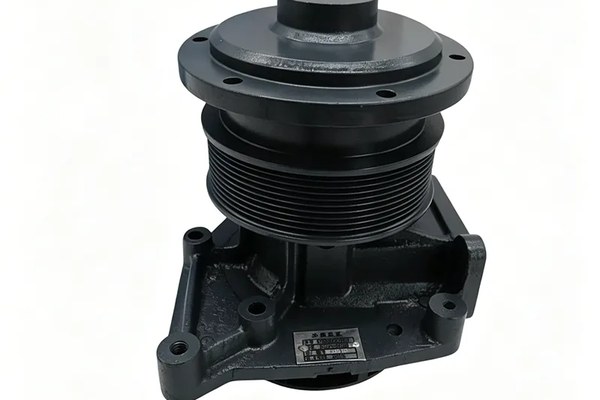
Pre-payment verification does not require a site visit. It requires asking questions specific enough that a middleman cannot answer them from a catalog. Here are five checks that work consistently in the inquiries we handle.
1. Stock depth by part number. Name a specific OE reference for your truck model and ask for current available quantity and lead time to the port. Vague answers or multi-day delays indicate the supplier does not hold the part.
2. Inspection documentation. Ask what the pre-shipment inspection process looks like for the specific part category you are buying. For engine parts, ask whether test data is recorded. A supplier with a real inspection practice describes it in operational terms — who does it, what is checked, what documentation is produced.[1]
3. Export documentation chain. Ask which documents are included in the shipment: commercial invoice, packing list, bill of lading, and certificate of origin at minimum. Ask whether they handle customs clearance on the China side or whether that is the buyer's responsibility. Ambiguity here is a warning sign.[2]
4. Recent container reference. Ask for photos or records from a completed container shipment for a buyer in your region. A supplier with real export volume can produce this. A supplier who cannot is either new to export or is working as an intermediary.
5. Technical response before payment. Send a specific technical question — fitment compatibility, build variant differences for a part number, or packaging specification — and evaluate the quality of the answer. If the response is generic, the supplier is not drawing on engineering knowledge; they are forwarding your question or reading from a catalog.
Worked example: verifying one part number end to end
OE references are the most reliable starting point for parts identification, but they require careful use. An OE number identifies a part family and must be matched to the specific engine or gearbox variant in the buyer's truck. Buyers have told us that receiving the wrong variant of a correct-looking part number is one of the most common sourcing errors in cross-border procurement.[3]
The table below illustrates what a reference proves and what a buyer must still verify independently.
| Part category | Example OE reference | What the reference proves | What a buyer should still verify |
|---|---|---|---|
| Fuel injector assembly | 0445120662 | Part family and injection system design (Sinotruk HOWO) | Engine displacement variant and injection pump compatibility for the specific build year |
| Turbocharger | VG1560118229 | Turbocharger model and mounting configuration (Sinotruk HOWO) | Engine output rating and whether the truck has been re-engined or modified |
| Water pump assembly | 612600061603 | Cooling circuit interface and pump body spec (Sinotruk HOWO) | Engine series suffix and coolant flow requirement for the installed engine |
| Clutch disc assembly | AZ9725160300 | Disc diameter and spline count (Shacman) | Gearbox input shaft spec and clutch housing compatibility for the drivetrain configuration |
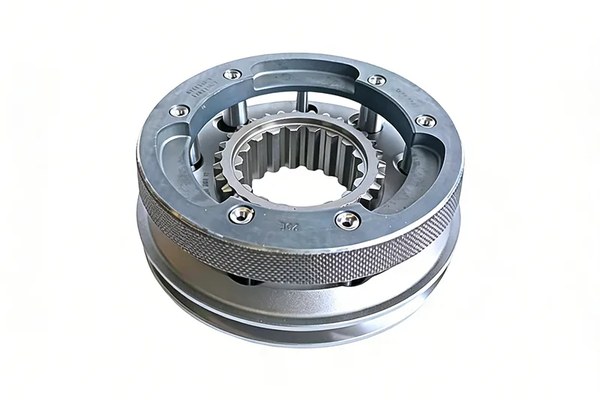
| Synchronizer | RTD11609A-1707140 | Synchronizer ring position and gearbox series (Shacman) | Specific gearbox ratio set and whether the gearbox has been rebuilt with non-OE components |
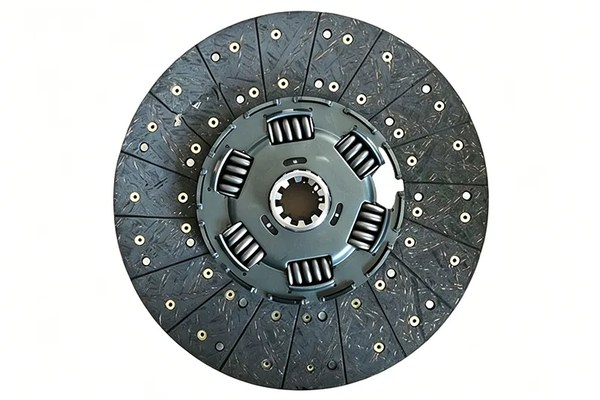
When you submit a request to any supplier — including Caanass — provide the OE number, the engine or gearbox serial prefix, and the truck's build year. A supplier who accepts an OE number without asking for fitment details is not checking compatibility; they are filling a line item. That is a risk in a sourced part that only surfaces when the driver installs it.
You can browse the parts catalogue at caanass.com/products to cross-reference references before making contact.
Frequently Asked Questions
Is it safe to source Chinese truck parts through a supplier found on Reddit?
Reddit can surface legitimate supplier names, but the platform provides no verification of stock, inspection, or export capability. Use it as a research starting point. Run the five pre-payment checks described above on any supplier name you find before committing funds.
What is the difference between an OE number and an aftermarket part number?
An OE (original equipment) number is assigned by the vehicle or component manufacturer and identifies a specific part family. Aftermarket suppliers often use OE numbers for cross-reference. The reference does not confirm quality or exact fitment — it identifies the design specification. Always confirm the engine or gearbox variant before ordering.
How do I confirm a supplier actually holds the stock they advertise?
Ask for the current available quantity of a specific part reference and a shipping lead time. Then request a photo of the part on the shelf with the reference label visible. A warehouse-based supplier can produce both within hours. A middleman typically cannot.
What documents should a Chinese truck parts shipment include?
Standard export documentation includes a commercial invoice, packing list, bill of lading, and certificate of origin. Depending on the destination country and import requirements, additional certificates may be required. Confirm the documentation package before shipment and clarify who is responsible for each document.
Can one OE number fit multiple truck models?
Some part families share references across model variants, but fitment is never guaranteed by the number alone. Engine series, build year, and regional specification all affect compatibility. Always provide the full vehicle identification context when requesting a part — not just the reference number.
Conclusion
A Reddit thread is a reasonable place to start building a supplier shortlist. It is not a place to end the verification process. The gap between a name on a forum and a confirmed, capable warehouse-based supplier is real, and it only closes through direct, operationally specific questioning before payment.
The five checks above — stock depth, inspection documentation, export paperwork, container loading evidence, and pre-payment technical response — apply to any serious supplier, regardless of where you found the name. Use them consistently.
Before paying any deposit, ask every supplier:
- [ ] What is your current stock quantity for this specific OE reference?
- [ ] What does your pre-shipment inspection process include for this part category?
- [ ] Can you show me container loading photos from a recent shipment to my region?
- [ ] What export documents are included, and who handles customs clearance?
- [ ] Can you confirm fitment compatibility if I provide my engine or gearbox variant?
A supplier who answers all five with specific, documented responses is worth continuing the conversation. A supplier who is vague on two or more is a middleman, regardless of their Reddit mentions.
Browse available Sinotruk HOWO, Shacman, and Foton parts at caanass.com/products and use the references above as a starting point for your fitment verification.
References
[1] U.S. Customs and Border Protection, "Basic Importing and Exporting". https://www.cbp.gov/trade/basic-import-export. Evidence role: Government trade guidance. Supports: Cross-border shipments are documented with a commercial invoice, packing list and transport document, and the parties must agree who files each document. Scope note: US-facing guidance used here to describe the document chain in general, not as a statement of any destination country’s rules.
[2] GOV.UK, "Import goods into the UK: step by step". https://www.gov.uk/import-goods-into-uk. Evidence role: Government import guidance. Supports: Import procedures, including classification, duties and documentary requirements, vary by destination and must be confirmed before shipment. Scope note: UK-specific; used only to show that documentation duties differ by market.
[3] World Customs Organization, WCO Trade Tools (Harmonized System classification). https://www.wcotradetools.org/en/. Evidence role: Classification reference. Supports: Goods are classified to a commodity code that governs duty and documentary treatment, and the classification depends on what the item actually is. Scope note: Explains classification at commodity level; it does not map individual truck part numbers to customs codes.
Image credits — All photographs in this article are product photographs from our own inventory. No third-party images are used.