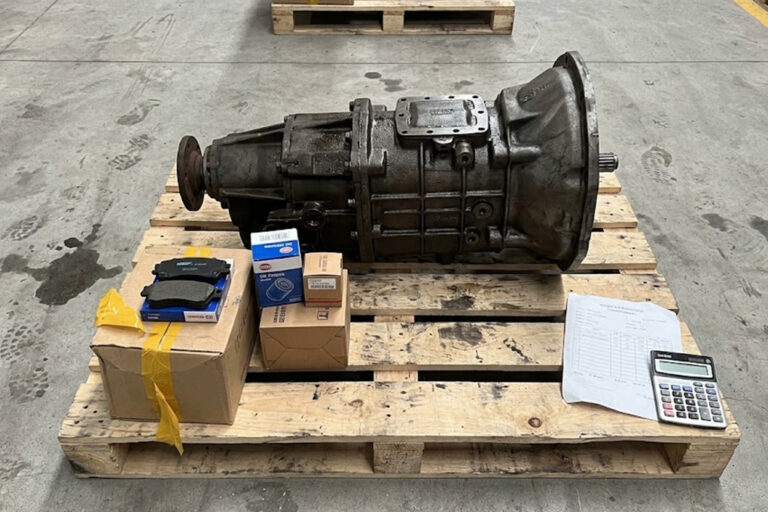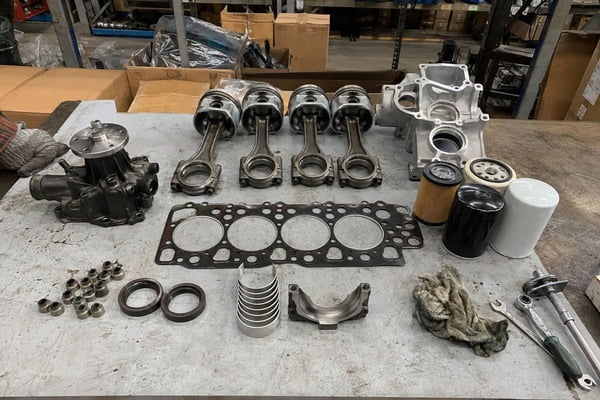
How to Order Spare Parts Online Without Receiving the Wrong Part?
Ordering spare parts online sounds straightforward — until the wrong component arrives at your warehouse six weeks after payment. For buyers sourcing Chinese truck parts internationally, the failure rarely happens at checkout. It happens earlier, quietly, in the identification step, the quality conversation, and the moment you assumed a quote meant confirmed stock.
Ordering spare parts online successfully comes down to three decisions made before payment: confirming the correct OE number with your supplier, understanding exactly which quality tier is being quoted, and verifying that stock is physically available before funds leave your account. Buyers who complete all three steps consistently receive the right part, on schedule. Buyers who skip any one of them frequently don't.
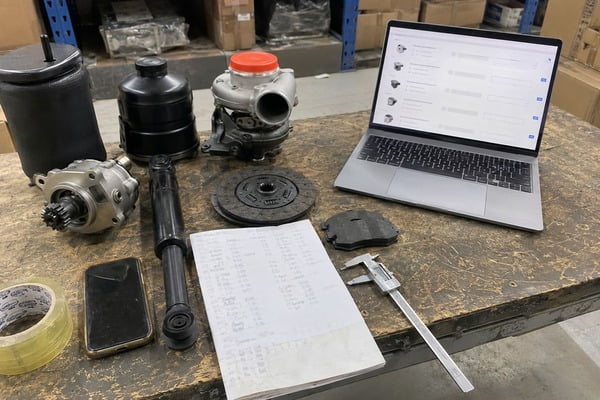
This guide is written from our team's operational experience at Caanass, handling daily inquiries from wholesalers, fleet procurement managers, and distributors across more than 100 markets. The patterns we describe below are recurring. If you recognize your own process in the failure modes, that's intentional.
Why Does Parts Identification Fail So Often When Ordering Online?
Most buyers assume they are providing enough information when they send a truck model and year. In practice, they are not. One model year can include multiple engine configurations, two or three gearbox variants, and regional fitment differences — all of which affect the correct part number.
The single most reliable starting point for ordering spare parts online is the OE number — the original equipment part number printed in the truck's service manual, stamped on the component, or listed in the manufacturer's parts catalog. When no OE number is available, the engine model and gearbox model are the next best anchor points. Year-of-manufacture alone is not a parts identifier.
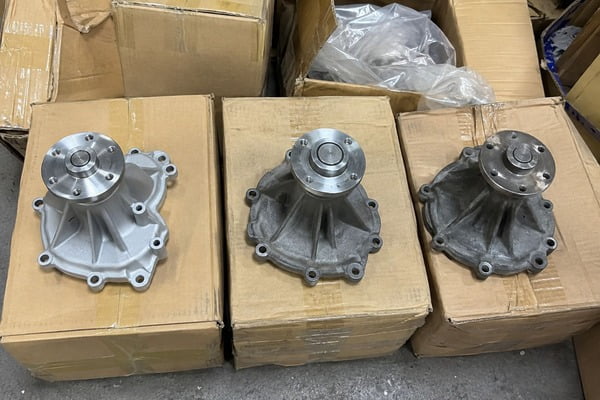
Getting identification right before you place an order is the single biggest leverage point in this entire process. Everything downstream — quality, lead time, refund eligibility — depends on it.
Why Year of Manufacture Misleads Buyers
A question we get repeatedly from fleet buyers is: "Can I just give you the truck model and year?" The honest answer is no — not reliably.
Consider a HOWO T7H series. Within the same production year, the truck may have shipped with a WD615, WD10, or MC13 engine depending on the market and customer specification. Each engine uses different air filters, oil filters, injectors, and related components. A year-of-manufacture search returns a list of possibilities, not a confirmed match.
The same problem appears with SHACMAN X3000, FAW J6, and FOTON Auman trucks. These platforms have long production runs with multiple mid-cycle revisions that don't always correspond to calendar years.
How to Confirm the Right OE Number
Before submitting a purchase inquiry, run through this checklist:
- Check the physical part — most components carry a stamped or printed part number
- Check the service manual — OEM service documentation lists part numbers by system and sub-assembly
- Check the VIN or engine number — your supplier can cross-reference these against their catalog if you provide the full string
- Ask the supplier to confirm the match — a reliable supplier will verify the OE number against their system and flag any discrepancy before quoting
At Caanass, parts identification and OE matching is a step our team completes before issuing a quotation — not after. We handle this for HOWO, SHACMAN, FAW, FOTON, and DONGFENG parts daily, and the catalog cross-referencing takes time we consider non-negotiable.
When the OE Number Is Unknown
Sometimes buyers are working from a damaged or illegible component with no readable markings. In this case, photos help — multiple angles, including any visible stamping. Engine model, displacement, and the truck's production configuration sheet are useful fallbacks.
What does not help: descriptions like "the big filter on the left side." We receive these regularly. They create delays, not quotations.
What Does "Original" or "OEM" Actually Mean When Ordering Parts Online?
This is the most misunderstood area in cross-border truck parts sourcing. Buyers who assume that any part labeled "genuine," "original," or "OEM" meets a single, consistent standard are consistently surprised by the variation in what arrives.
The Chinese truck parts market carries multiple quality tiers, often listed under the same label.[1] When ordering spare parts online, the correct question is not "is it original?" but "which quality tier are you quoting, and what does that mean for fitment guarantee and warranty?" The three main tiers are OE-specification parts, aftermarket Grade A, and economy-grade — and the differences in performance and accountability are significant.
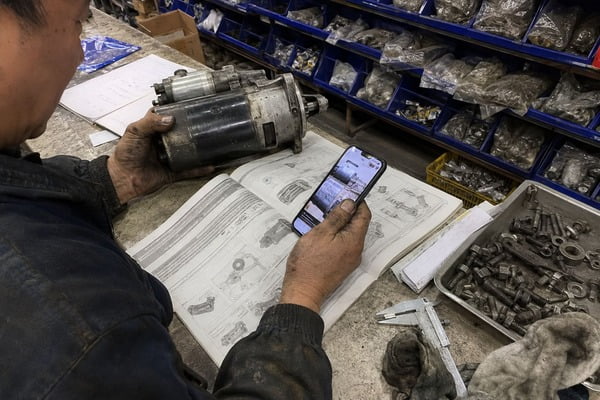
Understanding these tiers will change the questions you ask — and protect you from receiving a part you didn't agree to buy.
The Three Quality Tiers Explained
| Tier | Common Labels | Typical Source | Fitment Reliability | Price Point |
|---|---|---|---|---|
| OE-Specification | "Original," "Genuine," "Factory" | Same factory that supplies the vehicle manufacturer, or authorized production | High — same spec as assembly line | Highest |
| Aftermarket Grade A | "High quality," "Brand X," "OE-compatible" | Independent manufacturers meeting or approaching OE spec | Generally reliable — verify brand | Mid-range |
| Economy Grade | "Replacement," "Standard," "Budget" | Low-cost production, varying materials | Lower — short service life common | Lowest |
The problem is that these labels are not regulated in any consistent way. A supplier can call an economy-grade part "original" without legal consequence in many markets. This is not universally bad faith — sometimes it's a translation convention — but the result for the buyer is the same: wrong expectations, inconsistent performance, and no basis for a warranty claim.
How to Ask the Right Question
When you receive a quotation for truck spare parts online, ask directly:
- "Which brand or factory is this part from?"
- "Is this from the OE-supply chain, or is it aftermarket?"
- "What warranty do you offer, and what does a warranty claim require?"
- "Can you provide photos of the actual product and packaging before shipment?"
A supplier who deflects these questions or responds with vague reassurances is giving you information — just not the information they think they are.
At Caanass, we quote parts by tier when multiple options exist for the same OE number. Our team will tell you: "We have a Grade A option at X price and an economy option at Y price — here is the difference." That transparency protects both sides.
A Note on Warranty in Cross-Border Orders
Warranty in international truck parts sourcing is rarely as simple as buyers assume. The practical questions are:
- Does the warranty cover return shipping costs?
- Is the claim process photo-based or does it require physical return of the defective part?
- What is the claim window — 30 days? 90 days? One year?
- Is the warranty offered by the supplier or by the brand?
Ask these questions before payment. Asking after the part has arrived and failed is almost always too late.
Is an Online Quote the Same as a Confirmed Order?
One of the most expensive assumptions in online parts procurement is treating a quoted price as a reserved order. It is not. A quote is an offer, not a commitment — and in B2B parts sourcing, the gap between the two has real consequences.
An online inquiry or quotation does not confirm stock availability, reserve lead time, or lock logistics routing. Real B2B ordering requires a stock confirmation step, a logistics feasibility check (especially for bulk or container orders), and explicit written agreement on packing and documentation — all before payment is transferred.
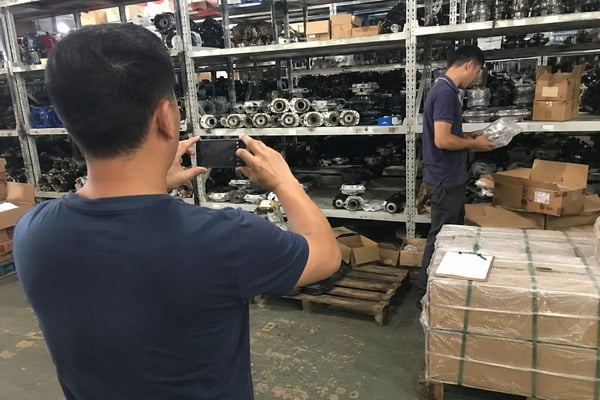
The steps between inquiry and payment are where most cross-border orders either succeed or fail.
The Confirmation Steps That Protect Your Order
Step 1: Stock Confirmation
Ask your supplier explicitly: "Is this item in stock at your warehouse today?" If the answer is anything other than a specific quantity and location — "yes, we have 24 units in our Guangzhou warehouse" — follow up. Parts can be available in a supplier's catalog but sourced to order, which adds lead time that may not have been disclosed in the quote.
Step 2: Lead Time Agreement
Lead time for in-stock items and sourced-to-order items can differ by two to eight weeks.[2] For mixed orders — which are common in B2B sourcing — some items may be in stock while others need time to source. Get the full breakdown in writing before you confirm.
Step 3: Logistics Routing Check
For bulk orders or container consolidations, logistics routing is not a detail — it is a major cost and timeline variable. Questions to confirm before payment:
- Which port of departure?
- Which shipping line or freight forwarder?
- Who is responsible for tracking and documentation?
- Are export documents (commercial invoice, packing list, bill of lading) prepared by the supplier or a third party?
At Caanass, we handle logistics coordination internally and prepare documentation as part of the order process. We flag this because a common scenario we see with buyers switching from previous suppliers is that the supplier quoted a price but handed off logistics to a forwarder with no accountability — leaving the buyer with no tracking and no contact when something went wrong.
Step 4: Packing Specification
For international shipments, packing matters more than most buyers expect. Heavy truck parts shipped without adequate internal packaging — foam lining, wooden bracing for long shafts, sealed bags for seals and small components — arrive damaged. Confirm packing specification in writing, especially for fragile or heavy components.
How Can You Verify a Supplier Before Sending Payment?
The risk of supplier fraud and tracking blackouts is real in cross-border sourcing. But it is also reducible. Supplier reliability is verifiable before you wire money — if you know what to look for.
Before paying a new supplier for spare parts online, verify their export history through their trade platform profile or customs data, request warehouse photos with inventory visible, confirm whether they manage their own logistics or use a third-party forwarder, and ask for references from buyers in your region. None of these requests are unreasonable — a reliable supplier will accommodate all of them.
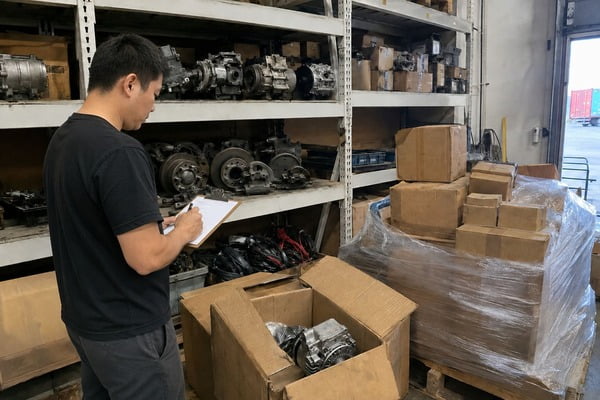
What to Check Before Your First Order
Trade Platform and Export Record
Suppliers active on Alibaba, Made-in-China, or Global Sources carry a verifiable activity record — transaction history, response rates, buyer reviews.[3] Export record data is also available through third-party customs databases for buyers who want independent verification.[4]
Look for:
- Years of activity on the platform
- Verified export destinations — a supplier claiming 100+ markets should have a transaction footprint to match
- Response time and quality of replies to your inquiry — a team that answers vaguely at the inquiry stage will not improve after payment
Warehouse Evidence
Ask for a short warehouse video or photos showing the part you are ordering, alongside visible inventory. This is a basic verification step that most serious suppliers are comfortable with. Reluctance to provide this is a signal worth taking seriously.
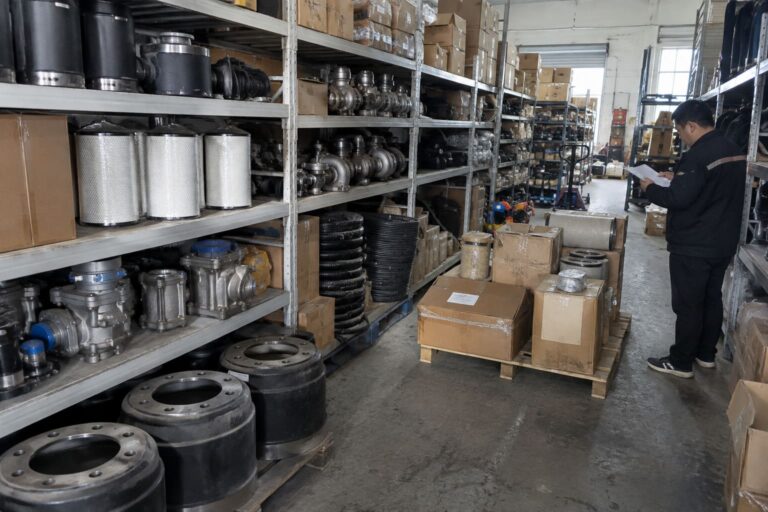
Caanass operates an 8,000 m² warehouse in Guangzhou with approximately 40,000 SKUs across HOWO, SHACMAN, FAW, FOTON, and DONGFENG parts lines. We provide warehouse photos as a standard part of our supplier introduction.
Logistics Accountability
Ask: "Who handles your export logistics — your own team or a third-party forwarder?" The answer matters because if a third-party forwarder handles documentation and something goes wrong, the supplier may have limited ability to intervene. Suppliers who manage logistics coordination internally carry more accountability.
Payment Terms as a Signal
A supplier pushing for 100% advance payment with no trade assurance, no escrow option, and no verifiable track record is asking you to accept all the risk. Established B2B suppliers typically offer trade-platform escrow, documentary collection, or partial payment structures that reflect some shared risk. This is worth discussing before you commit.
Frequently Asked Questions
How do I find the OE number for my truck part?
Check the physical part first — most components have a stamped or printed number on the body or housing. If that is unreadable, consult the truck's service manual or parts catalog. You can also provide your engine number and vehicle VIN to a supplier experienced in the truck brand; they can often cross-reference it against their system.
What is the safest payment method when ordering spare parts online from China?
Trade platform escrow (such as Alibaba Trade Assurance) offers the clearest buyer protection for first orders. For established supplier relationships, documentary collection or letter of credit structures are common in larger B2B transactions. Avoid full advance wire transfers to a supplier with no verified history.
How long does international shipping take for truck spare parts from China?
Sea freight from Guangzhou typically takes 15–45 days depending on destination. Air freight is faster — usually 5–10 days — but is cost-effective only for small, urgent orders.[5] Lead time for stock confirmation and order preparation should be added to shipping time; in-stock items can typically be ready in 3–7 business days.
Can I order mixed parts from multiple truck brands in one shipment?
Yes — consolidated or mixed orders are standard in B2B truck parts sourcing. Suppliers with broad multi-brand coverage can combine HOWO, SHACMAN, FAW, FOTON, and DONGFENG parts into a single shipment, which reduces per-unit freight cost significantly. Confirm that your supplier can handle multi-brand OE matching before submitting a mixed inquiry.
What should I do if I receive the wrong part after ordering online?
Document the discrepancy immediately — photos of the received part, the packaging, and any visible part numbers. Compare against your confirmed order documentation. Contact your supplier with this evidence within the warranty window. For future orders, use the pre-order identification checklist to reduce this risk from the start.
Conclusion
Ordering spare parts online works — when the process is right. The failures that cost buyers real money almost always trace back to the same gaps: an identification shortcut that skipped the OE number, a quality assumption that went unverified, a quote treated as a confirmed order, or a supplier trusted without evidence.
The correct process for ordering truck spare parts online is methodical: confirm the OE number before quoting, ask your supplier which quality tier they are offering, get explicit stock and lead-time confirmation in writing, verify logistics accountability, and check supplier credibility before payment. None of these steps are complicated. All of them matter.
At Caanass, our team handles exactly this process for wholesalers, distributors, and fleet buyers sourcing HOWO, SHACMAN, FAW, FOTON, and DONGFENG parts across more than 100 markets. If you are evaluating a new supply partner or working through an identification problem, we are glad to walk through it with you. Contact our team with your OE number or part details, and we will start from there.
- [1]"The Impact of Trading Counterfeited Vehicle Spare Parts across the ...", https://www.academia.edu/11828861/The_Impact_of_Trading_Counterfeited_Vehicle_Spare_Parts_across_the_Local_Supply_Chain_Case_of_Moshi_Municipality. Research on China's automotive aftermarket supply chain has documented stratified quality tiers ranging from OE-supply parts to low-cost economy replacements, with inconsistent labeling practices creating significant information asymmetry for international buyers. Evidence role: general_support; source type: research. Supports: That the Chinese automotive parts market is segmented into distinct quality tiers that are not consistently differentiated by labeling or terminology.. Scope note: Most published research focuses on passenger vehicle parts or counterfeit goods rather than specifically on heavy truck parts quality tier labeling conventions. ↩
- [2]"The U.S. Automotive Industry Supply Chain - Boise State University", https://www.boisestate.edu/cobe/blog/2025/02/the-u-s-automotive-industry-supply-chain-challenges-and-transformations/. Supply chain management literature on spare parts procurement documents significant lead time variance between items held in finished goods inventory and those sourced through make-to-order or multi-tier supplier networks, with variability commonly ranging across several weeks in international contexts. Evidence role: general_support; source type: research. Supports: That lead time variability between stocked and non-stocked parts in international B2B supply chains can be substantial, frequently measured in weeks.. Scope note: Published benchmarks typically address industrial or passenger vehicle spare parts; heavy truck parts sourced from China may involve supply chain structures not fully captured in general spare parts literature. ↩
- [3]"Evaluating the drivers of B2B performance - PMC - NIH", https://pmc.ncbi.nlm.nih.gov/articles/PMC11244795/. Academic research on B2B e-commerce trust mechanisms has examined platform-based supplier ratings, transaction records, and third-party verification badges as information signals that reduce but do not eliminate buyer uncertainty in cross-border trade, noting that self-reported metrics and platform-curated reviews may not fully capture supplier reliability. Evidence role: mechanism; source type: research. Supports: That B2B trade platforms employ supplier verification and rating systems intended to provide buyers with signals of supplier reliability, though the completeness of these signals varies.. Scope note: Research findings on platform trust signals primarily address general B2B e-commerce and may not reflect the specific verification depth of any individual platform's current supplier credentialing system. ↩
- [4]"Report Name:China Exporter Guide", https://apps.fas.usda.gov/newgainapi/api/Report/DownloadReportByFileName?fileName=China%20Exporter%20Guide_Beijing%20ATO_China%20-%20Peoples%20Republic%20of_01-03-2021. Commercial trade intelligence platforms aggregate bill of lading and customs declaration data from importing countries to provide shipment-level records linked to named exporters, enabling buyers to assess a supplier's export volume, destination markets, and trading partners prior to engagement. Evidence role: mechanism; source type: other. Supports: That commercial customs data services aggregate shipment records that can be used to verify an exporter's trade history, destination markets, and shipment frequency.. Scope note: Data completeness varies by country; records reflect shipments from the perspective of destination customs rather than Chinese export declarations, and some shipments may not appear due to data licensing gaps or confidentiality filings. ↩
- [5]"Air Cargo Between the U.S. and World Regions, including ...", https://www.bts.gov/newsroom/air-cargo-between-us-and-world-regions-including-china-february-2020-preliminary. Data from international air cargo associations and freight forwarder industry reports indicate that air freight from China to major regional hubs typically takes five to ten days door-to-door, while the substantially higher per-kilogram cost relative to ocean freight renders air transport impractical for bulk or heavy industrial components. Evidence role: general_support; source type: institution. Supports: That air freight from China to major international destinations typically completes within five to ten business days, and that the cost premium over sea freight makes it economically unsuitable for high-volume or heavy cargo.. Scope note: Transit times vary by airline routing, destination customs efficiency, and whether the figure cited is flight time only or total door-to-door duration including customs clearance. ↩