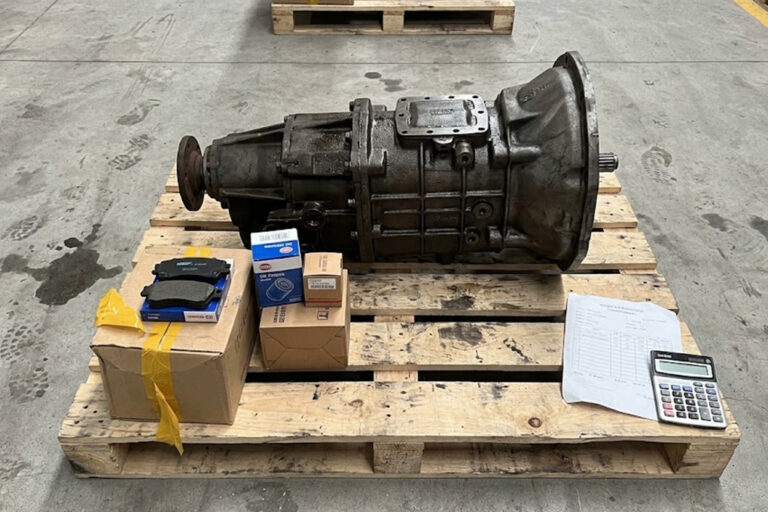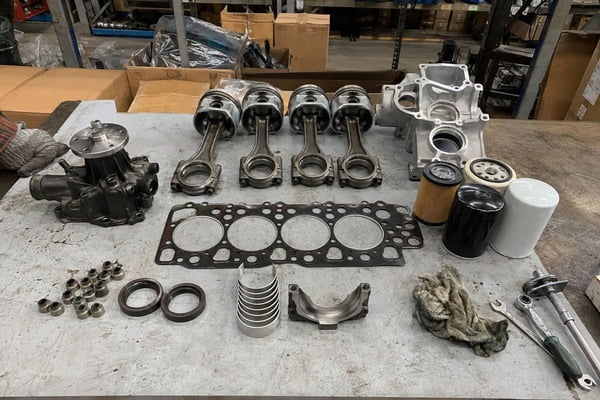
Who Is the Best Auto Parts Manufacturer in China?
Sourcing auto parts from China is one of the most cost-effective decisions a fleet operator or parts distributor can make — until it isn't. When buyers search for the "best auto parts manufacturer in China" without knowing what to look for, they risk mismatched parts, wrong quality tiers, and wasted shipping costs. The good news is that the right sourcing framework makes this decision much more manageable.
There is no single "best" auto parts manufacturer in China. China's parts supply chain is segmented by vehicle platform, part category, and quality tier — not ranked by a universal standard. The correct question is: which supplier type fits your specific truck model, quality requirement, and order pattern? Answering that question first is what separates buyers who source confidently from those who receive the wrong parts.
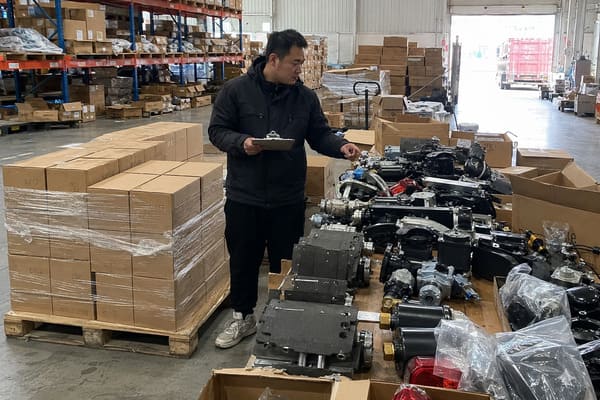
The question sounds simple. The answer, however, requires you to understand how China's parts industry is actually structured — and why the way most buyers phrase their search works against them from the start. Let's unpack this step by step.
Is "best auto parts manufacturer in China" even the right question?
Most buyers who ask this question are trying to reduce risk. That instinct is correct. But the question itself creates a problem before the search even begins.
Asking for the "best" manufacturer in China without specifying a truck brand, part category, or quality tier is like asking for the "best restaurant in the city" without saying whether you want breakfast, a business dinner, or a quick meal under ten dollars. The criteria determine the answer — and without them, any answer is meaningless.
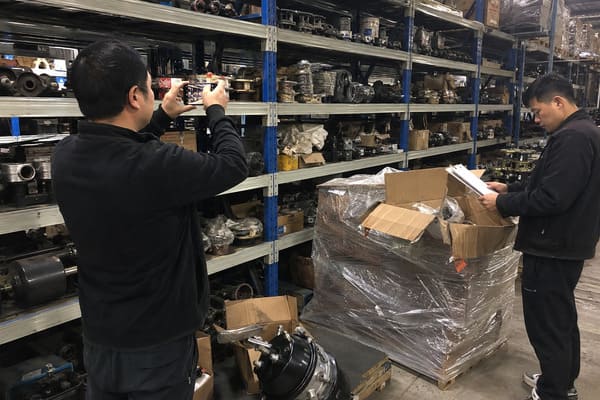
We receive inquiries regularly that read something like: "I need the best quality truck parts from China." No model number. No part name. No OE reference. In our sourcing experience, the first thing we clarify is always the same: which truck brand, and which part? Without those two inputs, no honest supplier can give you a useful recommendation.
Why China's parts industry is segmented, not ranked
China does not have a single tier-one manufacturer that supplies quality parts across all truck brands and all categories. The industry is organized by vehicle platform:
- Parts for HOWO (Sinotruk) trucks come primarily from Shandong-based suppliers and factories aligned with the Sinotruk supply chain.
- Parts for SHACMAN trucks trace back to Shaanxi, with a distinct supplier network.
- FAW, FOTON, and DONGFENG each have their own regional manufacturing clusters and authorized supply chains.
A factory that produces excellent engine components for HOWO trucks may have no coverage at all for FAW or FOTON. A brake specialist for SHACMAN may not stock a single DONGFENG cabin part.
The two questions that actually narrow the field
When buyers come to us without a clear brief, we always ask:
- Which truck brand and model is the part for?
- What quality tier does your end market require — OE-standard, branded aftermarket, or budget-grade replacement?
These two questions reduce the relevant supplier pool from thousands to dozens. They also prevent the most common sourcing mistake we see: buying by price heuristic rather than by specification match.
Does higher price mean better quality Chinese truck parts?
Many first-time buyers assume that paying more guarantees OEM-spec parts and paying less means counterfeit or low-grade stock. In practice, the relationship between price and quality tier in Chinese truck parts is more nuanced than that.
Price signals something about quality, but it does not guarantee it. A higher price may reflect genuine OE-standard components, or it may reflect a middleman's margin, a premium brand name applied to standard-grade parts, or simply higher logistics costs. Buyers should evaluate quality tier through documentation and specification matching — not price alone.
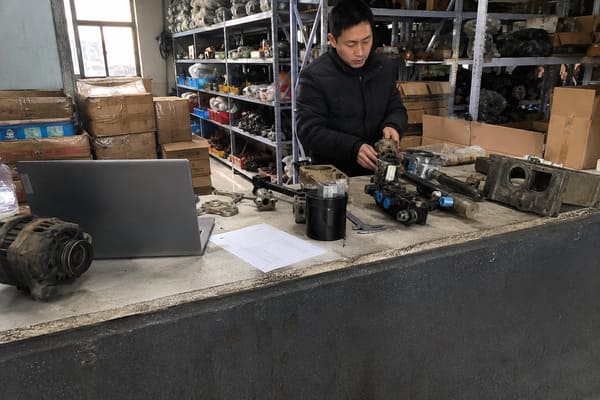
Understanding the three quality tiers
Chinese truck replacement parts generally fall into three broad tiers. Each serves a legitimate market:
| Tier | Common Description | Typical Use Case |
|---|---|---|
| OE-standard | Parts manufactured to the original equipment specification, sometimes by the same supplier that supplies the vehicle OEM | Heavy-duty fleets with strict maintenance standards, warranty-sensitive operations |
| Branded aftermarket | Parts produced by established Chinese aftermarket brands, often meeting or approaching OE spec | Mid-market distributors, regional fleets, buyers who balance cost and quality |
| Budget-grade replacement | Parts built to a lower specification at a reduced cost | High-volume replacement markets, price-sensitive end markets, short-cycle equipment |
Important: No quality tier label should be accepted at face value. Buyers should request documentation — part numbers, material specs, test reports — and verify claims through qualified technical evaluation when the application is safety-critical.
Why the right tier depends on your end market
A mining fleet in a remote region running trucks on short replacement cycles may need budget-grade parts simply to maintain parts availability and keep costs per kilometer in range. A logistics operator running trucks under long-term lease agreements with strict maintenance standards may need OE-standard components to avoid warranty disputes.
Neither buyer is wrong. They just need different suppliers — and treating either tier as universally "better" ignores the actual procurement context.
One pattern we see repeatedly: buyers who source the cheapest available parts for a market that actually demands higher-grade components, then face quality complaints from their customers downstream. The cost of that mistake almost always exceeds the savings on the initial order.
Should you buy direct from a Chinese manufacturer or use a distributor?
The appeal of factory-direct sourcing is understandable. Buyers assume that cutting out the middleman means lower prices and better control. For some buyers and some product categories, that is true. For others, it creates more problems than it solves.
Factory-direct sourcing works well when you need a single part category in high volume from one vehicle platform.[1] It becomes a liability when your order spans multiple truck brands, multiple part categories, or requires accurate OE-number matching across a large SKU list.
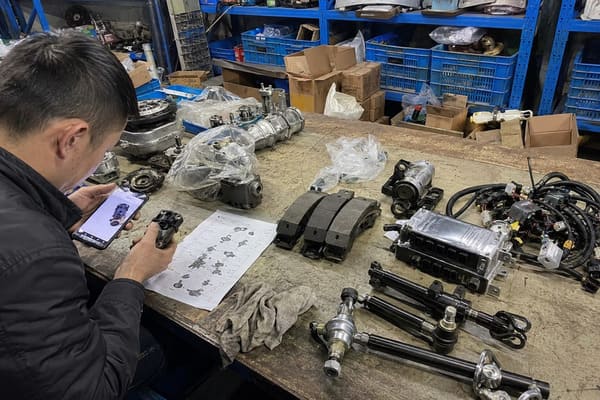
Three sourcing models and when each fits
1. Direct factory relationship
Best for: Buyers with high-volume, single-category orders. For example, a distributor who needs 500 units of one specific HOWO engine part per month and has already verified the OE specification.
Limitations: Most factories specialize in one category or one vehicle platform. A buyer sourcing parts across HOWO, SHACMAN, and FOTON from a single factory is unlikely to get complete coverage. SKU gaps, substitution errors, and mismatched specifications are common when buyers force a single-factory relationship onto a multi-brand sourcing requirement.
2. Specialized aftermarket brand
Best for: Buyers who want a recognized aftermarket brand name to support resale in their local market. Some established Chinese aftermarket brands carry strong regional recognition in parts markets across Africa, the Middle East, and Southeast Asia.[2]
Limitations: Brand recognition does not equal universal vehicle coverage. Always verify that the brand covers your specific truck model before committing to a supply relationship.
3. Consolidated professional supplier
Best for: Wholesalers, distributors, and fleets sourcing across multiple truck brands or part categories. A consolidated supplier with verified sourcing relationships across the major Chinese truck platforms can manage OE-number matching, mixed orders, and logistics coordination in one relationship.
Why this model reduces risk: In our experience, the most common sourcing errors — wrong part numbers, mismatched fitment, incomplete orders — happen not because parts are low quality, but because the buyer's sourcing model was not built to handle multi-brand, multi-category orders. A professional consolidated supplier absorbs that complexity.
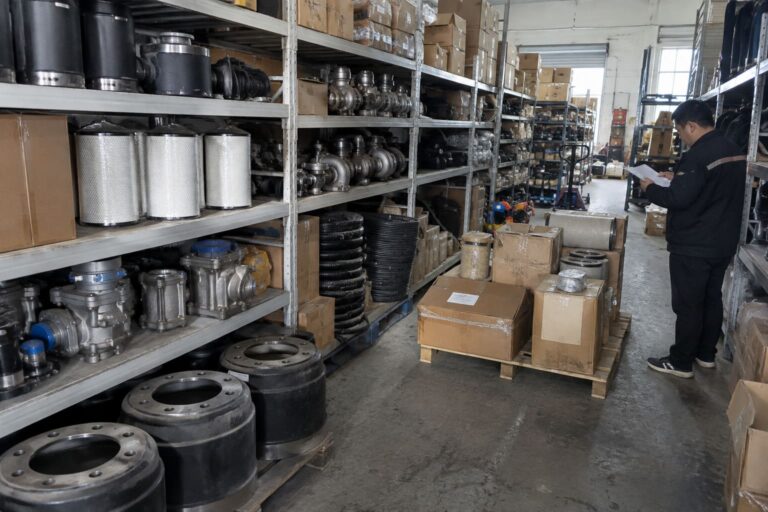
This is the sourcing model that Caanass operates. With access to more than 40,000 truck-part items across HOWO, SHACMAN, FAW, FOTON, and DONGFENG, and an 8,000 m² warehouse in Guangzhou, we support buyers who need accurate parts identification, mixed-order consolidation, and recurring replenishment across multiple vehicle platforms — not buyers looking for a single factory's catalog.
What should you verify before choosing a Chinese truck parts supplier?
Choosing a supplier without a basic verification checklist is one of the most common mistakes in international truck parts sourcing. Suppliers vary significantly in vehicle coverage, documentation capability, and order support — and these differences matter more than most buyers realize until the first problem shipment arrives.
Before committing to a supply relationship, buyers should evaluate potential suppliers across a consistent set of criteria — not based on catalog claims or price lists alone.
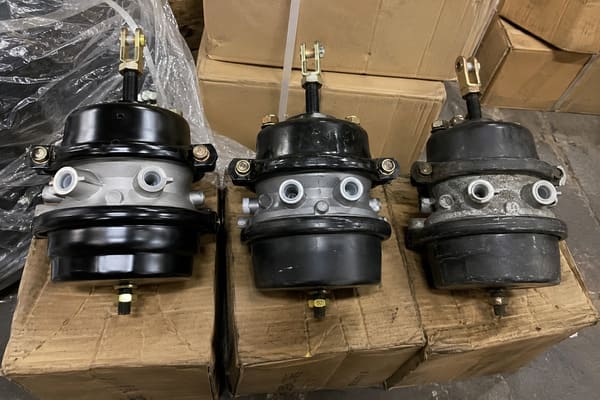
Key criteria to evaluate
Vehicle platform coverage Does the supplier have documented coverage for your specific truck brands and models? Ask for a sample parts list with OE numbers for your most commonly sourced items. Gaps in a sample list are a reliable indicator of gaps in the full catalog.
OE number and fitment matching capability Can the supplier match parts to your OE references, VIN data, or vehicle model descriptions? This is one of the highest-value services a professional supplier provides — and one of the clearest ways to distinguish a capable supplier from a parts trader with a warehouse catalog.
Quality documentation What documentation can the supplier provide for the parts you need? Test reports, material certifications, and inspection records are standard requests. Note that certifications should be verified independently for safety-critical applications — do not accept documentation at face value without follow-up.
Order flexibility and mixed-order capability Can the supplier handle mixed orders across multiple truck brands and part categories in a single shipment? This is a practical requirement for wholesalers and distributors managing diverse customer demand.
Logistics and consolidation support International truck parts buyers — especially those managing container orders — benefit significantly from suppliers with in-house logistics coordination. Consolidated shipping, customs documentation support, and container planning reduce both cost and lead time.[3]
Communication and response quality A supplier who cannot respond accurately to a technical inquiry before the order is unlikely to resolve a warranty or fitment issue after it. Response quality during pre-sales evaluation is a meaningful proxy for post-sales support capability.
Frequently Asked Questions
How do I find a reliable Chinese truck parts supplier for HOWO or SHACMAN trucks?
Start by specifying your truck model, part categories, and required quality tier before approaching any supplier. Evaluate potential suppliers by requesting a sample parts list with OE numbers for your most common items. Verify their coverage, documentation capability, and logistics support before committing to a first order.
Are Chinese truck parts good quality?
Chinese truck replacement parts span a wide quality range — from OE-standard components to budget-grade replacements. Quality depends on the specific part, the supplier's sourcing tier, and the documentation behind the claim.[4] Buyers should request part specifications and test reports, and use qualified technical evaluation for safety-critical components.
Is it better to buy direct from a Chinese factory or through a distributor?
Factory-direct sourcing suits high-volume, single-category buyers who have already verified their specifications. Distributors and consolidated suppliers suit buyers sourcing across multiple truck brands or part categories, where SKU coverage, OE matching, and mixed-order logistics add significant value.
What is the difference between OE-standard and aftermarket truck parts from China?
OE-standard parts are manufactured to original equipment specifications — sometimes by the same supplier that serves the truck OEM[5]. Aftermarket parts are produced independently, with quality ranging from near-OE to budget-grade. The right tier depends on your end market's requirements, not on a universal quality judgment.
How can I avoid receiving the wrong parts when sourcing from China?
Provide complete information: truck brand, model, year, OE part number, and the quantity required. Work with suppliers who have structured OE-number matching capability. Avoid placing large first orders before verifying fitment on a sample quantity. Mismatched parts are usually a communication and specification problem — not purely a quality problem.
Conclusion
The search for the best auto parts manufacturer in China leads most buyers to the wrong starting point. China's parts supply chain is not ranked by a universal quality standard — it is segmented by vehicle platform, part category, and quality tier. The buyers who source most successfully are those who specify their truck model, quality requirement, and order pattern first, then evaluate suppliers against those criteria.
Price is not a reliable quality proxy. Factory-direct is not always the most efficient model. And no supplier can be evaluated honestly without documentation and fitment verification for your specific application.
If you source parts for HOWO, SHACMAN, FAW, FOTON, or DONGFENG trucks and need a supplier who can handle multi-brand coverage, OE-number matching, and consolidated order logistics — contact Caanass to discuss your sourcing requirements. We will start with the two questions that actually matter.
- [1]"When do competing retailers benefit from sourcing through ...", https://www.sciencedirect.com/science/article/abs/pii/S0925527323002773. Supply chain management literature on sourcing strategy, including transaction cost economics frameworks applied to procurement, supports the principle that direct supplier relationships are most cost-effective when order volumes are high and product complexity is low, while intermediaries reduce coordination costs in fragmented or multi-category sourcing environments. Evidence role: mechanism; source type: research. Supports: That direct manufacturer sourcing yields efficiency advantages primarily under conditions of high volume, low SKU complexity, and stable specifications, while intermediaries add value in fragmented, multi-supplier procurement contexts. Scope note: General procurement theory applies broadly; empirical studies specific to Chinese automotive parts sourcing decisions are limited in the peer-reviewed literature. ↩
- [2]"China - Automotive Industry - export.gov", https://legacy.export.gov/article?id=China-Automotive-Components-Market. Chinese customs and trade statistics, as well as reports from the China Chamber of Commerce for Import and Export of Machinery and Electronic Products (CCCME), document substantial automotive parts export volumes to African, Middle Eastern, and Southeast Asian markets. Evidence role: statistic; source type: government. Supports: That China is a major exporter of automotive parts to Africa, the Middle East, and Southeast Asia, supporting the claim of established market presence in those regions. Scope note: Aggregate export volume data supports market presence but does not directly measure brand recognition or consumer preference for specific Chinese aftermarket brands in those regions. ↩
- [3]"Study the Impacts of Freight Consolidation and Truck Sharing ...", https://rosap.ntl.bts.gov/view/dot/42413. International logistics research and freight economics literature document that less-than-container-load (LCL) consolidation services reduce per-unit shipping costs for buyers with insufficient volume to fill a full container, while coordinated container planning by experienced freight forwarders is associated with reduced transit variability; see, e.g., studies on freight consolidation published in the International Journal of Physical Distribution & Logistics Management. Evidence role: general_support; source type: research. Supports: That cargo consolidation in international freight reduces per-unit shipping costs compared to individual shipments, and that coordinated logistics planning can shorten effective lead times. Scope note: Cost and lead time benefits of consolidation are context-dependent and vary with route, cargo type, and service provider capability; the article does not quantify the magnitude of these benefits. ↩
- [4]"Research on the Current Situation and Innovation ...", https://www.researchgate.net/publication/371425483_Research_on_the_Current_Situation_and_Innovation_Development_of_China's_Automotive_Aftermarket. Industry assessments from organizations such as the Automotive Body Parts Association (ABPA) and quality research from testing institutions indicate that Chinese aftermarket parts quality varies substantially by product category and supplier tier, with some parts meeting or exceeding OE specifications and others falling significantly below them. Evidence role: expert_consensus; source type: institution. Supports: That the quality of Chinese automotive aftermarket parts is heterogeneous and depends on supplier tier, part category, and verifiable documentation rather than being uniformly high or low. Scope note: Most published quality assessments focus on collision or passenger vehicle parts rather than heavy commercial truck components specifically. ↩
- [5]"Automotive aftermarket", https://en.wikipedia.org/wiki/Automotive_aftermarket. Automotive industry research, including analyses by organizations such as the Automotive Aftermarket Suppliers Association (AASA) and academic supply chain studies, documents the widespread practice of OEM-tier suppliers selling equivalent components through independent aftermarket channels, sometimes under different branding. Evidence role: mechanism; source type: research. Supports: That automotive OEM component suppliers commonly sell equivalent or identical parts through aftermarket channels, a practice documented in automotive supply chain literature. Scope note: Most documented evidence of this practice pertains to passenger vehicle markets in North America and Europe; direct evidence specific to Chinese heavy truck OEM suppliers is less systematically published. ↩