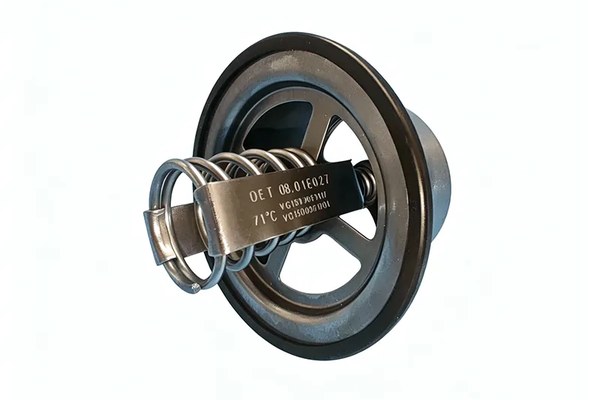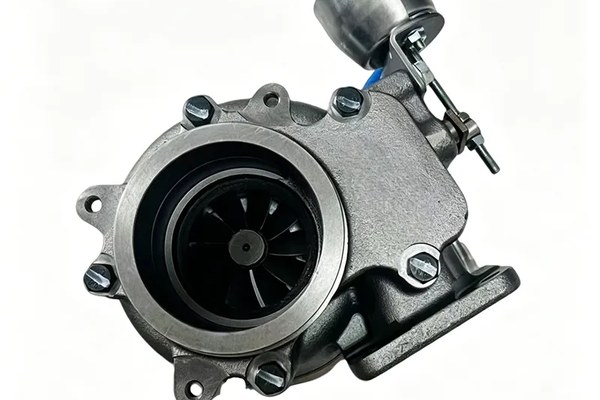
China heavy truck parts sourcing looks easy. It is not. The wrong parts show up, the supplier stops replying, and you eat the loss. The market is fragmented, it is opaque, there is no universal quality standard, and suppliers contradict each other on everything. Every bulk order carries real financial exposure. The risk can be managed anyway. You just have to know where it comes from.
Chinese parts are not the problem. The market contains at least three distinct quality tiers — OEM, OES, and aftermarket[1], and almost nobody can tell them apart before shipment. No framework means price comparison. Price comparison means you buy the cheapest thing that looks right. That is the whole failure mode, in one sentence.
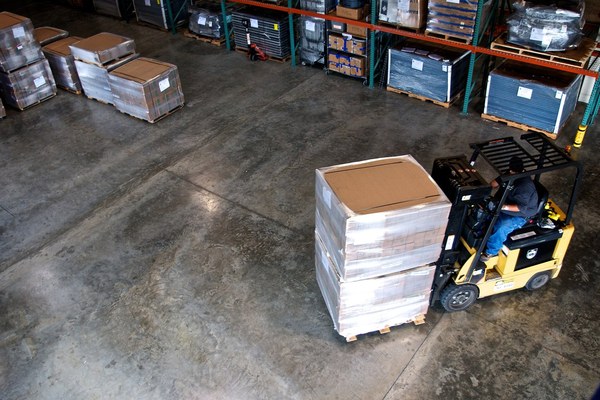
Country of origin is a distraction. The tier is what matters. Understand the tiers, ask suppliers the right questions, insist on a real pre-shipment inspection, and this becomes ordinary procurement. Skip those steps and it is a bet, and the odds are set by whoever packed the container.
Is the "China = Fake Parts" assumption actually true?
The fear has a basis. Containers arrive in Africa, Southeast Asia and the Middle East with unmarked parts, mislabeled boxes, components dead in weeks. That happens. What does not follow is that all Chinese-made parts carry equal risk. The supply chain is more structured than that.
China manufactures genuine OEM components for Volvo, Scania, Cummins, Bosch, ZF, and dozens of other global brands[2]. The plants feeding the European assembly line also feed the aftermarket. Origin is not your problem. Opacity is. You cannot price a risk you cannot see: which factory, which grade, which channel.
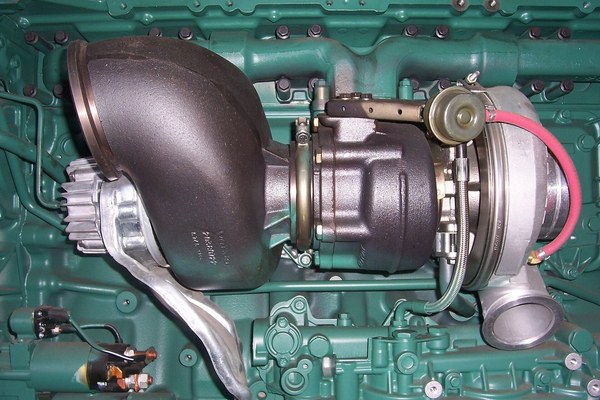
That reframes everything. Stop asking whether the parts are Chinese. Start asking which tier this is, and whether the supplier can prove it.
Why the "reject everything Chinese" strategy fails
Ban all China-sourced parts and you will often pay European import money for goods built in Jiangsu or Guangdong under a European brand license. The supply chain is just as invisible. The invoice is bigger.
Worse, for markets like Sub-Saharan Africa or Central Asia where European parts availability is limited and lead times are long[3], a blanket ban buys you fleet downtime that costs more than the parts themselves[4].
Why the "accept everything cheap" strategy also fails
The cheap-everything crowd has the mirror-image problem. In our experience the buyers who lose the most are not naive. They had no way to verify anything before the container closed. Then the parts land, they fail inspection or fitment, and the supplier has already gone cold.
It is always the same gaps. They turn up in every dispute file. No part number verification. No physical inspection. No functional test.
What are the real quality tiers for China heavy truck parts?
“OEM” gets used to mean “good.” The word has turned into a compliment rather than a specification. That is sloppy, and it is expensive. Each tier has its own price, its own risk, its own correct application.
The three supply tiers for China heavy truck parts are OEM (Original Equipment Manufacturer parts made by or for the brand that built the truck), OES (Original Equipment Supplier parts made by the same manufacturer that supplies OEM but sold outside the original supply chain), and aftermarket (parts made by third-party manufacturers to compatible specifications). All three are legitimate somewhere. The error is applying one to a job that needs another.
Practical breakdown. The price gaps are real. So are the risk gaps, and they do not line up neatly with the price. Tier is not a quality ranking. It is a statement about who made the part and who will stand behind it.
OEM Parts
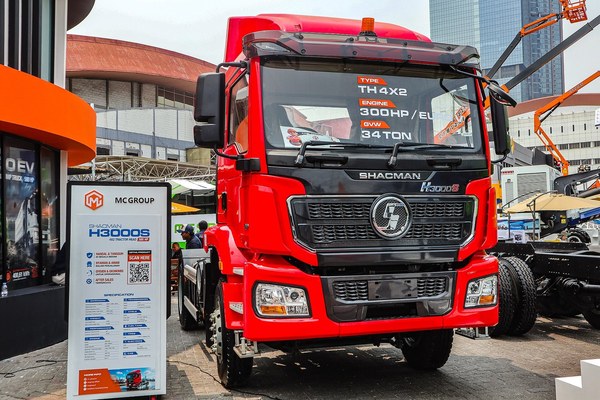
OEM parts come from the brand or from a plant it directly authorizes. Chinese heavy truck brands — HOWO, SHACMAN, SITRAK, FAW, Dongfeng[5] — sell them through an authorized distribution network. European brands with Chinese-made content (Cummins engines assembled in China, ZF gearboxes with China-made internals) trace back to the licensed facility.
Specify OEM when:
- Drivetrain parts under heavy load cycles (gearbox internals, differential assemblies, crankshafts)
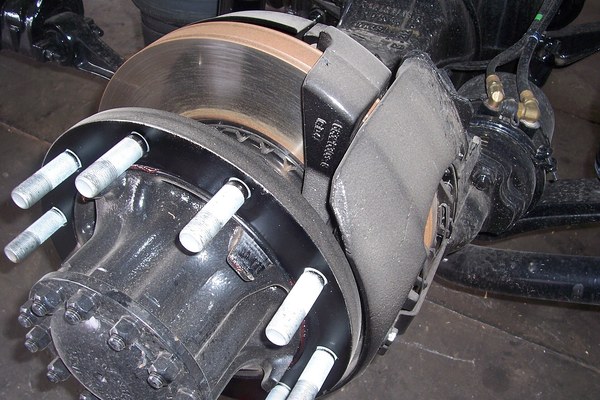
- Safety-critical systems (ABS modules, steering components, brake calipers)
- Warranty terms or fleet maintenance contracts require brand-traceable parts
- High-mileage engines with worn tolerances, where dimensional accuracy is the whole game
Price: top of the market. Expect 30–80% premium over aftermarket depending on the brand and component[6].
OES Parts
OES parts come off the same factory lines as OEM, but they move through independent distribution instead of the brand’s official network. Build quality is typically OEM-equivalent. Documentation and channel control are what you give up.
Most buyers get this tier wrong. A Weichai-authorized bearing supplier selling direct to independent workshops makes OES parts. Not fakes. Real quality. Harder paperwork.
OES fits when:
- Scheduled maintenance where the brand box is not operationally required
- Fleet operators with in-house technical staff who can judge fit and function themselves
- High-volume programs where OEM pricing makes no sense
Price: usually 15–40% under OEM. Verify the supplier. Confirm the actual factory.
Aftermarket Parts
Aftermarket parts are built to compatible dimensions by third parties, with the original OEM supplier out of the picture entirely. Quality here is a wide spread. Established Chinese manufacturers can deliver near-OES equivalents. Others ship unbranded parts and no quality control documents whatsoever.
Aftermarket is fine for:
- Body panels, cab components, non-structural sheet metal
- Consumables: filters, belts, hoses, gaskets on planned maintenance
- Older vehicles where OEM parts cost more than the truck is worth
Aftermarket is unacceptable for:
- Load-bearing structural components
- Engine internals in high-duty-cycle work
- Anything where dimensional tolerance touches safety
| Tier | Traceability | Relative Price | Appropriate Use |
|---|---|---|---|
| OEM | Brand-verified, documented | Highest | Drivetrain, safety systems, warranty contexts |
| OES | Factory-traceable, requires verification | Mid-range | Maintenance parts, fleet volume procurement |
| Aftermarket | Variable, supplier-dependent | Lowest | Consumables, body parts, low-criticality components |
How does brand confusion cause fitment failures?
Brand confusion costs more than counterfeiting in our experience. Nobody is selling you a fake. They are selling you a real part for a truck you do not own. That is a fitment problem rather than a fraud problem, and it is far more common than either.
China heavy truck parts procurement involves two completely different fitment contexts: parts for Chinese-brand trucks (HOWO, SHACMAN, SITRAK, FAW, Dongfeng, Hino, Isuzu) and parts sourced as replacements for European or Japanese models (Scania, Volvo, Mercedes-Benz, MAN, Cummins). Labeling, part number systems and interchange compatibility are not standardized across those contexts. Suppliers will not always tell you which one you are in.
The specific problem with Cummins, Weichai, and Yuchai
Cummins, Weichai and Yuchai make the point better than any chart.
Cummins engines assembled in China (through the Dongfeng Cummins or Beijing Foton Cummins joint ventures)[7] mix global and China-specific part numbers. Buy injectors for a Cummins ISM in a European truck and you can receive components that look identical and measure differently, because they were built for the Chinese JV variant. The box says Cummins-compatible. The engine disagrees.
Weichai and Yuchai are Chinese OEM engine brands with their own authorized parts networks[8]. Genuine parts, for Weichai or Yuchai engines. Not interchangeable with European assemblies, however similar the application description sounds.
How we approach brand verification at Caanass
Our practice: match the part number first, the description second. We require:
- VIN or chassis number
- Engine model and serial number (not just the brand)
- The existing part number off the component being replaced
Then we run manufacturer interchange data before confirming supply. If a number does not resolve cleanly, we flag it. We do not substitute quietly. That kills most fitment failures before they happen.
What does a credible pre-shipment inspection actually cover?
Inspection is risk control, not risk elimination. The buyers who skip it and take the supplier’s word for everything are most of the post-arrival disputes we hear about. Nothing verified before shipping. No practical recourse after customs.
A credible pre-shipment inspection for China heavy truck parts should cover, at minimum: visual and dimensional verification against the specified part number, engine start and functional test for mechanical assemblies, oil and fluid condition assessment for used components, checking of serial numbers and casting marks against documentation, and photographic evidence recorded before loading. A supplier who cannot or will not produce that documentation before shipment is transferring all of the risk to you.
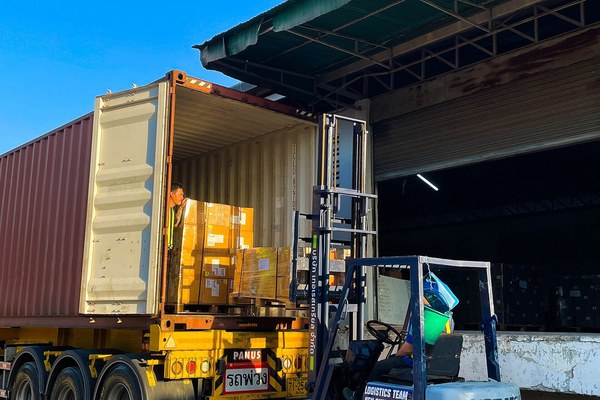
What we verify before shipment at our facility
Our warehouse and storage yard at Caanass together hold 1,000+ engines and 1,000+ gearboxes at any given time. For mechanical components we check the following.
Used engines:
- Cold start and warm idle test (video-recorded)
- Oil pressure and coolant temperature monitored under load
- Visual check for cracks, corrosion, previous repair welds
- Serial number against sales documentation
- Compression test on request for high-value orders
Gearboxes and axles:
- Gear engagement through all ranges
- Oil leaks, bearing noise, housing damage
- Output shaft play measured
- Matched to specified truck model and ratio
Spare parts, new:
- Part number against the order specification
- Packaging and seal integrity
- Brand mark authenticity: molding quality, font consistency, weight
- Random dimensional check on precision components
Not a certified laboratory. An experienced engineer who has seen the failure patterns before, looking at the part while the container is still open. Judgement, not accreditation, and it catches most of what paperwork misses. A certificate proves somebody paid for a certificate.
What buyers should ask any supplier
New supplier? Ask these.
- Can you provide video of the engine start test before shipping?
- What is your part number verification process?
- Do you issue a pre-shipment inspection report with photos?
- What happens if a part arrives with a discrepancy from the order?
Vague answers mean an unstructured process. Assume it until somebody sends you the video and a report they are willing to sign.
Frequently Asked Questions
Are Chinese-made truck parts suitable for European brand trucks like Scania or Volvo?
Some Chinese-made components are genuine OEM or OES for European trucks, particularly engine parts from licensed joint ventures. Verify by part number anyway. Not by the brand on the packaging. The wrong part number is the most common cause of fitment failure we see, whatever the label claims.
How can I tell if a truck part is genuine OEM or a copy?
Ask for the manufacturer part number. Run it against official interchange data. Inspect the part: molding quality, weight, casting and stamping marks. Chinese-brand distributors keep part number records. For high-value components, bring in a third-party inspection service before shipment.
What is the minimum order quantity for sourcing China heavy truck parts in bulk?
Depends on the supplier and the part. Caanass supplies container loads and multi-unit orders, not single retail pieces. Engines, gearboxes and axles are quoted per unit, with volume pricing at 5+ units. Spare parts go by weight or pallet.
How long does shipping take from China to Africa or Southeast Asia?
Ocean freight from Guangzhou to major African ports (Lagos, Mombasa, Dar es Salaam) typically takes 25–45 days[9], routing and port congestion depending. Southeast Asia (Jakarta, Manila, Ho Chi Minh City) runs 10–20 days. Both assume the cargo is ready to load. Inspection and documents add 3–7 days on a new order.
What recourse do buyers have if parts arrive incorrect or damaged?
Your recourse is only what you agreed in writing before shipment. No inspection report, no part number agreement, no written return policy means almost no options after arrival. That is the argument for documentation: when the dispute starts, you have a factual record instead of a story. Paper beats memory every time.
Conclusion
The risk is not the country of origin. It is running procurement without a framework for tiers, fitment and pre-shipment control. Everything else is fixable if you catch it before the container loads. OEM, OES and aftermarket all belong in a sensible strategy. The mistakes are using the wrong tier for the application, and accepting claims you never verified.
Two decades exporting truck parts and used commercial vehicles from Guangzhou. The failures look the same every time: no inspection, no part number confirmation, no documented agreement before the container loads. None of it is inevitable.
If you are sourcing China heavy truck parts for fleet procurement, distribution or resale, and you want a supplier who shows inspection video, verifies part numbers before shipment and stands behind the goods, contact Caanass with your requirements.
Image credits
- Warehouse racking with palletised stock — U.S. Federal Emergency Management Agency, Public domain, via Wikimedia Commons
- Turbocharger assembly on a truck engine — Panoha, CC BY-SA 3.0, via Wikimedia Commons
- Truck air disc brake assembly — Panoha, CC BY-SA 3.0, via Wikimedia Commons
- Shacman H3000S tractor truck on display — Sulthan Naufal, CC BY-SA 4.0, via Wikimedia Commons
- Container loading with forklift at a warehouse — Goterrestrial, CC BY 4.0, via Wikimedia Commons
- [1]"Original equipment manufacturer", https://en.wikipedia.org/wiki/Original_equipment_manufacturer. Automotive industry literature defines OEM parts as those supplied by or under authorization from the original vehicle manufacturer, OES parts as components produced by the same supplier that serves the OEM but distributed independently, and aftermarket parts as those manufactured by third parties to compatible specifications. Evidence role: definition; source type: encyclopedia. Supports: That the automotive replacement parts market is conventionally divided into OEM, OES, and aftermarket tiers with distinct supply chain characteristics. Scope note: Terminology usage varies across markets and regions; some industry sources use OEM and OES interchangeably, which may affect the precision of tier-based risk assessments. ↩
- [2]"China's Growing Role in U.S. Automotive Supply Chains", https://www.usitc.gov/publications/332/working_papers/id-19-060_chinese_auto_parts_final_080519-compliant_0.pdf. Research on global automotive supply chain integration documents that Chinese manufacturing facilities produce original equipment components for multinational brands, reflecting China's role as a tier-one supplier in the global vehicle parts industry. Evidence role: general_support; source type: research. Supports: That China-based factories produce OEM-grade components for major global automotive and commercial vehicle brands. Scope note: General supply chain studies may not confirm specific brand relationships cited; brand-specific sourcing arrangements are often not publicly disclosed. ↩
- [3]"Logistics Challenges in Sub-Saharan Africa and Opportunities for ...", https://www.mdpi.com/2071-1050/14/4/2399. Studies on transport infrastructure and fleet management in Sub-Saharan Africa and Central Asia identify spare parts availability and extended procurement lead times as significant operational constraints for commercial vehicle operators in these regions. Evidence role: general_support; source type: research. Supports: That spare parts availability for commercial vehicles is constrained in Sub-Saharan African and Central Asian markets, contributing to extended downtime. Scope note: Research in this area tends to address transport sector challenges broadly rather than isolating heavy truck parts availability specifically; conditions vary substantially by country and urban versus rural context. ↩
- [4]"Understanding the True Cost of Downtime for Fleets", https://www.pensketruckleasing.com/resources/resource-library/cost-of-downtime/. Fleet operations research documents that unplanned commercial vehicle downtime generates significant direct and indirect costs, including lost freight revenue, driver idle time, and contractual penalties, which in many operational contexts exceed the procurement cost of the failed component. Evidence role: mechanism; source type: research. Supports: That unplanned fleet downtime generates costs — including lost revenue, driver costs, and cargo delays — that can exceed the value of the replacement parts that caused the failure. Scope note: Cost-of-downtime figures vary substantially by vehicle type, cargo value, and market context; studies focused on developed-market fleets may not accurately reflect the cost structures of operators in Sub-Saharan Africa or Central Asia. ↩
- [5]"China National Heavy Duty Truck Group", https://en.wikipedia.org/wiki/China_National_Heavy_Duty_Truck_Group. Industry analyses of the Chinese commercial vehicle sector identify Sinotruk (HOWO), Shaanxi Automobile (SHACMAN), FAW Group, and Dongfeng Motor as major domestic heavy truck manufacturers, collectively accounting for a substantial share of China's heavy truck production and export volume. Evidence role: general_support; source type: research. Supports: That HOWO (Sinotruk), SHACMAN, SITRAK, FAW, and Dongfeng are among the leading Chinese heavy truck manufacturers with established domestic and export market presence. Scope note: SITRAK, a joint venture brand, may require separate sourcing documentation; the article's grouping of all five under a single OEM parts framework may oversimplify differences in their distribution structures. ↩
- [6]"Aftermarket vs OEM Truck Parts: Price, Quality, and Warranty", https://www.skylinerrepaircenter.com/blog/aftermarket-vs-oem-truck-parts-price-quality-and-warranty/. Industry pricing analyses of the automotive replacement parts market indicate that OEM-branded components typically carry a substantial premium over aftermarket equivalents, with reported differentials varying widely by component category, brand, and market. Evidence role: statistic; source type: research. Supports: That OEM automotive or heavy truck parts command a significant price premium over aftermarket alternatives, in the range of 30–80%. Scope note: Published price differential data is more commonly available for passenger vehicles than heavy trucks, and China-specific market pricing may differ from global averages. ↩
- [7]"Foton Motor", https://en.wikipedia.org/wiki/Foton_Motor. Corporate and regulatory filings document Cummins' joint venture manufacturing arrangements in China, including partnerships with Dongfeng Motor and Foton Motor, established to produce diesel engines for the Chinese commercial vehicle market. Evidence role: historical_context; source type: institution. Supports: That Cummins operates engine manufacturing joint ventures in China with Dongfeng and Beijing Foton. Scope note: The specific part number divergence between JV-produced and globally produced variants described in the article requires additional technical documentation beyond joint venture existence alone. ↩
- [8]"Weichai Power", https://en.wikipedia.org/wiki/Weichai_Power. Weichai Power Co., Ltd. and Guangxi Yuchai Machinery Co., Ltd. are among China's largest diesel engine manufacturers, supplying powertrains to domestic heavy truck and commercial vehicle producers and maintaining authorized parts distribution networks within China. Evidence role: historical_context; source type: encyclopedia. Supports: That Weichai Power and Guangxi Yuchai are major Chinese OEM diesel engine manufacturers supplying the domestic commercial vehicle market through authorized distribution channels. Scope note: The geographic reach and formalization of their authorized distribution networks outside China, particularly in export markets, may differ from domestic arrangements. ↩
- [9]"Latest Supply Chain and Freight Indicators", https://www.bts.gov/freight-indicators. Shipping industry data and port authority records indicate that container transit times from Chinese ports to Sub-Saharan African destinations such as Lagos, Mombasa, and Dar es Salaam typically range from approximately 25 to 45 days, subject to routing, transshipment hubs, and port congestion. Evidence role: general_support; source type: institution. Supports: That ocean freight transit times from southern China to major Sub-Saharan African ports fall within the 25–45 day range. Scope note: Transit times fluctuate with carrier schedules, port congestion, and geopolitical factors; published averages may not reflect current conditions. ↩