First time buying Chinese trucks? The brand list alone will make your head spin. Pick the wrong one and you've got a fleet parked thousands of miles from the closest spare part. So which Chinese truck brands are actually worth your money? There's no clean answer to that, and the ranked-list format people expect doesn't survive contact with a real procurement decision.
Here's the thing: no top 10 Chinese truck brand list fits every buyer. Three variables decide it — what you're hauling (haulage, mining, construction, logistics), what you can spend, and the one people skip: whether the brand has parts and service on the ground in your market. The names that survive serious procurement conversations are Sinotruk HOWO, SHACMAN, Dongfeng, FAW, Foton, SITRAK, FAW J7, Hongyan, CAMC and Beiben.
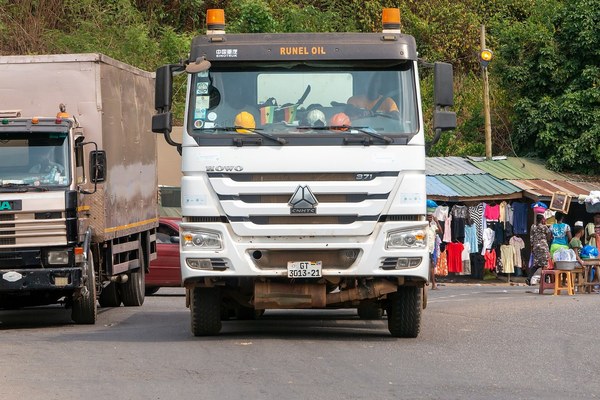
Why those names and not others? And which one is yours? That takes a framework. Below you'll find the two buyer tiers, who sits in each, and the questions to answer before money changes hands.
How should you think about Chinese truck brands before comparing them?
Almost everyone lands here after Googling "top Chinese truck brands" and getting ten names in a numbered list. That list is the trap. A ranking pretends there's one quality ladder. Chinese truck procurement doesn't have one.
Do this first: split the market in two. Volume mainstream brands compete on purchase price and parts density. Premium and JV-platform brands compete on cab comfort, drivetrain spec and total cost of ownership. Keep the tiers apart. Otherwise you'll compare prices that don't belong in the same sentence and cross off trucks that would have run fine for years.
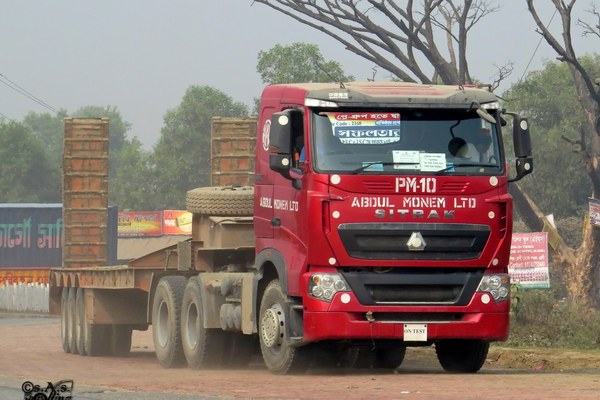
That split isn't theory. It came out of conversations with buyers in Africa, Southeast Asia and the Middle East. The mistake we see most: a procurement manager putting a base-spec HOWO beside a SITRAK C7H and treating them as rivals. Same parent company — Sinotruk Group — but not the same product. The HOWO is a volume machine for price-sensitive markets. The SITRAK C7H is a cab-over built on licensed MAN technology, and it sits much closer to a mid-tier European truck.
The two-tier framework explained
Tier 1 — Volume mainstream brands:
Price, parts, and a track record in developing-market conditions. That's the whole competition here. Between them, these brands account for most Chinese truck exports on the water.
- Sinotruk HOWO
- SHACMAN (Shaanxi Heavy Duty Truck)
- Dongfeng
- FAW (first-series, standard cab range)
- Foton Auman
Tier 2 — Premium and JV-platform brands:
For buyers who want a better cab, better fuel numbers, or something closer to European drivetrain spec. Higher sticker price. And the parts network has to be genuinely developed, not promised.
- SITRAK (Sinotruk × MAN technology)
- FAW J7 / Jiefang J7
- Hongyan (Iveco platform, SAIC Iveco Hongyan)
- CAMC (Anhui Jianghuai Automobile)
- Beiben (Mercedes-Benz technology licensing history)
Important note for buyers: Tier is not a verdict on quality. A Tier 1 brand with 500 local parts dealers will run circles around a Tier 2 brand nobody supports locally. Tier says where a brand competes. It says nothing about whether your trucks will keep working in your country.
What are the mainstream volume Chinese truck brands worth knowing?
Africa, the Middle East, chunks of Southeast Asia — this is where the buying happens. Buyers watch price closely. Resale markets exist. And local mechanics already know these trucks, which matters more than any brochure.
Five brands carry mainstream export volume: Sinotruk HOWO, SHACMAN, Dongfeng, FAW (standard range) and Foton Auman. Lowest entry prices, widest spare parts coverage in developing markets, biggest pool of used stock. If you're running a fleet outside Europe, start here.
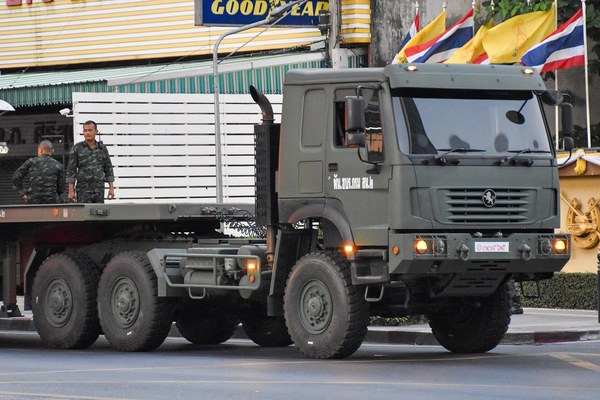
Brand by brand, then.
Sinotruk HOWO
HOWO is the commercial vehicle arm of China National Heavy Duty Truck Group (CNHTC / Sinotruk). It is almost certainly the most widely distributed Chinese heavy truck brand globally[1]. When a buyer in sub-Saharan Africa writes to us, HOWO is nearly always the first name on the page.
Key facts for buyers:
- Primary applications: long-haul tractor trucks, dump trucks, mixer trucks, water tankers
- Engine options: Weichai (most common), Sinotruk D12 series
- Price position: competitive at the lower end of the mainstream tier
- Parts availability: strong in most African, Middle Eastern, and Southeast Asian markets — verify locally before committing
What our clients report: Look after a HOWO and it will take punishment. Neglect the maintenance intervals, or fail to find genuine parts locally, and ownership gets painful fast — that's the pattern behind most unhappy HOWO buyers we hear from. Counterfeit HOWO parts are a documented problem in several markets[2], which we tackle in our parts sourcing content.
SHACMAN (Shaanxi Heavy Duty Truck)
Shaanxi Automobile Group builds SHACMAN. Sinotruk does not. Two different companies, and first-time buyers mix them up constantly. SHACMAN holds a significant historical technology relationship with MAN (Germany), which influenced its cab and powertrain design for several generations[3].
Key facts for buyers:
- Primary applications: tractor trucks, heavy dump trucks, tipper trucks for mining and construction
- Engine options: Weichai, Cummins (in some configurations), Yuchai
- Price position: comparable to HOWO, sometimes slightly higher in certain spec configurations
- Parts availability: strong in East Africa and the Middle East; growing in Southeast Asia
SHACMAN is particularly popular in East African markets for mining and quarrying applications[4]. Our own stock and shipment records back that up: dump trucks hold their structure well on bad roads. One caveat. On used units, check the cab and chassis properly. Heavy-use configurations soak up stress you can't see in a photo.
Dongfeng
Dongfeng is one of China's largest state-owned vehicle manufacturers[5]. Light commercial vehicles up to heavy trucks, all under one roof. The Tianlong and Kingland series are the ones fleet buyers should care about.
Key facts for buyers:
- Primary applications: long-haul tractor trucks, cargo trucks, special-purpose vehicles
- Engine options: Cummins (ISZ series for export configurations), Dongfeng Renault engine (joint venture), Weichai
- Price position: mainstream, competitive with HOWO and SHACMAN
- Parts availability: moderate in most export markets — confirm with local distributors
Dongfeng's joint ventures (notably with Nissan and Renault) have produced truck platforms that offer somewhat different drivetrain characteristics than pure-Chinese platforms[6]. Which platform are you actually buying? Which engine? Ask, in writing, because the answer shifts between model years and export specs.
FAW (Standard / First-Series Range)
FAW (First Automobile Works) is one of China's oldest and largest truck manufacturers[7]. Its standard heavy range — not the J7 — holds a mid-mainstream slot, and it's been selling into Asia and Africa for a long time.
Key facts for buyers:
- Primary applications: cargo trucks, tractor trucks, tipper trucks
- Engine options: Xichai (FAW's own), Cummins, Weichai
- Price position: mainstream, comparable to Dongfeng
- Parts availability: reasonable in established Chinese truck markets
Long production runs have one clear upside. Older-generation parts are everywhere, which is exactly what you want if your fleet is made of older used units.
Foton Auman
Foton is a privately held Chinese manufacturer[8]. You see fewer of them exported than HOWO or SHACMAN, though Southeast Asia and parts of Africa are picking up.
Key facts for buyers:
- Primary applications: medium-to-heavy cargo trucks, logistics vehicles
- Engine options: Cummins (common in export), Weichai
- Price position: competitive, sometimes below HOWO on equivalent specs
- Parts availability: more limited than the top three — verify locally
Where the distribution is real, Foton deserves a quote. Where dealer infrastructure is thin, a first-time buyer is taking on supply chain risk.
What are the premium Chinese truck brands that compete closer to European specifications?
Smaller tier. Talked about less. Understood worse. Buyers come to it when they're stepping up from basic fleet operations, or when fuel bills and driver churn force the issue.
SITRAK, FAW J7, Hongyan, CAMC and Beiben are the premium-tier names that matter to serious fleet buyers. Cab comfort, fuel efficiency, drivetrain spec — this is where they close in on mid-tier European trucks. You'll pay more than mainstream money, and you need a parts network that can actually support them. In the right operating conditions, the total cost of ownership can come out lower.
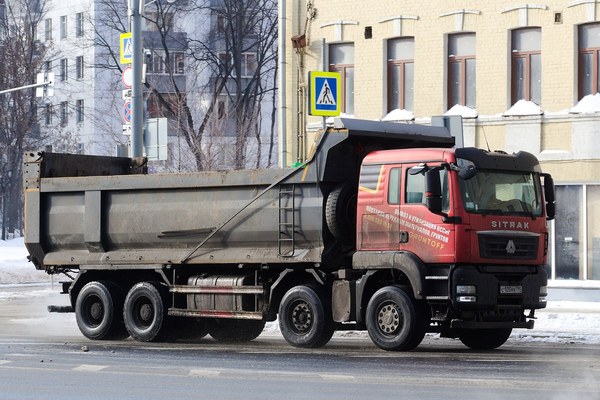
SITRAK
SITRAK is produced by Sinotruk and is built on a platform developed through a joint venture with MAN (Germany)[9]. Take the C7H cabin. Ergonomics, safety features, powertrain refinement — a clear jump above standard HOWO spec.
| Feature | HOWO (Tier 1) | SITRAK C7H (Tier 2) |
|---|---|---|
| Cab origin | Sinotruk standard | MAN-influenced platform |
| Typical engine spec | 336–420 hp | 400–540 hp |
| Fuel efficiency | Standard for class | Generally improved |
| Purchase price | Lower | Higher (15–30% premium, varies) |
| Parts availability | Wide | More limited — verify locally |
Important: Same group, different products. SITRAK and HOWO are separate lines for separate buyer profiles, and a price comparison between them tells you nothing useful.
FAW J7 (Jiefang J7)
FAW's flagship heavy truck. The cab and powertrain borrow from FAW's joint venture work, and the J7 is the most deliberate move FAW has made toward the premium end.
- Better cab insulation, driver comfort, and electronics integration than the standard FAW range
- Positioned for long-haul operators where driver retention matters
- Requires more sophisticated maintenance environment than basic HOWO/SHACMAN
Hongyan (SAIC Iveco Hongyan)
Hongyan is produced through a joint venture between SAIC and Iveco (Italy). The truck platform carries visible Iveco influence in cab design and drivetrain specification[10].
- Strong option for buyers who want closer alignment with European platform DNA
- Parts sourcing can be more complex than for pure-Chinese platforms — confirm supply chain before committing
- Well-regarded in domestic Chinese logistics operations; export presence is growing
Beiben
Beiben trucks are produced by Inner Mongolia North Benz, which historically had a technology-licensing relationship with Mercedes-Benz[11]. Off-road and all-wheel-drive heavy trucks are what the brand is known for.
- Strong in construction, mining, and oilfield applications that require AWD configurations
- Popular in some African and Central Asian markets for off-road heavy haulage
- Premium positioning within the Chinese market
CAMC
Anhui Jianghuai builds CAMC (China Auto Motor Coach), and it lands mid-to-premium. Not as visible globally as SITRAK or Beiben. Still worth pricing for the right application.
Why does parts availability matter more than brand reputation?
This is where experienced buyers and first-timers part ways. You can see brand reputation from the outside. Parts availability is the thing that decides whether the trucks earn or sit.
Most of the time, parts availability is the harder wall. A mainstream brand with a real local parts network beats a better-spec brand with no dealer support, every month of the year, on uptime. Map the parts depth in your market first. Then pick a brand.
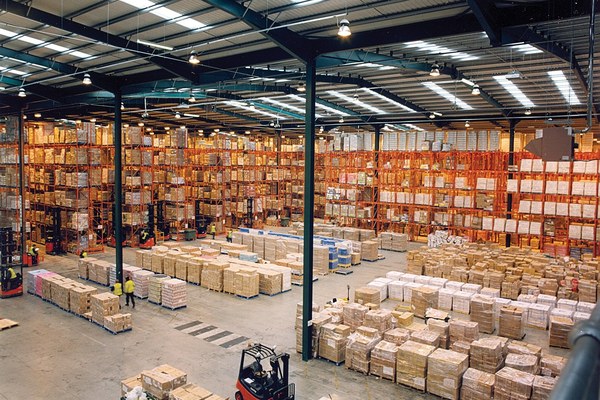
We ship into Africa, Southeast Asia and the Middle East, and the same story repeats. When a buyer had a bad year, it usually started with a brand chosen on price or spec and no local check on genuine parts.
Questions to ask before committing to a brand
- Are there authorized dealers or distributors in my country or neighboring countries?
- How quickly can critical wear parts (filters, brake components, clutch, driveshaft) be sourced locally?
- Are local mechanics familiar with this engine type (Weichai, Cummins, Yuchai, etc.)?
- Is there a regional technical support contact, or does every issue route back to China?
- What is the typical lead time for major components (gearboxes, engines) if local stock is unavailable?
How brand tier affects parts risk
| Brand tier | Parts risk level | Typical remedy |
|---|---|---|
| Tier 1 mainstream (HOWO, SHACMAN) | Lower in most export markets | Local dealer + direct sourcing from China |
| Tier 2 premium (SITRAK, Hongyan) | Higher in less-developed markets | Requires pre-planned import supply chain |
| Mixed-platform JV (Beiben, FAW J7) | Variable — depends on market | Confirm dealer network before purchase |
Genuine spare parts for most brands in this article sit in our warehouse. And the advice we give buyers never changes: check the local parts situation before you sign, not while the ship is already moving.
Frequently Asked Questions
Are Chinese trucks reliable enough for heavy-duty commercial use?
Chinese trucks from established brands such as HOWO, SHACMAN, and SITRAK are widely used in heavy-duty commercial fleets across Africa, the Middle East, and Southeast Asia[12]. Whether yours is reliable depends on maintenance, genuine parts and whether the spec matches the job. Our clients' experience is boringly consistent: maintained units keep working.
What is the difference between HOWO and SITRAK?
One group, two product lines, two buyer profiles. HOWO chases volume on price and parts availability. SITRAK uses MAN (Germany) technology and goes after buyers who want a better cab and drivetrain spec. Price alone won't rank them.
Which Chinese truck brand is best for Africa?
Our sales figures point the same way as everyone else's: HOWO and SHACMAN move in the biggest numbers, because parts are findable and mechanics know them. Beyond that, your country matters, your application matters, and whether dealers exist nearby matters most. Check parts network depth before choosing.
Is SHACMAN the same company as Sinotruk or HOWO?
No, and this one costs people money. Shaanxi Automobile Group builds SHACMAN. Sinotruk (CNHTC) builds HOWO. Different owners, different headquarters, different product lines. Assume nothing until you've checked.
Should I buy new or used Chinese trucks for my fleet?
Used units cost far less to enter, and where new truck pricing is prohibitive they're often the only route. The risks are predictable: hidden mechanical faults and non-genuine parts from whoever ran the truck before you. Get a qualified truck engineer to inspect before shipment — engine test, drivetrain assessment, the works. That inspection is part of our export service.
Conclusion
Anyone who answers "what are the top 10 Chinese truck brands" with a clean list is guessing. There isn't one, and understanding that is the single most valuable thing you can take into supplier shortlisting. The names that keep earning their place in real fleet decisions: Sinotruk HOWO, SHACMAN, Dongfeng, FAW, Foton, SITRAK, FAW J7, Hongyan, Beiben, CAMC. Which is right for you comes down to your use case, your budget, and above all which of them can keep your trucks running where you actually operate.
Caanass carries 200+ used trucks across most of these brands, and we've shipped to buyers in Africa, the Middle East, Southeast Asia and further out. If you're weighing brands for your next procurement, talk to our team. No obligation. We'll fit the brand, spec and price tier to your application and your market.
Image credits
- HOWO heavy truck operating in Ghana — Matti Blume, CC BY-SA 4.0, via Wikimedia Commons
- SITRAK T7H prime mover in Bangladesh — Shadman Samee, CC BY-SA 2.0, via Wikimedia Commons
- HOWO 6x6 tractor unit of the Royal Thai Army — Manrat Thiusthas, CC BY-SA 4.0, via Wikimedia Commons
- SITRAK four-axle dump truck — Retired electrician, CC0, via Wikimedia Commons
- Pallet racking in a spare parts warehouse — Axisadman, CC BY-SA 3.0, via Wikimedia Commons
- [1]"China National Heavy Duty Truck Group", https://en.wikipedia.org/wiki/China_National_Heavy_Duty_Truck_Group. China Association of Automobile Manufacturers (CAAM) annual export data and Sinotruk Group corporate reports document HOWO's export volumes across African, Middle Eastern, and Southeast Asian markets, supporting its characterization as a high-volume export brand. Evidence role: statistic; source type: institution. Supports: Sinotruk HOWO's position as a leading Chinese heavy truck exporter by volume. Scope note: Aggregate export rankings by brand are not always publicly disaggregated; figures may reflect total Sinotruk Group output rather than the HOWO sub-brand specifically. ↩
- [2]"How to manage the surge in counterfeit automotive parts in Southeast Asia", https://rouse.com/insights/news/2024/how-to-manage-the-surge-in-counterfeit-automotive-parts-in-southeast-asia. Research on counterfeit automotive components in sub-Saharan African and Southeast Asian markets documents the circulation of non-genuine parts for high-volume Chinese truck brands, with implications for vehicle safety and maintenance outcomes. Evidence role: general_support; source type: research. Supports: The prevalence of counterfeit spare parts for Chinese trucks in export markets. Scope note: Published research tends to address counterfeit automotive parts broadly rather than focusing specifically on HOWO or named Chinese truck brands; direct brand-specific documentation may be limited to industry trade publications. ↩
- [3]"Shaanxi Automobile Group", https://en.wikipedia.org/wiki/Shaanxi_Automobile_Group. Industry histories of Chinese heavy truck development document a technology cooperation agreement between Shaanxi Automobile Group and MAN Truck & Bus (Germany) that influenced SHACMAN cab and drivetrain architecture across multiple product generations. Evidence role: historical_context; source type: encyclopedia. Supports: The historical technology cooperation between Shaanxi Automobile Group and MAN Truck & Bus. Scope note: The precise terms, duration, and current status of this agreement are not always clearly distinguished in secondary sources; the relationship may have evolved or lapsed in more recent model generations. ↩
- [4]"Chinese automakers gain ground in South Africa as competitive pricing ...", https://www.reuters.com/business/autos-transportation/chinese-automakers-gain-ground-south-africa-competitive-pricing-spurs-demand-2026-05-15/. Trade data from East African national revenue authorities and regional automotive industry reports indicate significant import volumes of SHACMAN heavy trucks, particularly in mining, quarrying, and construction applications in markets such as Kenya, Tanzania, and Ethiopia. Evidence role: statistic; source type: institution. Supports: SHACMAN's market presence in East African mining and construction sectors. Scope note: Disaggregated brand-level import statistics are not consistently published by all East African governments; available data may reflect customs categories rather than brand-specific breakdowns. ↩
- [5]"Dongfeng Motor Group Company Limited", https://www.fitchratings.com/research/corporate-finance/dongfeng-motor-group-company-limited-02-08-2023. Dongfeng Motor Corporation, headquartered in Wuhan, is a state-owned enterprise under the supervision of the State-owned Assets Supervision and Administration Commission (SASAC) of China and is consistently ranked among the largest Chinese automotive groups by production volume. Evidence role: definition; source type: encyclopedia. Supports: Dongfeng Motor Corporation's status as a major state-owned Chinese vehicle manufacturer. Scope note: Production volume rankings among Chinese state-owned automakers fluctuate year to year; 'largest' should be understood as reflecting consistent top-tier status rather than a fixed ordinal position. ↩
- [6]"Dongfeng Motor Corporation", https://en.wikipedia.org/wiki/Dongfeng_Motor_Corporation. Dongfeng Motor Corporation has established multiple international joint ventures, including Dongfeng Nissan and the Renault-Nissan-Mitsubishi Alliance partnership, which have contributed engine and platform technology to segments of Dongfeng's commercial vehicle lineup. Evidence role: historical_context; source type: institution. Supports: Dongfeng Motor Corporation's joint venture relationships with Nissan and Renault and their influence on commercial vehicle platforms. Scope note: The specific heavy truck models produced under these JV platforms versus those using purely domestic Dongfeng engineering are not always clearly delineated in publicly available product documentation. ↩
- [7]"FAW Group", https://en.wikipedia.org/wiki/FAW_Group. FAW Group Corporation (First Automobile Works), founded in 1953 in Changchun, Jilin Province, is widely documented as one of China's earliest state-owned automobile manufacturers and among the largest by production volume, with a commercial vehicle division spanning light, medium, and heavy trucks. Evidence role: historical_context; source type: encyclopedia. Supports: FAW Group Corporation's status as one of China's oldest and largest vehicle manufacturers. Scope note: Rankings of 'largest' Chinese truck manufacturers vary depending on whether total vehicle output, heavy truck segment only, or revenue is used as the metric. ↩
- [8]"Foton Motor", https://en.wikipedia.org/wiki/Foton_Motor. Beiqi Foton Motor Co., Ltd. is listed on the Shenzhen Stock Exchange and has a mixed ownership structure; while it operates with significant state-linked shareholders through its parent Beijing Automotive Group, it is often distinguished from fully state-owned enterprises such as FAW Group or Dongfeng Motor Corporation. Evidence role: definition; source type: encyclopedia. Supports: Foton Motor's corporate ownership and classification relative to state-owned Chinese truck manufacturers. Scope note: The precise classification of Foton as 'private' versus 'mixed ownership' depends on the definitional framework applied; Chinese corporate ownership structures frequently involve both state and private capital. ↩
- [9]"Sinotruk forges partnership with Man", https://www.sinotruks.cn/m/info-5.html. MAN Truck & Bus and Sinotruk (CNHTC) established a strategic partnership and equity arrangement, documented in corporate filings and industry reports, under which MAN technology was licensed for use in the SITRAK platform, including the C7H cab series. Evidence role: historical_context; source type: institution. Supports: The joint venture between Sinotruk (CNHTC) and MAN Truck & Bus that underpins the SITRAK product line. Scope note: The specific technology transfer scope and any subsequent modifications made by Sinotruk to the licensed platform are not always detailed in publicly available sources. ↩
- [10]"SAIC Hongyan", https://en.wikipedia.org/wiki/SAIC_Hongyan. SAIC Iveco Hongyan Commercial Vehicle Co., Ltd. is a joint venture between SAIC Motor and CNH Industrial's Iveco brand, established to produce heavy commercial vehicles in China; corporate and industry sources confirm Iveco's platform contribution to the Hongyan product line. Evidence role: historical_context; source type: institution. Supports: The joint venture structure between SAIC and Iveco underlying Hongyan truck production. Scope note: The degree to which current Hongyan models retain original Iveco platform architecture versus domestically developed derivatives may vary by model year and is not always specified in secondary sources. ↩
- [11]"BeiBen Truck", https://en.wikipedia.org/wiki/BeiBen_Truck. Industry histories of Chinese heavy truck manufacturing record a technology licensing arrangement between Inner Mongolia North Benz Heavy Duty Truck Co. and Daimler AG (Mercedes-Benz), which shaped Beiben's early drivetrain and chassis architecture. Evidence role: historical_context; source type: encyclopedia. Supports: The historical technology licensing arrangement between Inner Mongolia North Benz (Beiben) and Mercedes-Benz/Daimler. Scope note: Sources differ on the current extent of Mercedes-Benz technical influence in contemporary Beiben models, as the licensing relationship predates recent product generations. ↩
- [12]"Why China tripled its heavy truck shipments to Central Asia", https://www.lowyinstitute.org/the-interpreter/why-china-tripled-its-heavy-truck-shipments-central-asia-unravelling-influence. China's General Administration of Customs and CAAM export statistics document substantial annual volumes of heavy commercial vehicles exported to sub-Saharan Africa, the Middle East, and Southeast Asia, with Chinese brands accounting for a growing share of new truck registrations in these regions. Evidence role: statistic; source type: government. Supports: The scale of Chinese heavy truck exports to African, Middle Eastern, and Southeast Asian markets. Scope note: Aggregate export figures do not always distinguish between heavy trucks and other commercial vehicles, and market share data within individual destination countries varies in availability and reliability. ↩