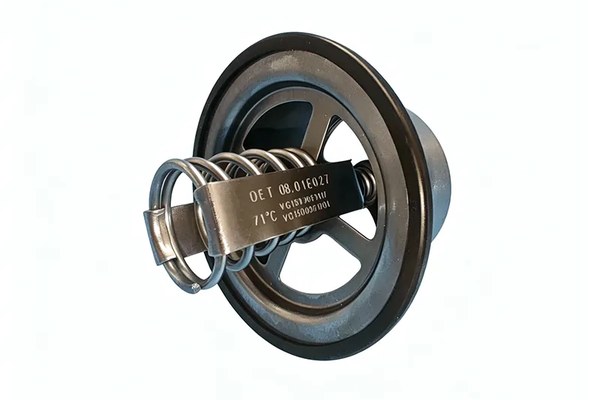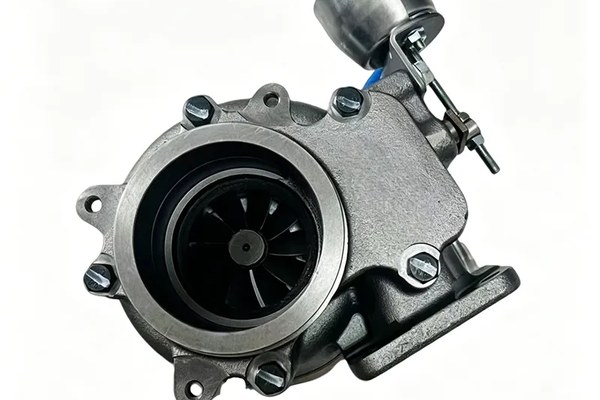
Three quotes land in your inbox. Same OE number. Same truck model. The prices sit 30, maybe 40 percent apart, and you have to pick one.
If you have been buying Chinese truck parts for more than a minute, you know how this usually ends. The cheap one looks like a win on the spreadsheet. Six months later you are on the phone with your workshop foreman explaining why the unit is sitting dead in the yard, and the replacement is somewhere on a container ship crossing the Indian Ocean.
Not a hypothetical. We take these calls most weeks. And counterfeit and substandard aftermarket parts are a documented problem in this trade, not an occasional accident[1].
We do not get paid to find the cheapest quote. We get paid to find the right one. Sounds similar. It is not.
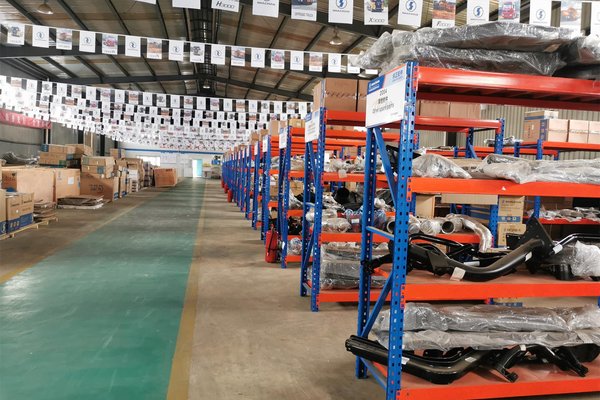
When a buyer sends us an RFQ with a competitor's quote stapled to it, the first thing we do is not look at the price. It is check whether we are even talking about the same physical part. Because if we are not, the price gap is noise, and everything underneath it is wasted time.
Does an OE Number Match Mean the Quotes Are Comparable?
No. A matched OE number is not the finish line. It is barely the starting gate.
An OE number is a reference code, not a blueprint. The same code can point at physically different parts depending on the truck variant, the model year, or the export market the truck was built for. None of that shows up in the number itself. Three suppliers can all quote VG1047080011 and you can end up with three different fuel-water separators on your dock. We have seen it happen.
What a matching OE actually tells you is narrower than it looks:
- Everyone is working inside the same reference family.
- The supplier can find the number in some catalogue.
- That is roughly it.
It does not tell you the part clears your tolerances. It does not tell you it came off the same line as the one that failed on your truck last week. And it definitely does not tell you it will bolt onto your chassis without someone reaching for a grinder.
Fitment gets checked separately. Truck model, chassis number, production year, export spec. Those are the inputs that move the needle. The OE number sits on top of them. It does not replace them.
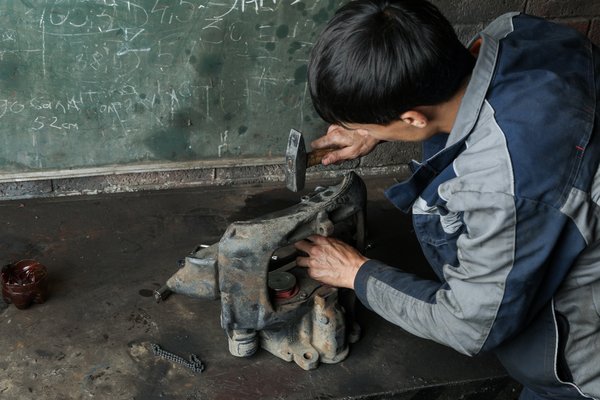
Why the Same OE Number Can Describe Different Physical Parts
This is the mismatch we untangle most often. A buyer forwards a quote, points at the OE number, asks why ours is higher. We dig in. In most cases the two suppliers were not quoting the same object at all.
Production year creeps in. Truck makers do not freeze a spec sheet for the life of a model. They revise mid-run, and OEMs routinely retire old part numbers and issue supersessions when dimensions or material specifications change. A HOWO that rolled off the line in 2018 and one from 2023 can share an old OE code while running dimensionally different components. Catalogues lag behind that reality.
Export markets split the spec. A HOWO or SHACMAN headed for an African mining site often carries a different engine and chassis setup than the same badge sold in Bangkok or Dubai. Chinese commercial vehicle exports are concentrated exactly in those markets, which is why the variants circulate so widely[2]. The OE travels with the badge. The part underneath does not always follow.
Cross-reference databases disagree. Every aftermarket shop works off its own cross-reference list. One supplier's database might map that VG number to a slightly different housing than another's. Both can be internally consistent. That does not help you on the loading dock.
Superseded numbers linger. If a supplier is still quoting a retired code, there is a real chance they are sourcing an older spec that will not fit trucks built in the last few years.
How to Actually Check, Not Just Ask
This is the part most buying guides skip. "Verify the part" is not advice. Here is what verification looks like in practice.
Ask for the parts-book position, not just the number. Chinese OEMs publish illustrated parts catalogues. Every part sits at a position number inside an assembly diagram. Two suppliers can quote the same OE against different position numbers — which means they are quoting different parts. Get the diagram and the position before you get the price.
Ask what the number supersedes. "What did this replace, and what replaced it?" A supplier with a live catalogue feed answers in one sentence. A supplier reading a decade-old PDF changes the subject.
Ask for a photo of the actual unit, label included. Not the catalogue render. The carton, the label, the casting marks, the connector orientation. Photos catch the things part numbers structurally cannot describe: bracket clocking, hose bends, hole patterns, plug pinouts.
Treat every cross-reference as a hypothesis. A cross-ref tells you two numbers are claimed to be equivalent. It is a lead, not a conclusion. Confirm it against the OEM diagram, then against a physical measurement.
Check the packaging properly. Holograms, QR codes, laser-etched numbers. Scan the QR — if it resolves to a generic landing page instead of the brand's own domain, that tells you something. For higher-value orders, a pre-shipment inspection with a dimensional report from SGS, BV or Intertek costs a fraction of one failed installation.
Buy one before you buy three hundred. Measure it against the failed part. Key dimensions, thread pitch, material grade, and for wear parts, hardness. A single unit is cheap. A container of the wrong unit is not.
What to Send Instead of Just the OE
Buyers who get quotes they can trust usually send a small packet, not a bare number.
Truck model and variant — HOWO 371, SHACMAN X3000, that level of specificity. It locks in the production spec.
The VIN. Under ISO 3779[3] it encodes manufacturer, model year, plant and often market, so it resolves year and export spec in one string. On Chinese trucks the chassis number and VIN are usually the same plate, but confirm which one the supplier's catalogue is indexed against — some are organised by chassis prefix, not VIN.
Engine or gearbox code, when the part mates to the powertrain. Gearbox-mounted components are a classic case where the OE number is right and the part is still wrong.
A photo of the old part. A bracket, a hose bend, a connector. Half the fitment disputes we resolve start with a phone photo held next to what is on the shelf.
The grade you want, stated outright. More on that below.
How Do Quality Grades Affect Quote Comparability?
Say you have confirmed everyone is quoting the same physical part. Good. You are still not out of the woods.
Grade wrecks price comparisons more than any other variable. A lower price is not automatically a bargain. It may just be a cheaper part wearing the same OE on its box.
OEM-spec, branded aftermarket, economy grade — all three can carry identical OE numbers. The spread between the top and bottom tier is routinely double, sometimes more. Pick the cheap one without asking which tier you are buying, and you have not saved money. You have swapped the product and called it a saving.
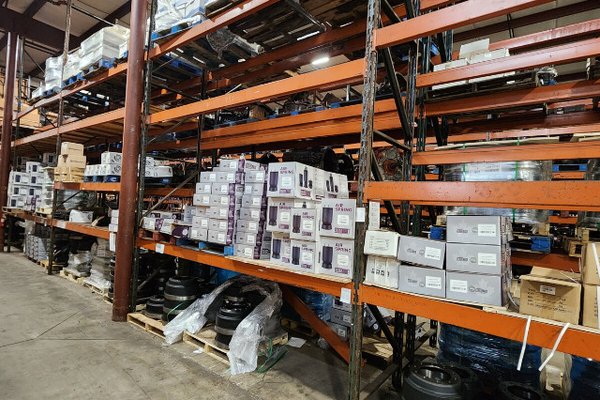
The Tiers You Will Actually Run Into
Not everyone uses the same names — and if you are buying through Chinese suppliers, you will hear the Chinese ones constantly. Here is how the vocabulary maps.
| Tier | What you will hear it called | Indicative price (OEM = 100) | Where it makes sense | The quote must state |
|---|---|---|---|---|
| OEM / OES | 原厂件 — genuine, or Tier-1 line supplying the OEM factory | 100 | Mining, long-haul, safety-critical, anything where downtime dominates cost | Brand, factory, batch or lot number, warranty terms |
| Branded aftermarket | 品牌件 — established aftermarket producer with traceable QC | 55–80 | Distributor mixed inventory, fast movers, mid-criticality | Brand, production standard, warranty terms |
| Economy / unbranded | 副厂件 — no-name or house-brand; 高仿 for deliberate copies | 25–50 | Slow movers, low-criticality consumables, price-sensitive retail | Explicit "non-genuine" marking, material spec |
| Used / take-off | 拆车件 — pulled from scrapped trucks | 20–40 | Breakdown patches, obsolete parts, non-structural | Provenance, mileage, return policy |
Price indices are indicative and move by component category; treat them as a shape, not a quote.
The distinction that matters most in practice is OEM vs OES. Genuine OEM is the manufacturer's own branded part. OES is the same Tier-1 supplier building to the same drawing and selling under its own name — often identical inside the box, meaningfully cheaper, and priced differently again by the time it reaches your market. Suppliers blur these two constantly. Both can be good buys. They are not the same claim.
If you run mining trucks or long-haul units where a breakdown costs a day's revenue, spec the top tier. The premium hurts on the PO. The downtime hurts more.
If you are a distributor building mixed inventory, branded aftermarket is usually where the smart money sits. You can move volume at a price the market accepts, and customers do not come back angry.
Economy grade has its place. Price-sensitive retail, slow movers, low-criticality consumables — rational calls. The problem is not the tier. The problem is picking it without realising that is what you picked. That is how a brake component ends up on a truck for forty dollars less than it should.
Why Suppliers Do Not Always Put Grade on the Quote
This is the pattern in almost every incoming RFQ we see. The price is there. The OE is there. The grade is not.
Sometimes the supplier assumes you know their tier. Sometimes their sourcing is flexible and they will build to whatever grade you ask for. Either way, you cannot line three quotes up side by side until you know which shelf each one came off.
Ask directly, in this order:
- What brand is this? A brand name is a traceable claim. "Our own brand" is not.
- What production standard? ISO 9001 is process. It says nothing about whether this part meets the OEM drawing. Ask for the drawing or the spec sheet.
- Is this OEM-equivalent, branded aftermarket, or economy? Get one of the three words.
- What is the warranty, and who honours it? Supplier warranty and manufacturer warranty are different instruments.
A supplier who will not answer those four is not giving you enough information to buy from. That is the whole test.
Does Application Context Change What a "Good" Quote Looks Like?
Here is where experienced buyers and first-timers part ways. There is no single right grade. There is the right grade for your trucks, in your operating environment, with your risk on the line.
Two buyers, identical OE number. One runs a mining fleet in southern Africa — trucks under constant load, nearest competent mechanic three hours away, a single failure capable of costing days of production. The other runs a distribution warehouse in Southeast Asia, stocking a broad catalogue for end users who want the lowest price that works.
Those two buyers should not be buying the same grade. Full stop.

Three Questions Before You Read the Price
Do not look at the number on the quotation until you have answered these.
What does early failure actually cost? Downtime, emergency labour, rush freight to get a replacement to site. If that total dwarfs the part price, your quality floor goes up and there is nothing to debate.
What is this part's job in the inventory? A filter you reorder every month tolerates a cheaper tier far more easily than a structural bracket or anything safety-related. Fast movers and slow movers do not buy the same way.
Who eats the failure cost? Product liability rules in most major markets make importers and distributors answerable when an overseas manufacturer's part fails downstream — the EU's current regime, Directive (EU) 2024/2853, replaced the 1985 directive and extends explicitly to importers, with national transposition due by December 2026[4]. If you are a distributor selling to end users, you own the returns and the reputation. If you are a fleet running your own workshop, you absorb the downtime internally. Two different risk profiles. They should not default to the same tier.
What the Cheaper Quote Actually Costs — A Worked Example
Composite from our RFQ desk; figures rounded and details changed.
A distributor in West Africa ordered 300 clutch pressure plate assemblies for HOWO A7 tractors. Two quotes, same OE number:
- Supplier A, OEM-equivalent: $86/unit — $25,800 total
- Supplier B, "same spec, same OE": $61/unit — $18,300 total
Supplier B saves $7,500 on the PO. The buyer takes it.
Over the following nine months, 41 units came back or failed in service — release bearing noise, then uneven wear on the friction disc. Each failure cost the distributor roughly:
- Workshop labour: $70
- Truck downtime, 2 days at ~$180/day: $360
- Air freight for a single replacement unit: $45
That is $475 per failure, or about $19,500 across the 41 units — against $7,500 saved. The part was also not the same part: the friction material compound and the diaphragm spring rate differed from the OEM drawing. The box carried the same OE number.
Net position after nine months: roughly $12,000 worse off, before counting the two accounts that stopped ordering.
The point is not that cheap parts fail. It is that the failure cost never appears on the quotation, so the comparison you ran was never the comparison that mattered.
The Number You Should Be Comparing
Wrong fitment means a return, a replacement on an emergency timeline, freight in both directions, and a truck sitting dead. An undertolerance part means unplanned labour and accelerated wear on everything around it. A spec mismatch in the fluid system — seals, gaskets, filters — can cascade into secondary damage costing several times the original part price.
None of that appears on the quotation sheet. The number to compare is not unit price in column B. It is landed cost plus reliability risk. Those are the two that reach your P&L.
What a Quote Looks Like When It Survives Comparison
Everything above is a test you can run on a supplier's document. So here is the document we think you should be asking for — and the one we issue.
A comparable quote carries eight fields. If any are missing, the price is not a price yet.
- OE number, plus the parts-book position it was checked against.
- Tier — OEM, OES, branded aftermarket, economy. Named, not implied.
- Brand and factory, where applicable.
- Material or production standard the part was built to.
- Batch or lot reference, for traceability.
- Warranty terms, and who honours them.
- MOQ and lead time, stated separately from price.
- Incoterm and HS code, so landed cost is calculable without a second email.
Most quotes you receive will carry two of those eight. That gap is the actual reason three prices can sit 40 percent apart and none of them be comparable.
When we work an RFQ at Caanass, we cross-check the truck model against chassis data, pull the parts-book position, hold any photo you send next to the catalogue image, and put the tier on the quote in writing. Not because it is good manners — because a quote that cannot be compared line by line is a quote you cannot defend to your own customer.
Quick Questions
Can two suppliers quoting the same OE number always be compared on price? No. Not until tier and fitment context are pinned down. Same OE can mean different tiers, different physical specs, different vehicle variants. Until those line up, the gap is noise — it could be margin, it could be a different product, it could be both.
Which grade should I buy? Whichever one your failure cost justifies. High-downtime, high-load operations want a higher floor. Low-criticality consumables in a price-sensitive market can live with economy grade. A supplier who answers this by defaulting to the fattest margin is answering a different question.
What is the single fastest way to spot a bad quote? No tier. If the document says the OE number and a price and nothing else, you cannot compare it to anything — including another quote from the same supplier.
Is OEM always the safest pick? Not automatically. It carries the highest quality floor and it is the right call for demanding environments and safety-critical parts. For cheap consumables in a competitive retail market, it is money set on fire. Application drives the decision, not a hierarchy.
Where This Leaves You
Comparing Chinese truck parts quotations is not really a price exercise. It is a parts-identification exercise with risk attached.
OE match gets you in the door. Fitment context and vehicle variant keep you honest. Tier is the variable that decides whether two price tags are describing the same product at all. And the right tier depends on how your trucks actually work — not on a universal chart.
The rule worth keeping: before you read the price, confirm you are comparing equivalent parts. A lower number on a different product is not a saving. It is an undisclosed substitution, and the bill arrives later. With interest.
If you are working through an RFQ for HOWO, SHACMAN, FAW, FOTON or DONGFENG parts and want a second set of eyes on the OE numbers, the tier, or a mixed order, send the list to grand@caanass.com or message us on WhatsApp at +86 199 2469 8529. We will walk the RFQ with you and tell you what tier each line item actually is — including when the honest answer is cheaper than what you were quoted.
- [1]U.S. Department of Commerce, International Trade Administration, ["Automotive Anti-Counterfeit Resources,"](https://www.trade.gov/about-us/automotive-anti-counterfeit-resources) trade.gov. The ITA documents counterfeit automotive components as a recurring supply-chain risk, including safety-critical parts entering markets through informal channels. ↩
- [2]U.S. International Trade Commission, ["China's Growing Role in U.S. Automotive Supply Chains,"](https://www.usitc.gov/publications/332/working_papers/id-19-060_chinese_auto_parts_final_080519-compliant_0.pdf) Working Paper ID-19-060, 2019. China is among the largest exporters of commercial vehicle components, with exports concentrated in markets where Chinese truck brands have a large installed base — sub-Saharan Africa, the Middle East and Southeast Asia. ↩
- [3]ISO 3779, *Road vehicles — Vehicle identification number (VIN) content and structure*. The VIN encodes manufacturer, vehicle attributes, model year and assembly plant, from which production year and intended market can usually be inferred. ↩
- [4]Directive (EU) 2024/2853 on liability for defective products, which repealed and replaced Directive 85/374/EEC and expressly covers importers; member states are required to transpose it into national law by 9 December 2026. Liability regimes in Africa, Southeast Asia and the Middle East vary considerably and are often less codified — local counsel is the only reliable guide. ↩