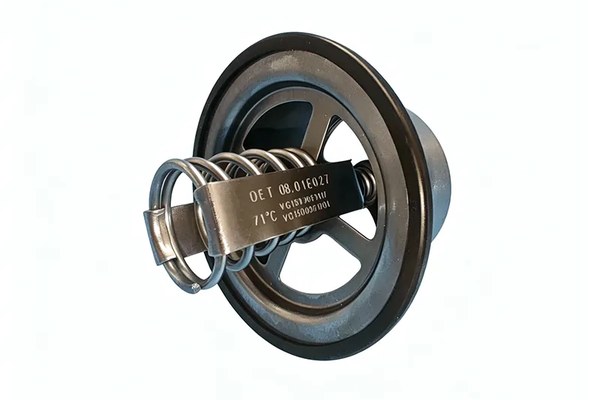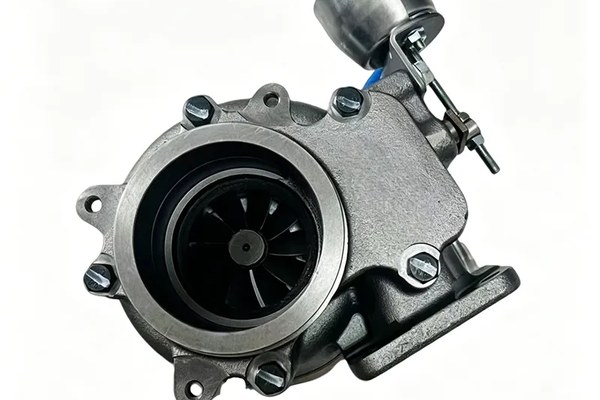
Incoming inspection for Chinese truck parts is one of the most skipped steps in the distributor's workflow — and one of the most expensive to skip. By the time a wrong part surfaces at the customer's workshop, the boxes are broken down, the photos are gone, and the evidence window has closed. Without documentation, a valid complaint becomes an unwinnable argument.
When a container of HOWO, SHACMAN, FAW, FOTON, or DONGFENG parts arrives at your dock, incoming inspection is the only moment you control the evidence. A distributor's checklist for incoming inspection should cover five areas: packaging condition, SKU-level quantity and OE number verification, component-level physical checks (tiered by risk), photo documentation, and filing. Each step must happen before parts enter the warehouse.

Most distributors know they should inspect incoming shipments. The gap isn't awareness — it's structure. Without a checklist that specifies what to check, in what order, and at which tier of scrutiny, the inspection collapses into a box count. The sections below break down each stage so your team can apply it at the dock, not in a QC lab.
Why Does Incoming Inspection Matter More Than Most Distributors Realize?
Receiving a container feels like the finish line. The order is confirmed, the invoice matches, and the goods are physically in your hands. It is easy to treat the unboxing as a formality. That assumption is where most losses begin.
The gap between shipment confirmation and physical receipt is where errors hide. Dimension mismatches, wrong OE numbers, and incorrect vehicle models are almost never caught at invoice review — they surface at installation, when your customer is already waiting and your documentation leverage is already gone.

In claims we've processed at Caanass, the most common pattern is straightforward: a distributor contacts us weeks after receipt with a complaint about a wrong part or a damaged component. The first question we ask is always about documentation — photos at unboxing, packaging condition records, SKU-level count sheets. More often than not, those records don't exist. Without them, neither side can establish whether the issue originated at shipment or at the warehouse. The claim stalls, and the distributor absorbs the loss.
The Real Cost Is Rarely Just the Part
The financial logic of a defective part looks simple on the surface: one part, one refund or replacement. In practice, the cost compounds:
- Customer downtime. A fleet customer waiting on a brake chamber or injector isn't just inconvenienced — their truck is off the road.
- Reputation damage. The distributor who supplied the wrong part carries the relationship risk, regardless of where the error originated.
- Double payment. The distributor often absorbs the cost of the replacement part while the claim on the original is unresolved.
- Lost claim leverage. Once parts are shelved or installed without documentation, suppliers have no obligation to accept liability.
Where the Evidence Window Opens and Closes
The evidence window is narrow. It opens when the first box comes off the truck and closes the moment parts enter the warehouse without a record. Every step in this checklist is designed to capture what can be verified within that window, using tools your receiving team already has: a phone camera, a scale, a tape measure, and a printed copy of the packing list and purchase order.
This checklist does not replace specialist inspection. It does not catch every internal defect. What it does is create a defensible record that makes legitimate claims actionable and forces visible errors to the surface before they become warehouse inventory problems.
Step 1: Packaging Condition — What Should You Check Before Opening a Single Box?
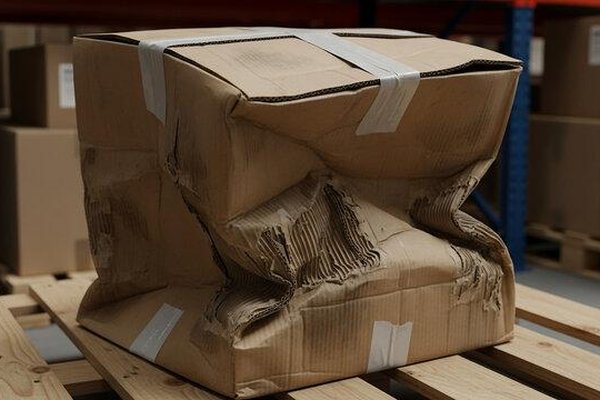
Packaging arrives looking intact far more often than the contents justify. Intact outer boxes can conceal moisture damage, impact damage, or repackaged returns.[1] If you skip the outer inspection, you lose the ability to attribute those problems to transit.
Before opening any box, photograph and log the condition of every carton, pallet, and bundle. Record visible damage to outer packaging, moisture staining, crushed corners, and broken seals. This step takes ten minutes per pallet and creates the baseline for every downstream claim.
What to Look For at the Outer-Packaging Stage
Go through the following systematically, pallet by pallet:
- Carton integrity. Crushed corners, torn seams, or puncture marks suggest impact during loading or transit.
- Moisture indicators. Water staining, swelling, or soft spots on cardboard can mean internal rust or degraded gaskets — particularly relevant for engine and brake components.[2]
- Seal condition. Original factory tape vs. re-taped boxes. Re-taped cartons aren't automatically a problem, but they warrant closer component-level inspection.
- Label legibility. Part numbers, OE numbers, and quantity labels must be readable. Illegible or missing labels flag a picking or repacking issue at origin.
- Pallet completeness. Count cartons against the packing list at pallet level before moving anything to the warehouse floor.
A Note on Packaging vs. Component Condition
One of the most consistent mistakes we see in claims handling is treating a passed packaging check as a passed parts check. These are two distinct steps. Brake chambers, hoses, pistons, and gaskets regularly pass a packaging scan while carrying internal defects or dimensional deviations.[3] The packaging check establishes condition at receipt. The component-level check, covered in Step 3, is where functional risk is assessed.
Do not merge them into a single walkthrough.
Step 2: SKU-Level Quantity and OE Number Verification — Why Isn't Invoice Matching Enough?
Counting boxes against an invoice is not the same as verifying that the right parts are in those boxes. Invoice quantities match shipment quantities at the carton level. They do not catch a carton of HOWO brake parts that was substituted for a SHACMAN variant with a different OE number.
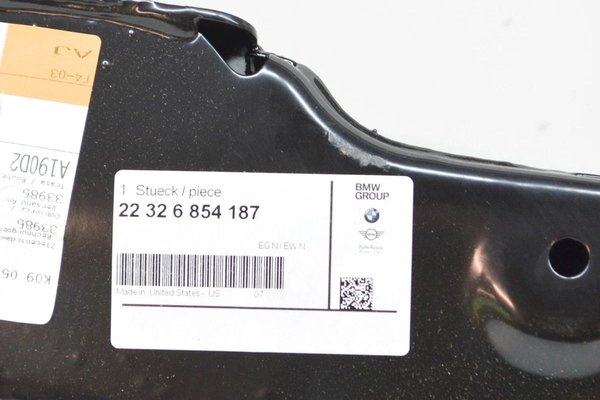
SKU-level verification means opening every carton and cross-referencing the part number on the physical item or its inner packaging against the OE number on your purchase order — line by line. This step must happen at unboxing, not at order placement. OE number re-verification at receipt is a separate, mandatory step.
Why OE Number Re-Verification at Receipt Is Non-Negotiable
OE number verification at the order stage confirms what was ordered. It does not confirm what was shipped. In practice, substitutions happen at the warehouse level — a supplier picks a visually similar part from an adjacent bin, or a packing team mis-scans a barcode.[4] The substitution often goes undetected because the outer carton label is correct.
The only reliable catch point is physical inspection at receipt:
- Open the carton.
- Read the OE number on the inner packaging or the part itself — not just the outer carton label.
- Cross-reference against the PO line item.
- Record any discrepancy immediately, with a photo of the part number and the PO line side by side.
SKU Verification Checklist
| Check Item | Method | Record Format |
|---|---|---|
| Carton quantity vs. packing list | Count and compare | Count sheet by SKU |
| Outer carton label OE number | Visual, compare to PO | Photo + written log |
| Inner packaging OE number | Open carton, read label | Photo + written log |
| Part marking (if present) | Physical inspection | Photo |
| Vehicle model compatibility | Cross-reference fitment list | Written note on count sheet |
The Model Mismatch Problem
Vehicle model compatibility is distinct from OE number accuracy. We've seen cases where the OE number on the part matches the PO, but the part was produced for a different engine variant or chassis generation. For HOWO, SHACMAN, FAW, and similar platforms, small variant differences — engine displacement, year range, cab type — can produce a part that looks correct but doesn't install correctly.[5]
If your purchase order specifies vehicle model alongside OE number, verify both at this step. If it doesn't, that's a gap to close at the ordering stage before the next container ships.
Step 3: Component-Level Physical Checks — How Deep Should Your Inspection Go?
Not all parts carry the same risk if something is wrong. A filter that fails performs poorly but rarely creates immediate safety risk. A brake chamber with a hairline crack or a dimensional deviation on a piston is a different category of problem entirely.[6] Your inspection depth must reflect that difference.
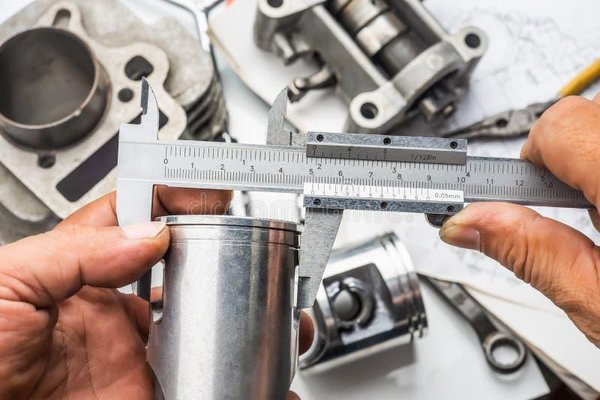
Component-level checks should be tiered by risk. Tier 1 (safety-critical) parts — brake components, engine parts, steering components — require a hands-on physical check of dimensions, finish, and mechanical condition. Tier 2 (functional) and Tier 3 (consumable) parts require a lighter check focused on visible damage and packaging integrity.
Risk Tier Framework
Use this framework to allocate inspection time at the dock:
| Risk Tier | Part Categories | Inspection Depth |
|---|---|---|
| Tier 1 — Safety-Critical | Brake chambers, brake hoses, wheel cylinders, master cylinders, injectors, pistons, gaskets, steering components | Full hands-on physical check: dimensions, surface condition, mechanical integrity, thread condition |
| Tier 2 — Functional | Clutch components, suspension parts, water pumps, alternators, electrical components | Visual and tactile check: finish, connectors, visible cracks, label accuracy |
| Tier 3 — Consumable / Low-Risk | Filters, belts, body panels, cabin hardware, standard fasteners | Packaging integrity, quantity count, label check |
Tier 1 Inspection: What to Check on Brake and Engine Parts
For every Tier 1 item, your team should work through the following:
Brake components (chambers, hoses, cylinders):
- Check for cracks, particularly at weld seams and port connections on brake chambers.[7]
- Inspect hose ends for seating integrity — a hose that looks correct at the outer body can have a loose end fitting.
- Verify thread condition on port connections: crossed or damaged threads will not seal correctly.
- Check diaphragm condition in brake chambers if the design allows visual access — a brittle or folded diaphragm is a defect.
- Confirm part markings match the OE number verified in Step 2.
Engine components (pistons, gaskets, injectors):
- Measure critical dimensions where possible — ring groove width on pistons, gasket bore diameter. A tape measure and digital calipers are sufficient for a first-pass check.
- Inspect surface finish for tooling marks, casting porosity, or surface inclusions on pistons.[8]
- Check injector tip condition for physical damage or contamination.
- Inspect gaskets for surface flatness, torn edges, or compression damage from improper storage.
Important: This checklist is designed for what a receiving team can verify without specialist equipment. It is not a substitute for professional engineering inspection or testing for critical applications. Advise your fleet customers to have safety-critical parts inspected by a qualified mechanic before installation.
Tier 2 and Tier 3: Faster, But Not Optional
Tier 2 and Tier 3 items move through faster, but the check still happens:
- Electrical components: Test visible connectors for pin integrity. Check harnesses for insulation damage.
- Suspension and clutch parts: Inspect for surface rust, deformation, or finish defects that suggest improper storage.
- Filters: Check end caps for seating integrity. A filter with a deformed end cap will not seal.
- Body panels: Check for transport damage — dents, scratches, bent mounting points.
Step 4: Photo Documentation — What Exactly Needs to Be Photographed?
Documentation is not a bureaucratic step added to the end of an inspection. It is the foundation of any claim. Without time-stamped photos tied to a PO number and container reference, a complaint is an assertion. With them, it becomes evidence.
Photo documentation for incoming inspection should cover: the container or delivery vehicle on arrival, outer packaging condition before opening, OE number on outer carton label, OE number on inner packaging or part marking, any visible defect or discrepancy, and quantity count sheets. Every photo must be time-stamped and filed under the PO number.

The Documentation Shot List
Work through this list for every shipment:
At arrival (before unloading):
- Container number or delivery vehicle
- Seal condition (intact or broken)
- Overall pallet/carton condition as loaded
During unboxing (Tier 1 parts get individual shots; Tier 2 and 3 can be batched by SKU):
- Outer carton condition, top and sides
- Outer carton OE number label — close-up, legible
- Inner packaging with OE number — close-up, legible
- Part marking where visible
- Any visible defect: crack, corrosion, deformation, dimensional issue
For discrepancies:
- Part OE number next to PO printout showing ordered OE number
- Defect close-up with a reference object (ruler, pen) for scale
- Quantity count sheet with handwritten count and date
How to File Documentation So It's Usable
A photo buried in a phone gallery is worth nothing at claim time. Build a simple filing system your team will actually use:
- Folder name = PO number + arrival date (e.g.,
PO-2024-0441_20250610) - Subfolders:
Arrival,Packaging,OE-Verification,Defects - Upload to a shared drive or cloud folder the same day
- Attach a summary sheet: container reference, SKU count, any flagged discrepancies, inspector name
A simple spreadsheet log per shipment — one row per SKU, columns for quantity received, quantity matched, OE verified, defects noted, photos filed — takes thirty minutes to complete and resolves disputes in days rather than weeks.[9]
Frequently Asked Questions
Does incoming inspection apply to every shipment, or only the first order from a new supplier?
Incoming inspection applies to every shipment, regardless of supplier history. Product quality and picking accuracy can vary between production batches and warehouse teams. A supplier with a strong track record on ten shipments can still produce a problem on the eleventh. The checklist is a protection mechanism, not a signal of distrust.
What should I do if I find a discrepancy during unboxing?
Stop. Do not move the affected cartons to the warehouse. Photograph the discrepancy immediately alongside the PO documentation. Record the quantity and SKU affected. Contact your supplier with the photos and PO reference before the goods leave the inspection area. Moving parts to the warehouse before filing a report weakens your claim position significantly.
How do I prioritize inspection when a container has hundreds of SKUs?
Apply the risk tier framework. Tier 1 safety-critical items — brake and engine components — receive full hands-on inspection first. Tier 2 functional parts receive a visual check. Tier 3 consumables receive a quantity and packaging check. If your team is under time pressure, concentrate effort where the cost of a missed defect is highest.
Can I rely on the supplier's pre-shipment inspection instead of doing my own?
Pre-shipment inspections at origin are useful, but they do not replace incoming inspection at your dock. Transit damage, loading errors, and warehouse substitutions all happen after the supplier's inspection is complete.[10] Your incoming check is the only point where you can verify what physically arrived in your location.
What OE number resources should I use to verify compatibility?
Use the packing list and purchase order as your primary reference at the receiving dock. For deeper verification, cross-reference against the truck chassis number, the original parts catalog for the vehicle model, or consult your supplier's parts-matching team before the shipment arrives. At Caanass, we support OE number and vehicle model matching as part of the ordering process — the goal is to resolve fitment questions before the container ships, not after.
Conclusion
Incoming inspection for Chinese truck parts is not about finding every possible defect — it's about protecting your right to claim when something is wrong. The checklist in this article covers the five steps that matter most at the receiving dock: packaging condition, SKU-level OE number re-verification, tiered component checks, structured photo documentation, and organized filing. Each step is executable without specialist equipment.
The distributors who consistently resolve claims successfully are not the ones with the most sophisticated QC systems. They're the ones who photograph everything, check OE numbers at unboxing, and file records by PO number before the parts touch a shelf. That discipline is available to any operation, at any volume.
If you're sourcing HOWO, SHACMAN, FAW, FOTON, or DONGFENG parts and want to discuss how we support accurate parts matching, pre-shipment documentation, or handling a specific incoming claim, contact Caanass directly. Email us at grand@caanass.com or reach our team on WhatsApp at +86 19924698529.
- [1]""Load Securement and Packaging Methods to Reduce Risk of Damage ...", https://repository.rit.edu/japr/vol6/iss1/6/. Packaging performance standards bodies such as ISTA (International Safe Transit Association) document that a significant proportion of transit-related product damage occurs without corresponding visible damage to outer packaging, underscoring the need for internal inspection protocols. Evidence role: general_support; source type: institution. Supports: That outer packaging condition is an unreliable proxy for internal product condition, and that transit damage frequently occurs without visible external indicators.. Scope note: Published standards address packaging design and testing rather than distributor receiving workflows specifically; applicability to automotive parts distribution is contextual. ↩
- [2]"Auto Parts Storage Best Practices", https://fdrwarehouse.com/best-practices-for-auto-parts-storage/. Materials science literature documents that relative humidity above approximately 60% accelerates electrochemical corrosion in ferrous metals and promotes hydrolytic degradation and swelling in rubber elastomers used in automotive gaskets and seals; moisture-damaged outer packaging is therefore a valid indicator of potential internal component degradation; see corrosion engineering references and rubber materials aging studies. Evidence role: mechanism; source type: paper. Supports: That moisture exposure during storage and transit causes accelerated corrosion in ferrous automotive components and accelerated degradation in rubber sealing components such as gaskets.. Scope note: The correlation between outer packaging moisture damage and internal component condition depends on packaging barrier properties and exposure duration; damaged packaging is an indicator rather than proof of internal degradation. ↩
- [3]"5.2.2 Vehicle Inspections - CSA - Department of Transportation", https://csa.fmcsa.dot.gov/safetyplanner/MyFiles/SubSections.aspx?ch=22&sec=65&sub=148. Quality engineering literature on automotive component inspection establishes that internal casting porosity, dimensional deviations, and subsurface material defects in brake and engine components require measurement-based or non-destructive testing methods to detect, as visual inspection of packaging and external surfaces is insufficient; see ISO 9001 quality management standards and automotive supplier quality manuals. Evidence role: mechanism; source type: paper. Supports: That internal defects and dimensional deviations in safety-critical automotive components are not reliably detectable through visual or packaging-level inspection alone.. Scope note: This evidence addresses inspection methodology in manufacturing contexts; its direct applicability to distributor-level receiving inspection is inferential rather than prescriptive. ↩
- [4]"Part 2: How to Calculate Error Rates", https://www.primerobotics.com/essential-calculations-for-warehouse-operations-part-2-how-to-calculate-error-rates/. Supply chain management literature reports warehouse picking error rates typically ranging from 0.1% to 1% of order lines, with mis-picks and bin substitutions identified as leading causes; see warehouse operations research published by logistics and industrial engineering journals. Evidence role: statistic; source type: research. Supports: Warehouse order picking error rates and the frequency of incorrect item substitution in distribution center operations.. Scope note: Published error rates are drawn from general distribution center studies and may not reflect the specific conditions of Chinese automotive parts export warehouses. ↩
- [5]"Howo Truck Model and Howo Truck Models", https://sinotruk.international/news/howo-truck-model-and-howo-truck-models/. Manufacturer technical documentation for HOWO (Sinotruk) and SHACMAN (Shaanxi Automobile) confirms that each platform encompasses multiple engine variants, chassis generations, and cab configurations, with parts catalogues specifying compatibility by chassis number and production year rather than brand name alone. Evidence role: general_support; source type: other. Supports: That major Chinese heavy truck brands produce multiple platform variants with differing specifications that affect parts interchangeability.. Scope note: Manufacturer parts catalogues are the authoritative source but are not always publicly accessible; this citation relies on the general principle of platform variant complexity rather than a single citable document. ↩
- [6]"Federal Motor Vehicle Safety Standard: FMVSS No. 135", https://www.regulations.gov/document/NHTSA-2026-0728-0001. United Nations Economic Commission for Europe (UNECE) regulations on vehicle braking systems (e.g., Regulation No. 13 on heavy vehicle braking) classify brake components as safety-critical systems subject to type approval and performance standards, providing a regulatory basis for treating brake parts as a higher inspection priority than consumable components. Evidence role: expert_consensus; source type: government. Supports: That brake system components are classified as safety-critical in vehicle regulatory frameworks, warranting more rigorous inspection than consumable parts such as filters.. Scope note: UNECE regulations govern vehicle type approval rather than distributor receiving inspection procedures; the risk classification principle is applicable but the regulatory context is not directly prescriptive for this workflow. ↩
- [7]"Failure Analysis of the Spring of a Haldex Spring Brake Chamber", https://static.nhtsa.gov/odi/inv/2011/INRD-PE11007-6692.pdf. Failure analysis studies of pneumatic brake chambers in heavy commercial vehicles identify weld seams and pressure port connections as stress concentration points where fatigue cracking and pressure-induced failure preferentially initiate, supporting their prioritization in visual inspection protocols; see engineering literature on air brake system failure modes. Evidence role: mechanism; source type: paper. Supports: That weld seams and port connections are documented failure-prone locations in pneumatic brake chambers, where cracks and leaks preferentially initiate.. Scope note: Published failure analyses typically address in-service failures rather than manufacturing defects detectable at incoming inspection; the relevance to pre-installation inspection is inferential. ↩
- [8]"AI Casting Porosity Detection for Foundry Quality", https://ifactoryapp.com/blog/ai-casting-porosity-detection-foundry-quality. Metallurgical and manufacturing quality literature identifies casting porosity and non-metallic surface inclusions as common defect categories in aluminum alloy pistons, noting that surface-breaking porosity and inclusions are detectable through visual inspection under adequate lighting, while subsurface defects require radiographic or dye-penetrant testing; see ASM International handbooks on casting defects and automotive component quality. Evidence role: mechanism; source type: paper. Supports: That casting porosity and surface inclusions are recognized defect types in cast aluminum pistons that can be identified through visual and dimensional inspection methods.. Scope note: Visual detection of casting defects at a receiving dock is less reliable than laboratory inspection methods; this citation supports the principle of visual checking rather than guaranteeing detection accuracy. ↩
- [9]"independent-dispute-resolution-idr-timeline-claims. ...", https://www.cms.gov/files/document/independent-dispute-resolution-idr-timeline-claims.pdf. Quality management research on supplier dispute resolution identifies contemporaneous inspection records — including photographic evidence, count sheets, and OE number verification logs — as the primary factor enabling rapid claim substantiation, with undocumented claims frequently resulting in extended resolution timelines or unrecovered losses; see supply chain quality management literature and ISO 9001 guidance on nonconforming product handling. Evidence role: general_support; source type: research. Supports: That systematic documentation of incoming goods inspection reduces the time and cost required to resolve supplier quality disputes and claims.. Scope note: The specific claim that documentation reduces resolution time to days rather than weeks is illustrative; actual resolution timelines depend on supplier responsiveness, contract terms, and claim complexity. ↩
- [10]"Supply chain disruptions and resilience: a major review ... - PMC", https://pmc.ncbi.nlm.nih.gov/articles/PMC7792559/. International freight and cargo insurance data consistently document that a substantial share of cargo claims arise from transit and handling damage occurring after goods leave the origin facility, supporting the principle that pre-shipment inspection does not eliminate the need for destination receiving inspection; see cargo loss and damage statistics published by international freight insurance bodies such as the International Union of Marine Insurance (IUMI). Evidence role: general_support; source type: institution. Supports: That a measurable proportion of cargo damage and error occurs during transit and loading operations, after origin inspection has been completed.. Scope note: Aggregate cargo damage statistics cover all freight categories and may not be directly representative of automotive parts shipments from China specifically. ↩