No dependable reference document makes Sinotruk spare parts painful to source. And costly. Get the catalog version wrong, or trust a PDF as if it were an official build sheet, and the freight bill shows up before the parts. Some of them will never bolt onto the truck in your yard. Every week, we hear another version of this story.
Short version. Sinotruk parts catalog PDFs are out there, on several third-party sites. No single official PDF covers every sub-brand, production year and chassis build. A catalog gives you a part number. It never proves the number fits your truck. VIN and chassis number first; purchase order second.
Why does the PDF alone fall short? What should the sequence look like instead? Both, answered below.
Why is there no single official Sinotruk parts catalog PDF?
Big OEM, therefore one master catalog covering everything. Understandable assumption. Wrong one, though — and it's where a lot of sourcing errors begin.
Sinotruk's product range is fragmented across multiple sub-brands, production generations, and chassis configurations[1]. No downloadable PDF represents all three at once. Work further back: sub-brand first, production year second, catalog third.
Sinotruk's sub-brands are not interchangeable
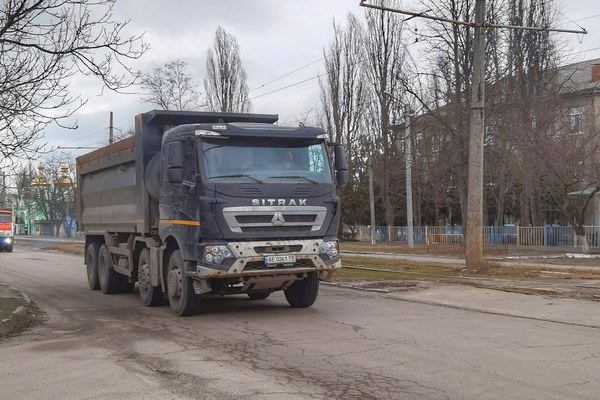
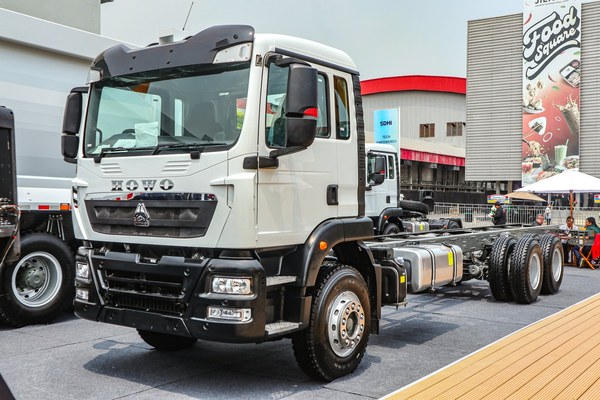
Most common catalog mistake we get asked about? Treating HOWO, A7, SITRAK and STR as one product family. Four families, actually.
What turns up in the yard:
- HOWO — the volume export line. Long production run and plenty of internal variation between generations
- HOWO A7 — a platform in its own right, not a trim package. Different cab structure, different drivetrain layout
- SITRAK — MAN-derived engineering. Far less parts overlap with older HOWO models than buyers assume
- STR — dump and mining duty, with its own ecosystem and its own numbering habits
A number lifted from an HOWO catalog will not reliably fit a SITRAK. The Sinotruk badge on both doors changes nothing. Buyers have tried that route. Parts came back.
Production year matters as much as model name
Parts keep moving inside a single sub-brand. Sinotruk has updated engine configurations, axle specifications, gearbox suppliers, and cab components across model generations[2]. Two trucks sold as a "HOWO 6×4 tractor" might share almost nothing underneath when one is a 2010 build and the other a 2021.
Online PDFs usually fall into one of three groups:
| Catalog Type | What It Usually Covers | Reliability for Ordering |
|---|---|---|
| Third-party compiled PDFs | A specific model and year range, often unstated | Low — version and year often unverified |
| Supplier-distributed catalogs | Parts a specific supplier stocks, not full OEM range | Medium — useful if supplier confirms compatibility |
| Official Sinotruk service system | Accessed through dealers or service network, not a free PDF | High — but requires VIN lookup to use correctly |
The free PDFs circulating online are typically third-party compilations or older supplier documents[3]. Worthless? No. They can supply a starting number. Guaranteed against your chassis? Also no.
Can a Sinotruk parts catalog PDF confirm part compatibility?
Sitting on a bulk order, this is the question that matters. The answer decides how much risk rides on your purchase order.
A catalog PDF finds a candidate number. Confirming it belongs on your specific truck is another job entirely. That job needs the VIN, the chassis number, and a supplier who can read both.
The difference between identification and verification
Time pressure pushes buyers to merge the two. That merge is how mismatched parts get into the supply chain.
- Identification — locating a part number in a catalog that looks like a match for the vehicle description
- Verification — proving that number against the chassis record, build date and factory configuration
PDFs help with the first. The second needs a live cross-reference between number and build record. A static document cannot hold that.
What chassis numbers actually tell a supplier
Hand over a VIN or chassis number with a parts inquiry and everything tightens:
- Production year and batch
- Engine variant fitted at the factory
- Gearbox and axle specification
- Factory configuration changes made for a particular export market
None of it sits reliably inside a generic PDF. The catalog is a map. The chassis number tells you where on that map your truck stands.
The documented failure mode: catalog as purchase order
Plenty of these land in our inbox. Worth writing down.
A buyer downloads a Sinotruk HOWO parts catalog PDF. They find a part number for a fuel injection pump. They send that part number in a purchase order without providing the vehicle's chassis number or production year. The supplier ships the part that matches the number in the catalog. The part arrives and does not fit the vehicle.[4]
Who is responsible? Usually the supplier shipped exactly what the paperwork requested. The error happened earlier, at identification, before the order existed.
Procurement managers who have lived through it once rarely repeat it. Buyers who haven't been through it are the ones treating a PDF page as proof before committing a whole container.
What is the correct process for using a Sinotruk parts catalog?
Skipping the catalog isn't the advice. In the right slot it saves real time and real money. Place it correctly in the workflow and it supports accurate purchasing rather than inventing confidence nobody earned.
Three steps. In this order. Reverse them, or skip one, and errors follow.
Step 1 — Use the catalog to identify a candidate part number
Match a catalog to your sub-brand (HOWO, A7, SITRAK, STR) and to your production year range where possible. Locate the part category. Pull the number that fits your description.
That number is a hypothesis. Nothing else.
Signals that a catalog source is worth using:
- It names the sub-brand instead of saying "Sinotruk"
- It states a production year range or chassis range
- It comes from a supplier who can check the number against live stock
- It matches the engine code stamped on the block, not just the model name on the door
Step 2 — Cross-reference against the vehicle's VIN and chassis number
Go to the physical vehicle before contacting anyone. Collect:
- VIN (Vehicle Identification Number) — stamped on the chassis rail and on the dashboard plate
- Engine model code — stamped on the block, never copied from the owner's manual
- Gearbox code — stamped on the gearbox housing
- Production date — from the identification plate inside the cab
Send all four with the candidate number from Step 1, then ask the supplier to confirm it against that exact chassis and build date.
Step 3 — Confirm with a qualified supplier before ordering
A competent supplier does this with that information:
- Cross-reference your number against known production records for the chassis series
- Flag any gap between the catalog number and what the vehicle actually needs
- Offer an alternative number where the catalog version is stale or model-specific
When an inquiry reaches us with a chassis number, our engineers check it against current stock and against configuration records built up from similar trucks. Where the catalog number doesn't match what we know about that chassis range, we say so. Before the order. Not after the container lands.
Supplier experience pays for itself right there. A supplier who books whatever number you send, never checking the vehicle record, adds nothing to your sourcing.
Frequently Asked Questions
Is there a free official Sinotruk parts catalog PDF available online?
Sinotruk does not appear to publish a single free official catalog PDF for public download[5]. What circulates is mostly third-party compilation or older supplier material. Fine for a first pass at identification. Not fine as an authority. Verify with a supplier who holds stock and knows chassis-level detail.
How do I know which Sinotruk catalog applies to my vehicle?
Sub-brand first (HOWO, A7, SITRAK, STR). Then the build year, read off the identification plate. The engine model code stamped on the block often decides which parts apply more reliably than the truck model name does[6]. Give a supplier the VIN and they can narrow it further.
Can I use a Sinotruk HOWO catalog for a SITRAK vehicle?
No. SITRAK rides a separate platform with heavy MAN involvement, and its parts differ substantially from standard HOWO components. Using an HOWO catalog to source parts for a SITRAK vehicle is a reliable path to receiving incompatible parts[7]. Settle the sub-brand before choosing a catalog.
Why do I keep finding different part numbers for the same Sinotruk component?
Because the variation is real. Sinotruk revised components across model generations, and suppliers sometimes run their own numbering for the same functional part. Chassis number plus production year settles most conflicts. A supplier with inventory experience across several Sinotruk generations usually knows which number applies to your truck.
How should I send a parts inquiry to get accurate responses?
Include the VIN or chassis number, the engine code from the block (not the manual), the build year, and a plain description of the part. Already holding a candidate number from a catalog? Include it, then add "this is the number I found, please confirm". An experienced supplier then has what they need to verify compatibility before you commit to an order.
Conclusion
A Sinotruk parts catalog PDF is a fair starting point, not a final authority. That second habit costs international buyers more than any other. Sinotruk's range spans sub-brands, production generations and chassis configurations that one downloadable PDF cannot reliably cover. Order of operations: catalog identification, chassis cross-reference, supplier confirmation, bulk order — in that sequence and no other. Sourcing Sinotruk spare parts and want the numbers checked against real chassis records before a shipment goes out? Talk to our team at Caanass. Twenty years of export work, thousands of genuine parts in stock, and a habit of confirming instead of assuming.
Image credits
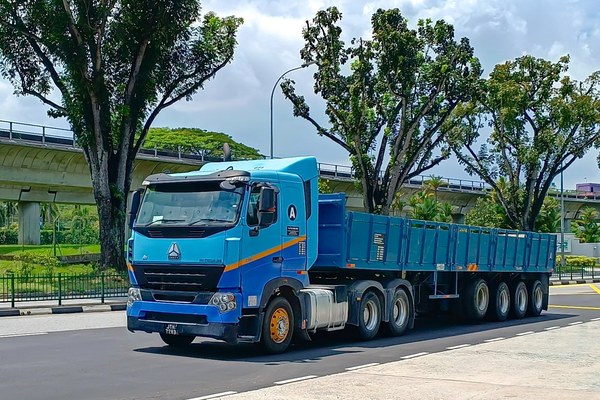
- HOWO A7 SINOTRUK Prime Mover — photo by 33Loading, CC BY-SA 4.0, via Wikimedia Commons.
- Sitrak C7h ZZ3317V326HE1 in Dnipro — photo by Alex Blokha, CC BY-SA 4.0, via Wikimedia Commons.
- Howo Sinotruk TX rigid truck — photo by Sulthan Naufal, CC BY-SA 4.0, via Wikimedia Commons.
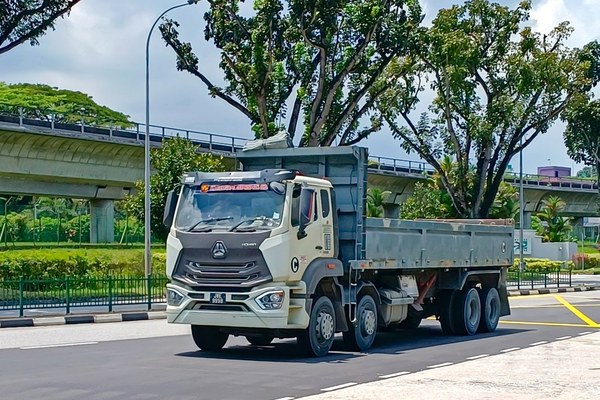
- HOHAN SINOTRUK Tipper Truck — photo by 33Loading, CC BY-SA 4.0, via Wikimedia Commons.
- [1]"Sinotruk", https://en.wikipedia.org/wiki/Sinotruk. China National Heavy Duty Truck Group Co., Ltd. (Sinotruk) is documented as operating multiple commercial vehicle sub-brands including HOWO, SITRAK, and others, each representing distinct platform generations with varying degrees of component commonality, as reflected in corporate and industry reference sources. Evidence role: general_support; source type: encyclopedia. Supports: That Sinotruk (China National Heavy Duty Truck Group) operates multiple distinct product sub-brands with separate platform architectures. Scope note: Encyclopedia and corporate sources may not capture the full current sub-brand portfolio or the precise degree of parts-level differentiation between platforms. ↩
- [2]"China National Heavy Duty Truck Group", https://en.wikipedia.org/wiki/China_National_Heavy_Duty_Truck_Group. Industry documentation from truck manufacturers and aftermarket parts bodies indicates that heavy commercial vehicle platforms routinely undergo component revisions across production cycles, affecting engine variants, axle ratings, and transmission suppliers in ways that create parts-level incompatibility between nominally similar models. Evidence role: general_support; source type: institution. Supports: That heavy truck manufacturers, including Sinotruk, regularly update powertrain and chassis components across production generations, creating parts incompatibility between model years. Scope note: General industry evidence supports the principle; Sinotruk-specific generation-by-generation documentation would require access to OEM service records or authoritative trade publications. ↩
- [3]"Preliminary Observations Indicate That Counterfeit Electronic Parts ...", https://www.gao.gov/products/gao-12-213t. Supply chain and aftermarket parts research identifies the proliferation of unofficial, outdated, or third-party-compiled parts documentation as a contributing factor to procurement errors in commercial vehicle maintenance, particularly in markets where OEM documentation access is limited or restricted to dealer networks. Evidence role: general_support; source type: research. Supports: That unofficial or third-party parts catalog documents circulating online present accuracy and currency risks compared to OEM-controlled documentation. Scope note: Direct empirical studies quantifying the proportion of online Sinotruk catalog PDFs that are unofficial or outdated are not available; the claim is supported by general aftermarket supply chain literature rather than Sinotruk-specific audits. ↩
- [4]"(PDF) Understanding Procurement Intentions for Using Aftermarket and ...", https://www.researchgate.net/publication/415114416_Understanding_Procurement_Intentions_for_Using_Aftermarket_and_Non-Genuine_Spare_Parts_Evidence_from_Indonesia's_Heavy_Equipment_and_Mining_Industries. Research and industry analyses of aftermarket parts procurement in commercial vehicle sectors identify catalog-number-only ordering—without cross-referencing vehicle identification data—as a recurring source of compatibility failures, particularly where multi-generation platforms share model names but differ in component specifications. Evidence role: case_reference; source type: research. Supports: That reliance on catalog part numbers without vehicle-specific verification is a recognized source of procurement error in commercial vehicle aftermarket supply chains. Scope note: Direct academic case studies specific to Sinotruk are limited; supporting evidence is drawn from broader commercial vehicle aftermarket procurement literature. ↩
- [5]"Howo Truck Spare Parts Catalog PDF", https://www.scribd.com/doc/292585208/Sinotruk-HOWO-truck-Parts-Catalogue. Major commercial vehicle OEMs generally distribute authoritative parts catalogs through controlled dealer and service-network channels rather than unrestricted public downloads, a practice consistent with protecting parts numbering integrity and directing buyers toward verified supply chains. Evidence role: general_support; source type: institution. Supports: That major OEM truck manufacturers typically restrict authoritative parts catalog access to dealer and service networks rather than offering unrestricted public downloads. Scope note: This note reflects general OEM industry practice; direct confirmation of Sinotruk's specific current distribution policy would require reference to official Sinotruk communications or dealer network documentation. ↩
- [6]"Information about Family Naming Conventions for Vehicles and Engines", https://www.epa.gov/ve-certification/information-about-family-naming-conventions-vehicles-and-engines. Aftermarket parts industry guidance and OEM service documentation consistently recommend using engine-stamped identification codes rather than vehicle model designations for parts lookup, as a single truck model name may encompass multiple engine variants with incompatible component specifications across production runs. Evidence role: expert_consensus; source type: institution. Supports: That engine-stamped identification codes provide more precise parts compatibility data than vehicle model names, which may span multiple engine variants. Scope note: This reflects general industry practice documented in service manuals and parts supplier guidance; a single authoritative universal standard document may not exist for all markets. ↩
- [7]"Warning: SITRAK Parts Are Not Compatible with HOWO", https://sinotrukparts.com/sinotruk-parts-man-mc11-mc13-vs-wd615-guide/. SITRAK's development on a platform incorporating MAN Truck & Bus technology introduced European-specification components—including cab structures, axle designs, and engine mounting configurations—that differ fundamentally from those used in the domestically developed HOWO platform, rendering the two platforms' parts catalogs non-interchangeable for most major assemblies. Evidence role: mechanism; source type: institution. Supports: That SITRAK and HOWO are built on distinct platforms with different component architectures, making cross-catalog parts sourcing unreliable. Scope note: Detailed component-level compatibility comparisons between SITRAK and HOWO require access to OEM service documentation; publicly available sources confirm platform differentiation but may not enumerate specific incompatible part categories. ↩