Foton turbochargers are one of the most frequently mismatched parts we handle in our daily quoting workflow. A buyer sends a truck model, we ship what seems correct, and the turbo doesn't fit — because the engine underneath is completely different from what we assumed. The solution is simple but overlooked: collect the right identification details before you request a quote.
To get an accurate Foton turbocharger quote, you need more than the truck model. You need the engine model code and the turbocharger nameplate numbers — specifically the turbo manufacturer's part number and the OE number stamped on the turbo's data plate. If the turbo nameplate is unreadable, the engine nameplate serves as a reliable fallback. Providing these details in your first inquiry eliminates mismatches, avoids costly return shipments, and accelerates the entire procurement process.
What follows is a practical, step-by-step guide built from our real quoting experience. I'll walk through why the same Foton model can need entirely different turbochargers, how to read and photograph the turbo nameplate, what to do when that nameplate is damaged, and exactly what details to include in your first message to a supplier. If you buy Foton turbochargers for resale, fleet maintenance, or repair work, this guide will save you days of back-and-forth — and potentially thousands of dollars in wrong shipments.
Why Does the Same Foton Truck Model Need Different Turbochargers?
This is the single biggest matching trap we encounter. Buyers understandably assume that if they know the truck model — say, a Foton Auman GTL or an Auman EST — they have enough information. They don't.
Foton pairs different engine brands and displacements with the same truck model across production years, power ratings, and export markets. A Foton Auman ETX, for example, may carry a Weichai WP10, a Cummins ISG, or a Foton Cummins ISF depending on the variant. Each engine uses a completely different turbocharger with different mounting, flow capacity, and part numbers. The truck model alone is never sufficient to identify the correct turbo.
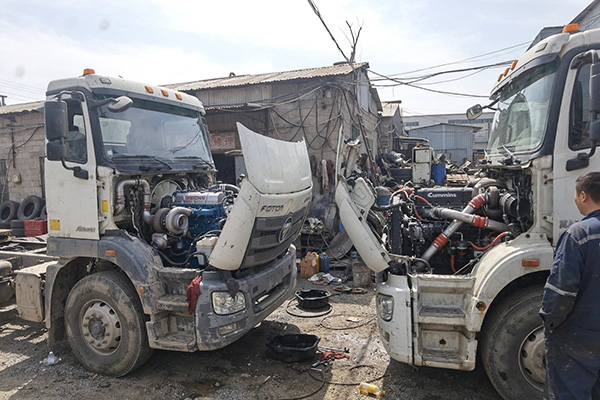
Let me break this down with examples from our actual parts-matching work.
Multiple Engine Brands Under One Badge
Foton has long-standing partnerships with several engine manufacturers[1]. Depending on the truck's intended market, emission standard, and power tier, the factory may install engines from:
- Weichai (WP series — WP6, WP7, WP10, WP12, WP13)
- Cummins / Foton Cummins (ISF, ISG, ISL, ISZ series)
- Daimler-licensed engines (in some higher-end Auman EST-A variants)
Each engine family has its own turbocharger supplier and part-number system. A Weichai WP10-equipped truck typically uses a Holset or domestic-equivalent turbo with one set of specifications. A Cummins ISG-equipped truck of the same Foton model uses a turbo from a completely different product line.
Production Year and Market Variations
The complexity multiplies when you factor in production year and export destination. Foton has adjusted engine pairings over time to meet different emission standards — China III, China IV, China V, Euro II, Euro III[2], and so on. A Foton Auman GTL sold in Ethiopia in 2016 may have a different engine (and therefore turbo) than a visually identical GTL sold in Vietnam in 2021[3].
Here is an illustrative table to show how this works in practice. This is not an exhaustive cross-reference — it is meant to demonstrate the variation pattern:
| Foton Model | Possible Engine | Turbo Manufacturer | Approx. Turbo P/N (Example) |
|---|---|---|---|
| Auman ETX (6×4 dump) | Weichai WP10.336 | Holset-type | HX50W series |
| Auman ETX (6×4 dump) | Cummins ISLe340 | Holset | HX40W series |
| Auman GTL (4×2 tractor) | Cummins ISG12 | Holset | HE500WG series |
| Auman GTL (4×2 tractor) | Weichai WP12.460 | Holset-type | HX55W series |
| Auman EST-A | Cummins ISZ13 | Holset | HE500WG / HE551 series |
| BJ3253 (various) | Weichai WP10 | Holset-type | HX50W series |
| BJ3253 (various) | Cummins ISLe | Holset | HX40W series |
Key takeaway: If you send us only "Foton Auman GTL," we genuinely cannot tell whether you need an HE500WG or an HX55W. The difference between those two turbos is not cosmetic — they are physically incompatible.
What This Means for Your Wallet
In our quoting process, we regularly see the cost of this ambiguity play out. When we receive only a truck model with no engine code, the first thing we ask is: "Which engine is installed?" If the buyer doesn't know, we go back and forth — sometimes for days. If both sides guess incorrectly and a wrong turbo ships across an ocean, the consequences are concrete:
- Return shipping costs that can exceed the turbo's value on smaller orders
- Additional customs clearance fees for the replacement shipment
- Vehicle downtime while the fleet waits for the correct part — potentially weeks
- Damaged supplier-buyer trust that takes months to rebuild
All of this is avoidable. The next sections explain exactly what information to collect.
What Numbers Should You Read From the Foton Turbocharger Nameplate?
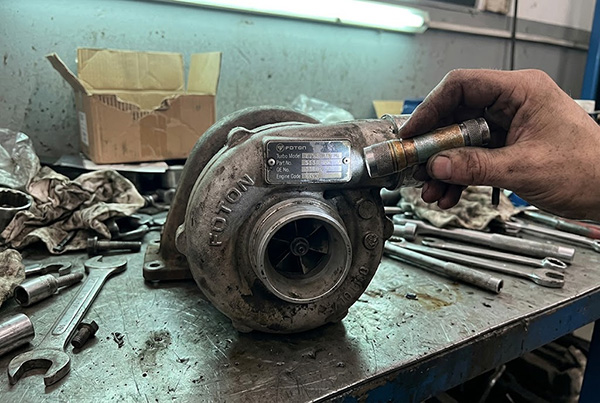
When the turbocharger is physically accessible — either still on the engine or removed — the nameplate (data plate) riveted or adhered to the compressor housing is your single best source of identification data. But most buyers aren't sure which numbers on that plate actually matter.
A Foton turbocharger nameplate typically carries three critical number groups: the turbo manufacturer's part number (identifying the turbo model and specification), the OE number (the engine or vehicle manufacturer's reference), and the engine model marking. When requesting a quote, photograph the entire nameplate clearly and report at minimum the manufacturer's part number and the OE number. These two numbers together allow a parts supplier to identify the exact replacement.
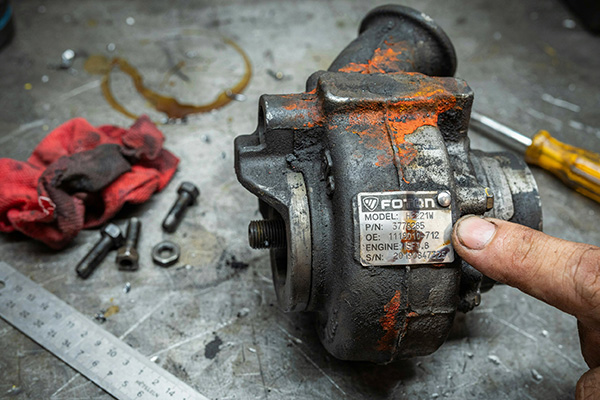
Here is how to make sense of what you see on the plate.
Anatomy of a Typical Turbo Nameplate
Most turbochargers installed on Foton trucks are manufactured by Holset (now Cummins Turbo Technologies)[4], or by Chinese domestic manufacturers who use a similar labeling convention. A typical nameplate includes:
-
Turbo Model / Assembly Number
- Example:
HX50WorHE500WG - This tells us the turbo platform and general size class.
- Example:
-
Manufacturer's Part Number (P/N)
- Example:
3596693or5322530 - This is the most precise identifier. It corresponds to a specific turbo configuration — including compressor wheel, turbine wheel, housing geometry, and wastegate calibration.
- Example:
-
OE Number / Customer Part Number
- Example:
612601110961(a Weichai OE number) or5346967(a Cummins OE number) - This is the number the engine manufacturer uses to order the turbo from the turbo maker. It links the turbo to a specific engine model and calibration.
- Example:
-
Engine Model Reference
- Example:
WP10.340E32orISGe5-430 - Not always present on every plate, but when it is, this directly confirms which engine the turbo was built for.
- Example:
-
Serial Number
- A unique production serial. Useful for traceability but not needed for parts matching.
Which Numbers to Prioritize
| Priority | Number Type | Why It Matters |
|---|---|---|
| 1st | Manufacturer's P/N | Uniquely identifies the turbo spec |
| 2nd | OE Number | Links the turbo to the correct engine application |
| 3rd | Engine Model | Confirms compatibility; useful cross-check |
| 4th | Turbo Model | Narrows the turbo family but not the exact variant |
| 5th | Serial Number | Traceability only — not needed for quotes |
How to Photograph the Nameplate
From experience, I can tell you that blurry or partial nameplate photos cause almost as many problems as no photo at all. Follow these guidelines:
- Clean the plate first. Oil, soot, and dust obscure stamped numbers. Wipe with a rag and solvent if available.
- Photograph straight-on, not at an angle. Ensure the entire plate is in frame.
- Use natural daylight or a flashlight to make embossed or engraved numbers legible.
- Take multiple shots — one wide shot showing the turbo housing for context, one close-up of the nameplate filling the frame.
- Send the original photo, not a screenshot or compressed thumbnail. WhatsApp and email both handle full-resolution images.
Pro tip from our team: When customers send us a clear nameplate photo alongside their truck model, we can typically confirm availability and return a quote within hours — not days.
What If the Foton Turbocharger Nameplate Is Missing or Unreadable?
This happens more often than most buyers expect. Turbochargers operate in extreme heat. Labels corrode, peel, or get scraped off during prior repairs. When a mechanic pulls the turbo and the nameplate is gone or illegible, the identification process doesn't stop — it just shifts to the engine.
When the Foton turbocharger nameplate is unreadable, your best fallback is the engine nameplate. Locate the engine data plate (usually on the valve cover, timing cover, or engine block side), read the full engine model code, and provide it to your supplier along with the truck model name, production year, and VIN or chassis number. This combination gives a qualified parts supplier enough data to cross-reference the correct turbocharger.
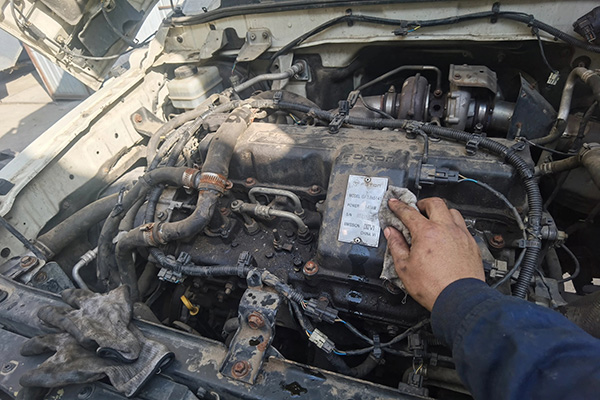
Let me walk through the practical steps.
Step 1: Locate the Engine Nameplate
The engine nameplate's location depends on the engine brand:
- Weichai WP series: Typically on the right side of the cylinder block or on the valve cover. Look for a metal plate with laser-etched or stamped text.
- **Cummins ISF / ISG / ISL / ISZ series
- [1]"Foton Motor", https://en.wikipedia.org/wiki/Foton_Motor. Foton Motor has entered into multiple joint ventures for powertrain supply, including the Foton Cummins Engine Company established in 2007 and a strategic technology cooperation agreement with Daimler AG formalized through the Beijing Foton Daimler Automotive Co., Ltd. joint venture. Evidence role: general_support; source type: encyclopedia. Supports: Foton Motor's established joint ventures and supply agreements with Weichai, Cummins, and Daimler for truck engine supply. Scope note: The specific engine-to-truck-model pairings described in the article reflect the author's trade experience and may not be fully documented in public corporate disclosures. ↩
- [2]"China Auto Industry National VI B Emission Standard", https://www.trade.gov/market-intelligence/china-auto-industry-national-vi-b-emission-standard. China's Ministry of Ecology and Environment has implemented progressively stricter vehicle emission standards modeled on European regulations, with China III taking effect for heavy-duty vehicles in 2008, China IV in 2013, China V in 2017, and China VI in 2021, each requiring engine and aftertreatment system modifications. Evidence role: historical_context; source type: government. Supports: The progression of Chinese national vehicle emission standards (China III through China VI) and their implementation dates for heavy-duty vehicles. Scope note: The specific dates when Foton adopted each standard for particular truck models are not specified in government regulations and depend on manufacturer compliance timelines. ↩
- [3]"China Auto Industry National VI B Emission Standard", https://www.trade.gov/market-intelligence/china-auto-industry-national-vi-b-emission-standard. Chinese commercial vehicle manufacturers, including Foton, adapt powertrain configurations for export markets to comply with varying local emission standards, which can range from Euro II equivalents in some African markets to Euro V or stricter in Southeast Asian markets, resulting in different engine and turbocharger specifications for the same truck model. Evidence role: general_support; source type: research. Supports: Chinese truck manufacturers configure engine and emission systems differently for various export markets based on local regulatory requirements. Scope note: The specific Ethiopia-2016 vs. Vietnam-2021 comparison is illustrative; exact configuration differences would need to be verified against Foton's production records for those markets and years. ↩
- [4]"Cummins", https://en.wikipedia.org/wiki/Cummins. Holset Engineering Co., originally founded in Huddersfield, England, was acquired by Cummins Inc. in 1973 and subsequently rebranded as Cummins Turbo Technologies, though the Holset brand name continues to be used on turbocharger products. Evidence role: historical_context; source type: encyclopedia. Supports: The corporate history of Holset Engineering and its integration into Cummins Inc. as Cummins Turbo Technologies. ↩
- [5]"Foton Motor", https://en.wikipedia.org/wiki/Foton_Motor. Beijing Foton Cummins Engine Co., Ltd., a 50-50 joint venture established in 2007, manufactures ISF light-duty and ISG heavy-duty diesel engines at its Beijing facility, with ISL and ISZ series engines also supplied by Cummins for Foton heavy truck applications. Evidence role: general_support; source type: institution. Supports: The Foton Cummins joint venture produces ISF and ISG series engines, while ISL and ISZ engines are also supplied for Foton truck platforms. Scope note: Specific engine-to-truck-model assignments vary by production year and market and may not be fully documented in joint venture disclosures. ↩
- [6]"Turbine adapted maps for turbocharger engine matching", https://www.sciencedirect.com/science/article/pii/S0894177710001755. Turbocharger matching is application-specific, with compressor and turbine sizing, housing geometry, wastegate calibration, and oil/coolant interface dimensions all engineered to the host engine's displacement, airflow requirements, and exhaust energy characteristics. Evidence role: mechanism; source type: research. Supports: Turbochargers are engineered for specific engine displacement, exhaust flow, and mounting configurations, making cross-application installation incompatible. Scope note: General turbocharger engineering principles support the non-interchangeability claim, but specific Weichai-vs-Cummins incompatibility data is not typically published in open literature. ↩
- [7]"Failure Mechanisms basic intro", https://www.youtube.com/watch?v=hX9VOSErNTw. Engineering literature on turbocharger matching confirms that an improperly sized turbocharger can cause compressor surge or choke, elevated exhaust gas temperatures, oil seal degradation leading to leaks, and in severe cases, mechanical failure of engine components due to abnormal pressure and thermal conditions. Evidence role: mechanism; source type: paper. Supports: Turbocharger-engine mismatch can lead to compressor surge, excessive exhaust backpressure, oil seal failure, and potential engine damage. Scope note: Published studies typically address turbocharger sizing in controlled experimental contexts; the specific failure scenarios on Foton trucks are based on field experience rather than published case studies. ↩