Ordering a truck fuel-water separator assembly looks simple until the parts arrive and nothing fits. Procurement teams across Africa, Southeast Asia and the Middle East know the frustration: the truck model matched, the photos looked right, but the base thread was wrong or the sensor connector had the wrong pin count. One mismatch across three components and the whole assembly is unusable.
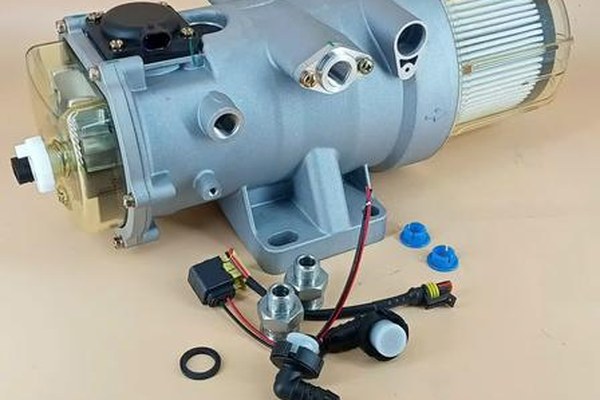
A truck fuel-water separator assembly is a three-part matching problem, not a single SKU. The filter element, the water-in-fuel sensor, and the base or bowl must each be matched independently to the specific vehicle. Truck model alone is never enough. Chassis number, engine model, and existing OE number — plus a photo of the sensor connector — are the minimum inputs needed to avoid a costly mis-shipment.
Understanding why each of the three components requires its own verification step is what separates a clean order from a three-round confirmation loop. The sections below break down each matching layer and explain what information you need before you place your inquiry.
Why Is "Same Truck Model" Not Enough for a Fuel-Water Separator Assembly?
Many distributors and fleet buyers assume the truck model is the starting point for parts identification. For simple consumables, it often is. For fuel-water separator assemblies, it reliably is not.
The same truck model designation can cover multiple engine families with different fuel-system specifications. HOWO trucks, for example, have been produced with WD615, WD10 and D12 engine families across different chassis series[1]. Each engine family can carry a different base thread specification and a different sensor port count. Matching on model name alone creates ambiguity that often requires multiple confirmation rounds before an order can be fulfilled correctly.
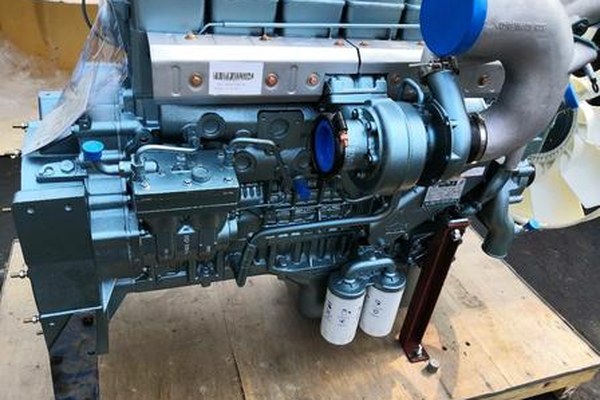
We have seen this pattern repeatedly in our order-handling experience. A buyer sends an inquiry with "HOWO A7, 2019" and nothing else. Our team then needs to ask for the chassis number and engine model before we can confirm even the base thread size, let alone the sensor interface. That confirmation loop adds time — and in markets where the truck is already off the road, time is downtime.
What Makes Fuel-System Identification Harder Than Other Parts
Fuel-water separators sit at the intersection of the engine fuel supply system and the vehicle's electrical diagnostic system. That means two separate technical specifications — mechanical and electrical — must both match the installed assembly.
Consider the variation within a single Chinese truck brand:
| Truck Brand | Common Engine Families | Potential Base Thread Variants | Sensor Connector Variants |
|---|---|---|---|
| HOWO | WD615, WD10, D12 | Multiple | 2-pin, 3-pin |
| SHACMAN | WP10, WP12, MAN-derived | Multiple | 2-pin, 3-pin |
| FAW | CA6DL, CA6DM | Multiple | 2-pin, 3-pin |
| FOTON | ISG, Cummins-derived | Multiple | 2-pin |
| DONGFENG | DCEC Cummins, DDi | Multiple | 2-pin, 3-pin |
Note: The specific thread and connector variants in this table are illustrative of the range of variation. Verify exact specifications against chassis documentation or OE numbers before placing an order.
The Minimum Information a Buyer Should Prepare
Before submitting an inquiry for a fuel-water separator assembly, gather the following:
- Chassis number (VIN) — the single most reliable vehicle identifier
- Engine model — not just displacement, but the actual engine family designation
- Existing OE number — from the old filter, the base, or the vehicle service manual
- Sensor connector photo — a clear image showing the connector body, pin count and wire colors if visible
- Any visible part numbers on the base or bowl
A buyer who provides all five of these inputs reduces their inquiry to a straightforward confirmation. A buyer who provides only the truck model is beginning a negotiation over what information is still missing.
What Are the Three Components That Must Each Be Matched Independently?
Many buyers treat the fuel-water separator as a single replaceable item. In practice, it is an assembly made of at least three distinct components, each with its own specification.
A fuel-water separator assembly consists of the filter element, the water-in-fuel sensor, and the base or bowl. These three parts must all be compatible with each other and with the specific vehicle. Replacing only the filter element while reusing an incompatible base is one of the most common and costly mistakes in fuel-system procurement.
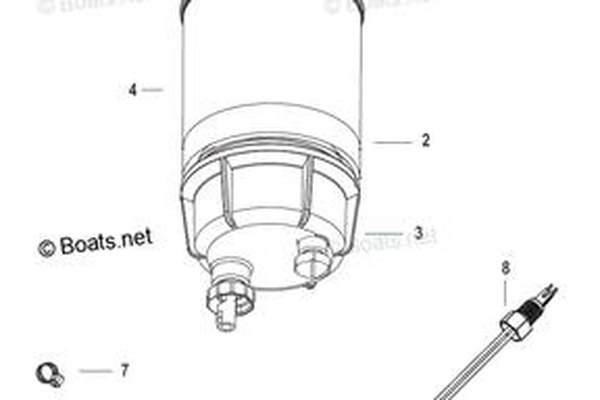
Each component has its own failure mode when mismatched. Understanding each one separately helps buyers ask the right questions before the order ships.
Component 1: The Filter Element
The filter element is the most frequently replaced part and the one buyers most often photograph and send as an inquiry reference. This is useful, but incomplete.
Key specification points for the filter element include:
- Filtration rating (micron rating for water and particulate separation)
- End-cap seal type (the seal geometry affects whether the element seats correctly in the base)
- Thread specification on the element itself, if it is a spin-on design
- Element height and diameter — visual similarity does not guarantee dimensional compatibility
A buyer who sends only a photo of the old filter element is giving us one-third of the matching picture. We still need the base and the sensor specs before we can confirm the assembly will work.
Component 2: The Water-in-Fuel Sensor
The water-in-fuel sensor is the component buyers most often overlook entirely. It connects the fuel-water separator to the vehicle's warning system. When it mismatches, the sensor either does not physically connect or sends the wrong signal to the ECU[2].
Critical sensor specifications include:
- Connector type and pin count (2-pin and 3-pin are both common across Chinese truck brands)
- Signal logic (normally open vs. normally closed — this determines the warning behavior)
- Thread interface at the sensor port on the base
We have had orders where the customer sourced the filter element and base correctly but used the wrong sensor, then could not understand why the water warning light behaved incorrectly after installation. The sensor is a small part with a large effect.
Component 3: The Base or Bowl
The base — sometimes called the bowl or housing — is the structural and hydraulic core of the assembly. It determines:
- Inlet and outlet port size and thread — must match the fuel-line connections on the vehicle
- Drain valve style — manual vs. automatic drain affects maintenance procedure compatibility
- Port orientation — particularly relevant in tight engine bay installations
- Sensor port location and thread — must match the specific sensor being used
Reusing an old base with a new filter element is only safe when the base has been verified against the current vehicle specification. We have seen cases where a vehicle was repowered or repaired with a different engine variant, leaving an incompatible base in place.
Does Cross-Brand Substitution Work for Fuel-Water Separator Assemblies?
Regional distributors serving multiple truck brands naturally look for opportunities to consolidate inventory. A separator assembly that covers SHACMAN and FAW with one SKU would simplify warehousing. The question is whether this is technically feasible.
Cross-brand substitution between Chinese truck fuel-water separator assemblies carries hidden interface risks. SHACMAN, FAW and FOTON assemblies may appear dimensionally similar, but sensor connectors and thread standards often differ[3]. Visual similarity is not compatibility evidence. Cross-reference against OE numbers or chassis documentation is required before treating two assemblies as interchangeable.
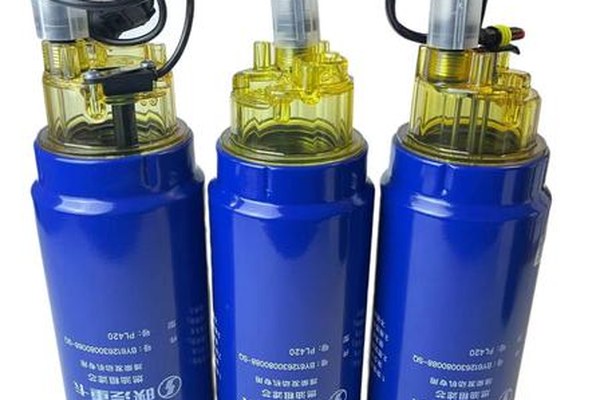
This is an area where our order-handling experience has revealed repeated risk. A distributor in a market with both HOWO and SHACMAN fleets will often attempt to simplify reorders by assuming assemblies are interchangeable across brands. Sometimes a filter element genuinely crosses over. The base and sensor almost never do without specific documentation.
Why Visual Similarity Is Not Enough
Chinese truck brands sourced many fuel-system components from overlapping supplier ecosystems during the same production periods[4]. This means assemblies from HOWO and SHACMAN can look nearly identical on the shelf — same general housing shape, similar filter element dimensions, comparable drain valve positioning.
What differs, frequently, is:
- Sensor connector pinout — even when the connector housing looks the same, internal pinout can differ
- Base thread pitch — a half-millimeter difference in thread pitch creates installation failure that is not obvious until assembly
- Internal filter seat geometry — affecting whether the element seals correctly even if it physically threads in
Procurement principle: An assembly that "fits" during installation but does not seal correctly or does not connect the sensor correctly has not solved the problem — it has created a hidden failure that surfaces later under operating conditions.
When Cross-Reference Claims Should Be Verified
If a supplier tells you that OE number X from SHACMAN crosses to OE number Y from HOWO, ask for the source documentation before accepting that claim. Legitimate cross-reference documentation includes:
- Original manufacturer parts catalogs
- Established cross-reference databases used by reputable parts distributors
- Vehicle service manuals that specify acceptable substitutions
We flag any cross-reference claims we have not personally verified against documentation — and buyers should expect the same standard from their suppliers.
What Is the Real Procurement Risk When an Assembly Mismatches?
It is easy to frame a wrong assembly shipment as an inconvenience — return the parts, reorder, wait. But for fleet operators and distributors serving remote markets, the actual risk is more serious.
A mismatched fuel-water separator assembly that passes visual inspection but fails during installation leaves a truck off the road[5]. For fleets operating in remote areas of Africa, the Middle East or Southeast Asia, a stranded vehicle is not a parts return scenario — it is a production or revenue loss that far exceeds the cost of the parts. Matching accuracy is downtime prevention, not just procurement diligence.

The mismatch scenarios that concern us most from an order-handling perspective are not the obvious failures. When a base thread is completely wrong, it is immediately visible. The costly failures are the ones that pass visual inspection:
High-Risk Mismatch Scenarios
- Filter element appears to thread in, but the end-cap seal does not seat correctly. The assembly installs, the technician drives the truck away, and fuel bypass occurs gradually rather than immediately[6].
- Sensor connector fits physically but has wrong pinout. No water warning appears on the dashboard even when water accumulates in the bowl. This is a safety-relevant failure.
- Cross-threaded base connection due to mismatched thread pitch — not always visible during installation, failure occurs under fuel pressure.
- Drain valve style incompatible with maintenance procedure — not a failure, but a maintenance workflow problem that leads to deferred servicing.
How Distributors Can Reduce This Risk
For distributors managing bulk inventory across multiple truck brands and markets, the following practices reduce assembly mismatch risk:
- Record chassis numbers and engine models for each end-customer vehicle — not just truck brand and model year
- Photograph the sensor connector and base thread on the first order for each fleet account — file it for reorder reference
- Treat OE number as the primary matching input, not the truck model designation
- Never assume a reorder matches the last order when the customer has changed engine suppliers or carried out major engine work
Frequently Asked Questions
Can I order just the filter element and reuse the existing base?
You can, but only after confirming the existing base is compatible with the new element's end-cap seal geometry and thread specification. If the base is from the same OE part family and has not been modified, it is usually safe. If there is any uncertainty about the base's origin or history, verify before ordering.
What information do I need before I inquire about a fuel-water separator assembly?
Gather the chassis number, engine model designation, any existing OE number (from the old part or service manual), a clear photo of the sensor connector showing pin count, and any numbers visible on the existing base or bowl. These five inputs allow accurate matching and reduce confirmation delays significantly.
Are fuel-water separator assemblies from different Chinese truck brands interchangeable?
Not reliably. While filter elements sometimes share dimensions across brands, the base thread and sensor connector specifications differ often enough that visual inspection is insufficient. Cross-reference against OE documentation before treating assemblies from different brands as interchangeable.
How do I know if my water-in-fuel sensor is the wrong type?
The most common symptom is incorrect warning light behavior — either no warning when water is present, or a constant false warning. If the sensor connector physically fits but behavior is wrong, the pinout or signal logic may differ. Compare the sensor's part number against the OE specification for your specific engine model.
Why does the same HOWO model sometimes require different assemblies?
HOWO is a model family, not a single specification. Different production years and regional markets have used different engine families — WD615, WD10 and D12, among others — each with potentially different fuel-system components. The chassis number and engine model designation are the only reliable way to identify which specification applies to a specific truck.
Conclusion
A truck fuel-water separator assembly is a three-part matching problem. The filter element, the water-in-fuel sensor and the base each carry independent specifications that must align with the specific vehicle. Truck model name is not enough to get this right — chassis number, engine model and existing OE number are the minimum inputs for accurate identification. Cross-brand substitution carries real interface risks that visual inspection will not catch. And for fleets operating in remote markets, a mismatch that survives installation but fails under operating conditions is not a return-shipment problem — it is vehicle downtime.
Before you place your next fuel-water separator assembly inquiry, prepare your matching checklist: chassis number, engine model, OE number if available, sensor connector photo, and any markings on the existing base. If you are sourcing HOWO, SHACMAN, FAW, FOTON or DONGFENG fuel system parts and want to avoid a confirmation loop, send your inquiry with that information to grand@caanass.com or reach our team on WhatsApp at +86 19924698529.
- [1]"China National Heavy Duty Truck Group", https://en.wikipedia.org/wiki/China_National_Heavy_Duty_Truck_Group. Sinotruk's official technical documentation and product catalogs list multiple engine families — including WD615, WD10, and D12 series — deployed across different HOWO chassis generations, reflecting the platform's evolution over successive production periods. Evidence role: general_support; source type: institution. Supports: That HOWO trucks have been manufactured with multiple engine families across different chassis configurations. Scope note: Official manufacturer catalogs may not enumerate all regional or export variants; independent technical databases may provide more complete cross-referencing. ↩
- [2]"Water in fuel sensor", https://en.wikipedia.org/wiki/Water_in_fuel_sensor. Diesel engine fuel system engineering literature describes water-in-fuel sensors as operating on normally-open or normally-closed circuit logic; a mismatch between sensor signal type and ECU input expectation results in either a persistent false warning or complete absence of warning when water is present. Evidence role: mechanism; source type: research. Supports: That water-in-fuel sensors communicate with the ECU via defined electrical signal logic, and that mismatched pinout or signal type produces incorrect warning behavior. Scope note: Specific ECU interface behavior varies by manufacturer and engine control software version; general electrical principles apply but exact fault manifestation depends on vehicle-specific calibration. ↩
- [3]"Chinese Truck Brands Ranked HOWO, Shacman, FAW ...", https://chinesetruckfactory.com/chinese-truck-brands-ranked-howo-shacman-faw-dongfeng-and-foton-compared/. OEM parts catalogs for SHACMAN, FAW, and FOTON list distinct OE part numbers for fuel-water separator bases and sensors across their respective engine families, indicating that assemblies which share general housing dimensions are not specified as interchangeable by the manufacturers themselves. Evidence role: general_support; source type: other. Supports: That fuel-water separator assemblies from different Chinese truck brands share general dimensional profiles while differing in thread pitch and sensor connector specifications. Scope note: Comprehensive cross-brand technical comparison data is not consolidated in a single publicly available source; this claim is best verified through direct comparison of manufacturer parts catalogs, which may not be publicly accessible. ↩
- [4]"OEM & Aftermarket Components - China Truck Parts Supplier", https://chineseautopart.com/china-truck-parts-a-reliable-global-source-for-commercial-vehicle-components/. Studies of China's commercial vehicle industry supply chain document significant supplier consolidation, with major OEMs including Sinotruk, Shaanxi Auto, and FAW sourcing fuel-system subcomponents from a relatively small number of Tier 1 and Tier 2 suppliers, producing cross-brand dimensional similarities that do not imply full interchangeability. Evidence role: historical_context; source type: research. Supports: That major Chinese commercial vehicle manufacturers have historically shared component suppliers, contributing to visual and dimensional similarity across brands. Scope note: Supplier relationship data for specific fuel-system components is not consistently published; available research addresses the broader Chinese automotive supply chain rather than fuel-water separator assemblies specifically. ↩
- [5]"Common Diesel Engine Problems: Your Troubleshooting Guide", https://www.uti.edu/blog/diesel/diesel-engine-troubleshooting-7-common-diesel-engine. Diesel fuel system engineering literature documents that thread pitch mismatches and seal geometry incompatibilities may allow initial assembly without obvious resistance, while producing fuel bypass or seal failure under operating pressure conditions that visual pre-installation inspection cannot detect. Evidence role: mechanism; source type: research. Supports: That dimensional or specification mismatches in fuel system components can produce failures that are not detectable through visual inspection alone. Scope note: Published failure case studies for this specific failure mode in Chinese truck fuel-water separators are limited; the mechanism is supported by general fluid system engineering principles rather than direct empirical studies of this component category. ↩
- [6]"Diesel Fuel Contamination: 4 Critical Symptoms to Look For", https://axi-international.com/the-effects-of-diesel-fuel-contamination/. Filtration engineering literature describes partial seal bypass as a failure mode in which unfiltered fluid passes around rather than through the filter medium; in diesel fuel systems, this can result in progressive fuel contamination and injector wear without producing the immediate external leakage that would prompt visual detection. Evidence role: mechanism; source type: research. Supports: That an improperly seated filter element seal can allow partial fuel bypass that develops gradually under operating conditions rather than producing immediate visible leakage. Scope note: Specific bypass flow rates and contamination progression timelines depend on operating pressure, seal material, and degree of misfit; general filtration principles support the mechanism but quantitative data for this specific component type is not widely published. ↩