If you operate or service Sinotruk trucks in Africa or the Middle East, sourcing the right spare parts is one of your most expensive gambles. Order the wrong component — or buy from the wrong tier — and you're paying twice: once for the part, and again for the downtime. Understanding what Sinotruk spare parts actually are is the first step toward smarter procurement.
Sinotruk spare parts are components manufactured or sourced to fit trucks produced by China National Heavy Duty Truck Group (Sinotruk), including sub-brands such as HOWO, Haoman, and Steyr. The term covers everything from engine internals and gearbox assemblies to suspension, braking, and electrical components. Parts are available across three tiers: OEM (original factory supply), branded aftermarket, and low-cost imitation — each with different fit tolerances, durability expectations, and pricing.
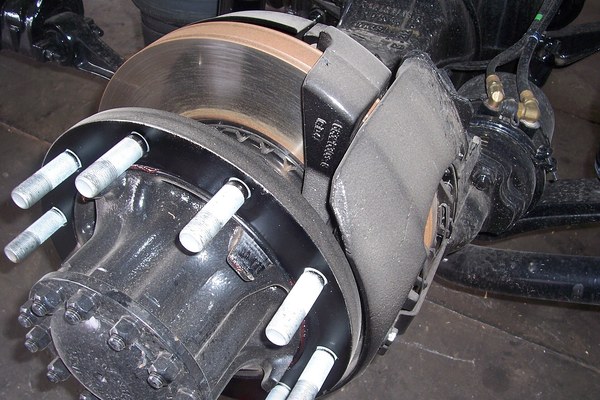
Understanding that broad definition, however, only gets you halfway. The buyers who make costly mistakes are not the ones who've never heard of Sinotruk — they're the ones who assume all Sinotruk parts are interchangeable across models and that price alone determines quality. The sections below break down exactly why that assumption fails, and what you need to know before placing your next order.
Is Sinotruk one brand or many?
Most buyers first encounter this question the hard way. They place an order for HOWO cab parts, receive components catalogued as "Sinotruk spare parts," and then discover the mounting points don't match. The frustration is real — and entirely preventable.
Sinotruk is a parent group, not a single truck model. It operates several distinct product lines — primarily HOWO, Haoman, and Steyr — each developed on different chassis generations and built to different specifications. Parts from one sub-brand rarely transfer directly to another.
In our experience at Caanass, the most common sourcing confusion we handle comes from buyers who know they're running "a Sinotruk" but aren't certain which product line their fleet actually belongs to. When we ask them to confirm the sub-brand and model year before we quote, some are genuinely surprised the question matters. It absolutely does.
HOWO
HOWO is Sinotruk's flagship heavy-duty line and the sub-brand most buyers mean when they say "Sinotruk." It is also the line we quote most often at Caanass, because it dominates the export fleet mix in sub-Saharan Africa and the Middle East. HOWO trucks typically run WD615 or WD10 series engines paired with HW series gearboxes. But even within HOWO there are meaningful differences between generations — the HOWO A7 platform, for example, uses different cab components and some different drivetrain parts compared with earlier HOWO T series trucks.
Haoman (豪曼)
Haoman is Sinotruk's lighter commercial range, positioned for medium-duty applications. It was developed through a joint venture structure distinct from the HOWO heavy-duty platform[1] and runs on a different chassis architecture. Engine displacement, suspension geometry, and axle specs all differ. Haoman parts are not interchangeable with HOWO parts, even when both are marketed under the Sinotruk brand umbrella. We've seen buyers in West Africa order HOWO wheel hub assemblies for Haoman trucks — a mismatch that costs both money and time to unwind.
Steyr (斯太尔)
The Steyr line traces back to a licensed partnership with the Austrian manufacturer in the 1980s[2]. Many older Steyr-based trucks remain in service across Central Asia, the Middle East, and parts of Africa. Parts for this line are increasingly harder to source as the platform ages, and suppliers who claim generic "Sinotruk parts" compatibility rarely carry genuine Steyr-spec components in stock. If your fleet includes older Steyr-based trucks, confirming parts compatibility requires careful cross-referencing of part numbers rather than model name alone.
| Sub-Brand | Typical Application | Common Engine Family | Key Parts Consideration |
|---|---|---|---|
| HOWO | Heavy-duty tractor, dump, mixer | WD615, WD10, WD12 | Multiple platform generations — confirm year |
| Haoman | Medium-duty cargo, light construction | Various Sinotruk light engines | Not interchangeable with HOWO |
| Steyr | Older heavy-duty, legacy fleets | Steyr-license WD615 variants | Aging platform; confirm part numbers directly |
What parts tiers exist for Sinotruk trucks?
Here is where procurement decisions become genuinely complex. A buyer comparing three quotes for the same HOWO cylinder liner might receive three wildly different prices. The natural assumption is that one supplier is overcharging. The more accurate explanation is that the three quotes represent three entirely different product tiers.
The parts tier matters as much as the part name. OEM components come from the original Sinotruk supply chain. Branded aftermarket parts are manufactured by third-party factories to compatible specifications. Low-cost imitations use the same part names but are built to lower tolerances and inconsistent quality standards.
None of these tiers is automatically the right choice. The correct answer depends on your operating environment, your margins, and your tolerance for downtime risk. Here is how we explain the trade-offs to buyers who ask us directly.
OEM (Original Equipment Manufacturer) Parts
OEM Sinotruk parts are produced within the Sinotruk-authorized supply chain — either by the brand's own manufacturing arms or by certified first-tier suppliers contracted to build to factory specifications. These parts carry the highest price point. They also carry the most predictable fit and the strongest documentation trail for warranty or inspection purposes.
For buyers running fleet operations on government contracts — road construction projects in East Africa, municipal waste collection fleets in the Middle East — OEM parts can justify their premium because downtime cost and inspection requirements are high. For a small workshop servicing a mixed fleet of aging trucks, the OEM price point may be difficult to absorb.
A practical note: genuine OEM parts should carry traceable part numbers. When a supplier cannot provide a part number for an "OEM" component, that is a flag worth investigating before you commit to a large order.
Branded Aftermarket Parts
This is the tier most of our African and Middle Eastern customers actually operate in. Reputable aftermarket manufacturers — many based in Shandong province, close to Sinotruk's own production base[2] — produce components to tolerances that perform reliably in the field. The price gap versus OEM can be 30–60% depending on the component category[3]. For high-consumption wear parts such as brake pads, filters, and belts, aftermarket sourcing at this tier is entirely rational.
The critical variable is knowing which aftermarket brands have a legitimate quality track record. We work with specific aftermarket suppliers we have vetted over years of fulfillment — not every aftermarket brand on the market carries the same consistency.
Low-Cost Imitations
These parts exist in every major export market. They are sold using the same part names and sometimes near-identical packaging to genuine OEM or reputable aftermarket products. Fit is often close enough to install, but dimensional tolerances, metallurgical quality, and surface treatments may fall well short of specification[4]. For high-stress components — cylinder liners, piston rings, connecting rod bearings — substandard parts create failure risk within months rather than years.
Our observation: buyers who are most vulnerable to imitation parts are those purchasing from multiple small traders rather than from a supplier who maintains verifiable inventory of a consistent product range. Consistency of supply is itself a quality signal.
What are the most important Sinotruk spare parts categories?
Knowing the parts landscape matters less than knowing which categories carry the most procurement risk. Not all Sinotruk spare parts are equally consequential to get right.
For buyers running trucks in demanding operating environments — long-distance haulage across rough roads, heavy construction cycles, high-temperature climates — the categories that matter most are those where a wrong-fit or low-quality component causes immediate operational failure rather than gradual wear.
Engine Components
This is the highest-stakes category. HOWO trucks commonly run Sinotruk's WD615 or WD10 series diesel engines. Core engine wear parts include:
- Cylinder liners — dimensional tolerance is critical; an undersized liner causes blowby and rapid wear
- Pistons and piston rings — ring gap and coating specification vary by engine variant
- Crankshafts and bearings — precision components where imitation parts create immediate risk
- Fuel injection components — including injector nozzles and high-pressure fuel pump elements
- Cylinder head gaskets — a frequent service item in high-temperature operating conditions
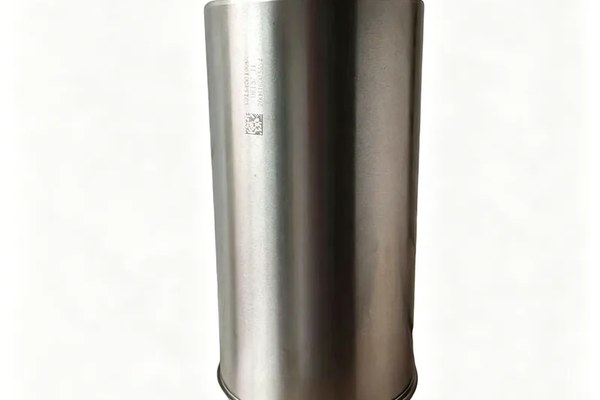
A common inquiry pattern we see: a buyer asks for "WD615 engine parts" without specifying whether their truck runs the WD615.47, WD615.68, or another variant in that family. These variants have different output ratings and some different internal specifications. The model number and engine code matter — not just the engine series name.
Gearbox and Drivetrain Parts
HOWO trucks typically use the HW series gearboxes — HW19710, HW15710, and related variants. Drivetrain parts in high demand include:
- Gear synchronizer rings and cones — a common service replacement item
- Main shaft and countershaft gears — where incorrect tooth profile causes noise and premature failure
- Clutch assemblies and clutch covers — including the 430 mm discs shared across several Chinese heavy truck platforms
- Drive shaft universal joints and cross kits
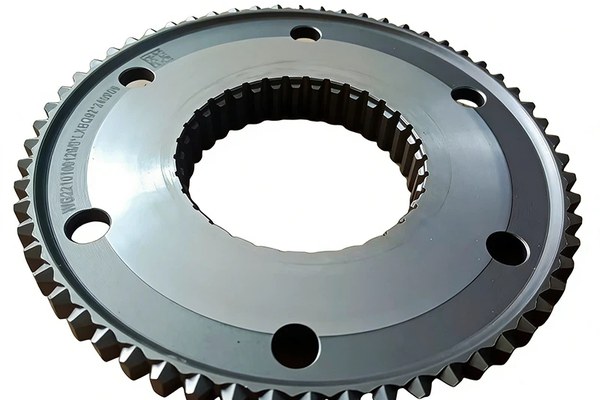
The gearbox category is an area where buyers frequently underestimate variant differences. HW19710 and HW15710 are not interchangeable even though they are both common HOWO gearboxes. Confirming the gearbox model number before ordering is non-negotiable.
Suspension, Axle, and Braking Components
For trucks running heavily loaded routes on poor road surfaces — a common operating reality across much of sub-Saharan Africa — suspension and axle components face accelerated wear cycles[5]. High-demand items include:
- Leaf spring assemblies and U-bolts
- Steering knuckles and king pins
- Brake drums, brake shoes, and slack adjusters
- Wheel hub assemblies and bearing kits
- Axle shafts
These components are generally more forgiving of aftermarket sourcing than precision engine internals — provided the dimensional specifications match the axle model.
Cab and Electrical Components
Cab parts and electrical components are the category most affected by platform generation differences. HOWO A7 cab panels, door assemblies, and wiring harnesses are not compatible with earlier HOWO platforms. Buyers of cab parts who provide only "HOWO" as their specification are likely to receive incorrect components if the supplier does not ask qualifying questions.
Which OEM reference numbers should you compare first?
Part numbers are the only part of a Sinotruk inquiry that is not open to interpretation. Two suppliers can argue about quality and lead time indefinitely, but a number either matches the component on your truck or it does not.
The table below lists the engine and drivetrain references we stock and quote most often. Every one of them is a number we can put next to a description, which is the minimum standard for a quote you can actually verify.
| Part | Example OEM reference we stock | What to verify before ordering |
|---|---|---|
| Cylinder liner | VG1540010006 | Liner bore step, flange diameter and O-ring groove must match the WD615 variant, not just the engine series |
| Piston | VG1540030004 | Combustion bowl code, ring groove widths and pin diameter differ between WD615 ratings |
| Cylinder head gasket | VG1540040015A | Euro 3 versus earlier head layout; gasket thickness and water passage pattern must match the head |
| Gearbox synchronizer range cone | WG2210100126 | HW19710 and HW15710 cones are not interchangeable; confirm the gearbox model stamped on the casing |
| Clutch disc assembly | AZ9725160300 | 430 mm diameter, spline count and damper type — a common disc across Chinese heavy truck platforms |
Two rules follow from this table. First, treat a part number as the start of the conversation, not the end: the same number can be superseded, and every superseded number is a chance for a trader to ship something "equivalent." Second, ask any supplier to confirm the tier behind a number — an OEM reference quoted at an imitation price is not the part the number describes. You can browse the full range we hold on our truck parts catalogue, where every listing carries its number and fitment.
How should buyers match Sinotruk spare parts to their trucks?
This is the most practical question behind everything else in this article. Getting the category right is only part of the job.
Matching Sinotruk spare parts correctly requires specific truck data, not just the brand name. Sending a supplier the words "Sinotruk HOWO spare parts" gives them almost nothing to work with — the right supplier will ask you a series of qualifying questions, and the right buyer will have those answers ready before making contact.
What information you need to provide
Before requesting a quote from any supplier, gather the following from your truck or your fleet documentation:
- Sub-brand and model — HOWO, HOWO A7, Haoman, Steyr, or the specific model designation
- Model year — platform specifications change across production years
- Engine series and code — found on the engine block or in the original vehicle documents (e.g., WD615.47, WD10.336)
- Gearbox model number — stamped on the gearbox casing (e.g., HW19710, HW15710)
- Axle model — particularly important for hub, drum, and shaft components
- Chassis VIN or the part number from the original component — where available, the original part number is the most reliable matching reference
Suppliers who do not ask for this information before quoting should raise a concern, not reassure you. A supplier quoting by brand name alone is either guessing or selling against specification assumptions that may not match your fleet.
Frequently Asked Questions
Are HOWO spare parts the same as Sinotruk spare parts?
HOWO is a sub-brand under the Sinotruk parent group. HOWO spare parts are a category within the broader Sinotruk parts range. However, parts designed for HOWO trucks are generally not compatible with Haoman or Steyr sub-brand vehicles. When sourcing, always specify the sub-brand — not just "Sinotruk."
Can I use aftermarket parts on Sinotruk HOWO trucks without hurting reliability?
Reputable branded aftermarket parts perform reliably in most service applications, particularly for wear items like brake pads, filters, gaskets, and belts. For precision engine internals, verifying the aftermarket manufacturer's reputation and product specifications matters more than avoiding aftermarket entirely. The tier choice should reflect your operating risk tolerance and the availability in your market.
How do I identify the engine model on my HOWO truck?
The engine model code is typically stamped on a plate on the engine block itself or listed in the vehicle's original documentation. Common HOWO engine families include WD615, WD10, and WD12 series, with sub-variants indicated by the numerical suffix. Confirm the full code — not just the series name — before ordering engine components.
Why are Sinotruk spare parts prices so different between suppliers?
Price variation usually reflects parts tier differences — OEM, reputable aftermarket, or low-cost imitation — rather than pure margin differences between sellers. It can also reflect currency and logistics differences across export markets. Always ask a supplier which tier they are supplying before comparing prices directly, or the comparison is meaningless.
What is the most commonly ordered Sinotruk spare part in export markets?
Based on the inquiry volume we handle at Caanass, engine-related components — particularly cylinder liners, piston rings, and cylinder head gaskets — represent the highest-volume category for African and Middle Eastern buyers[6]. Gearbox synchronizer rings and clutch assemblies follow closely. These are also the categories where wrong-fit orders cause the most expensive disruptions.
Conclusion
Sinotruk spare parts are not a single category — they are a complex landscape defined by sub-brand differences, platform generations, and quality tiers that each carry different risk and cost profiles. Buyers who understand that HOWO, Haoman, and Steyr are distinct product lines, and who know the difference between OEM, aftermarket, and imitation tiers, make significantly better procurement decisions than those who buy on price alone.
The right Sinotruk spare parts for your fleet depend on your truck's specific sub-brand, model year, engine code, and gearbox model. At Caanass, we stock a wide range of Sinotruk and HOWO spare parts and have more than 20 years of export experience serving buyers across Africa and the Middle East. You can see the range on our product catalogue or send your truck details through the contact form.
When you contact us, have your truck's sub-brand, model year, engine code, and gearbox model number ready. That information is what turns a vague inquiry into a correctly matched order — and it is the fastest path to avoiding costly procurement mistakes.
Image credits
All photographs in this article are our own warehouse and product photos. No third-party images are used.
- [1]"Sinotruk (Hong Kong)", https://en.wikipedia.org/wiki/Sinotruk_(Hong_Kong). Haoman (豪曼) is a medium-duty commercial vehicle brand under the Sinotruk group, developed through a joint venture structure distinct from the HOWO heavy-duty platform; corporate filings and industry references identify it as a separate product line with its own chassis architecture. Evidence role: historical_context; source type: institution. Supports: That the Haoman brand was established through a joint venture arrangement and is positioned as Sinotruk's medium-duty commercial vehicle line. Scope note: English-language sources on Haoman's specific joint venture history are limited; details may require cross-referencing Chinese corporate registry or industry publications. ↩
- [2]"China National Heavy Duty Truck Group", https://en.wikipedia.org/wiki/China_National_Heavy_Duty_Truck_Group. The Steyr-based heavy truck platform introduced to China in the 1980s through a licensing agreement with Steyr-Daimler-Puch formed the technical foundation for what became Sinotruk's Steyr product line; Shandong province, where Sinotruk's Jinan headquarters and primary production facilities sit, is documented as a major hub for Chinese heavy-duty truck manufacturing and its associated parts supply chain. Evidence role: historical_context; source type: encyclopedia. Supports: That the Sinotruk Steyr line derives from a 1980s licensing arrangement with the Austrian Steyr manufacturer, and that parts manufacturing clusters around the Jinan production base. Scope note: Sources on the licensing terms and on supplier clustering are primarily Chinese-language or embedded within broader automotive industry histories; direct English-language primary documentation is not widely available. ↩
- [3]"Recent Price Trends in the Motor Vehicle Parts Industry", https://www.bls.gov/mxp/publications/industry-pamphlets/motor-vehicle-parts-industry-facts.htm. Research on commercial vehicle parts markets documents significant price differentials between OEM and aftermarket components, with aftermarket pricing commonly 30–60% lower depending on part category and supplier tier; see automotive aftermarket industry analyses for supporting data on price structures. Evidence role: statistic; source type: research. Supports: That aftermarket heavy truck components are typically priced substantially below OEM equivalents, with discounts in the range of 30–60%. Scope note: Published figures typically cover Western or global markets and may not directly reflect pricing dynamics in African or Middle Eastern export markets for Chinese truck brands. ↩
- [4]"NASA Counterfeit Parts Awareness and Inspection", https://mttc.jpl.nasa.gov/pdf/NASA_Counterfeit_Training_unlimited_distribution_handout.pdf. Engineering and automotive safety research has documented that counterfeit and substandard components frequently deviate from OEM specifications in dimensional tolerances, metallurgical composition, and surface hardness treatments, contributing to premature failure under operational stress; see studies published by automotive engineering institutions and standards bodies. Evidence role: mechanism; source type: research. Supports: That counterfeit or low-cost imitation components commonly exhibit deficiencies in dimensional accuracy, material composition, and surface treatment compared to genuine parts. Scope note: Most published studies focus on passenger vehicle or safety-critical components in Western markets; direct research on heavy truck imitation parts in African or Middle Eastern markets is limited. ↩
- [5]"Infrastructure and Economic Development in Sub-Saharan Africa", https://openknowledge.worldbank.org/bitstreams/4605ebc4-528a-5f5f-845e-a16dbad77591/download. World Bank and African Development Bank transport sector assessments document that a substantial proportion of road networks in sub-Saharan Africa remain unpaved or in poor condition, conditions that are associated with higher mechanical stress and accelerated component wear in heavy commercial vehicles. Evidence role: general_support; source type: government. Supports: That road infrastructure quality in sub-Saharan Africa is significantly below global averages, creating more demanding operating conditions for heavy vehicles. Scope note: Infrastructure statistics vary considerably by country and are not uniformly disaggregated to the level of road surface quality relevant to truck component wear rates. ↩
- [6]"Effects of duty cycles on diesel engine component life estimation", https://researchrepository.wvu.edu/cgi/viewcontent.cgi?article=2736&context=etd. Fleet maintenance studies and automotive aftermarket analyses in developing-market contexts consistently identify engine wear parts — including cylinder liners, piston rings, and gaskets — as among the highest-frequency replacement categories, driven by operating conditions including heat, dust, and fuel quality variation. Evidence role: general_support; source type: research. Supports: That engine wear components represent a high-volume and high-priority spare parts category for heavy truck fleets operating in African and Middle Eastern markets. Scope note: Published data specific to Sinotruk or Chinese truck brands in African and Middle Eastern aftermarket contexts is limited; available research tends to cover broader diesel fleet maintenance patterns. ↩