Warehouse inventory verification is one of the most skipped steps in B2B truck procurement — and one of the most expensive mistakes buyers make. When you're sourcing used commercial vehicles remotely, you're not just evaluating a truck. You're evaluating whether the truck you're buying actually exists, matches its description, and will survive an international shipment.
Skipping warehouse verification and physical inspection in B2B truck procurement isn't just a quality risk — it's a structural blind spot. Buyers who rely on spec sheets and online listings alone have no reliable way to confirm that a vehicle exists as described, matches its stated condition, or is actually available for immediate shipment.[1] Documented warehouse evidence and physical or third-party inspection are the only tools that convert a supplier's claims into verifiable facts before a purchase commitment.
 warehouse](https://caanass.com/wp-content/uploads/2026/11/6612-parts-warehouse-racking-2-600x400-1.jpg "Warehouse inventory verification before a B2B truck parts order")
There's a reason experienced procurement managers insist on warehouse evidence before placing container-load orders. The gap between what's listed and what ships is real — and once a container is sealed and loaded, your options narrow dramatically. The sections below break down exactly why that gap exists, what inspection actually catches, and how inventory depth signals supplier reliability.
Does "Ready Stock" Actually Mean the Truck Is Available?
Buyers sourcing used trucks internationally often encounter confident claims: "Yes, we have stock," "ready to ship," "available immediately." But a listing is not a truck. A promise is not a vehicle sitting in a yard.
"Ready stock" is a claim, not a verified condition. Without documented warehouse evidence — unit-level photos, chassis IDs, timestamped videos — a buyer has no way to confirm whether a listed truck is physically present, matches its stated specification, or hasn't already been sold to another buyer. The only reliable verification is eyes on the unit, either directly or through documented proof tied to a specific vehicle.

Understanding why this gap exists helps buyers ask better questions and make sharper sourcing decisions.
Why Listings and Reality Often Diverge
Many used truck suppliers — particularly brokers and trading companies — don't hold physical inventory. They source units after receiving a buyer's enquiry, pulling from auctions, dismantlers, or sub-suppliers.[2] When they say "we can get you X," they mean they'll go looking. That's a meaningfully different risk profile from a supplier with units sitting in a managed yard.
Even suppliers with real inventory sometimes list trucks that have already been allocated, that have changed condition since photography, or that were photographed years ago and haven't been updated.
Here's what the difference looks like in practice:
| Supplier Type | Inventory Reality | Buyer Risk |
|---|---|---|
| Broker (sources on demand) | No physical stock held | Spec mismatches, delays, substitutions |
| Small dealer (limited yard) | 10–30 units, slow turnover | Limited selection, aging stock |
| Established exporter (large yard) | 200+ units physically held | Verifiable via documentation, faster matching |
When we work with new customers at Caanass, one of the first things they ask is: "Can you show me the actual unit?" That question tells us they've been burned before. Our answer is straightforward — we walk through the yard on video, pull the chassis ID, and photograph the specific truck against a current date reference. That's what documented inventory evidence looks like. It's not a marketing gallery.
Questions Buyers Should Ask to Verify Inventory Claims
Before committing to any supplier's stock claim, buyers should ask:
- Can you provide unit-specific photos with the chassis number visible? Generic fleet photos aren't evidence of a specific unit.
- When were these photos taken? Stock condition changes. A six-month-old photo is not current evidence.
- Is this unit allocated to another buyer? Confirm availability explicitly, not by assumption.
- Can you provide a live video walkthrough of this specific unit? A short video is significantly harder to fake than photos.
- What is your current yard inventory count? A supplier who can answer this precisely — and show documentation — is operating differently from one who guesses.
The goal isn't to interrogate a supplier. The goal is to shift from claims-based procurement to evidence-based procurement before money moves.
What Does a Physical Inspection Actually Catch?
Specifications describe what a truck was designed to be. They say nothing about what it has become after years of operation, variable maintenance, and hard use. A physical inspection answers a different question: what is the actual condition of this specific unit right now?
A physical inspection of a used truck can identify oil leaks, frame damage, worn drivetrain components, and evidence of hidden repairs that paperwork and specifications cannot reveal.[3] It doesn't eliminate all mechanical risk — no inspection does — but it separates knowable risks from hidden ones, giving buyers a factual baseline before committing to a purchase.
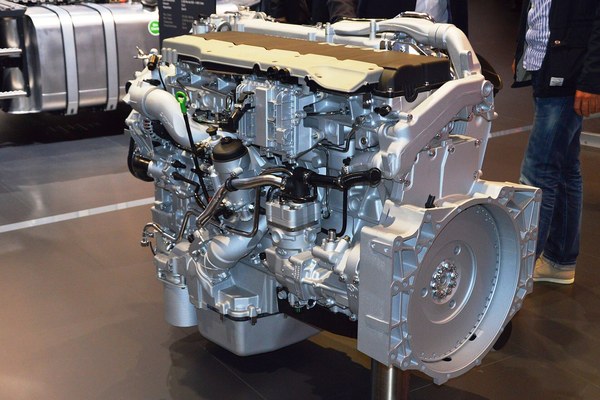
What we consistently see in pre-shipment inspection is that the most consequential defects are rarely in the spec sheet — they're in the physical unit.
What Inspection Finds That Documents Miss
Here are common findings that surface only during hands-on inspection:
- Oil leaks — engine, gearbox, or axle seals. Visible only underneath the truck or under running conditions.
- Frame cracks or weld repairs — often painted over. Require close physical examination, not photograph review.
- Worn clutch or transmission issues — audible and tactile under engine-running test conditions.
- Coolant contamination — visible in oil or coolant inspection during a running engine test.
- Electrical faults — partial cab function, instrument panel failures, lighting issues.
- Tire condition misrepresentation — photos can obscure sidewall cracking, tread depth, and mismatched sets.
- Previous accident repair — panel alignment, filler use, and structural distortion are physical findings.
When customers send us a third-party inspector or ask us to conduct pre-shipment inspection on their behalf, the report they receive reflects what the unit actually is — not what the listing described it as. Sometimes those match. Sometimes they don't. That's precisely the value of the inspection step.
Engine Testing Is Not the Same as a Visual Walkthrough
There's an important distinction between a visual inspection and a running engine test. A walkthrough can identify obvious physical damage, fluid leaks, and component wear. But confirming that an engine starts, runs clean, holds oil pressure, and doesn't overheat requires the engine to be running.
At Caanass, pre-shipment inspection includes engine testing as a standard step, not an add-on. We test engines before they're loaded into containers because discovering a problem after loading creates a much larger problem for everyone involved.
For buyers evaluating suppliers remotely, asking specifically whether inspection includes running engine tests — not just visual checks — is a meaningful differentiator. A supplier who only offers photo documentation is providing much less certainty than one who can provide documented engine test results.
Inspection as a Decision Tool, Not a Formality
The framing of inspection as a "best practice" undersells its function. Inspection is a decision tool. It answers the question: given what I now know about this specific unit, do I proceed, renegotiate, or decline?
Buyers who inspect before committing have options. Buyers who inspect after the container arrives have almost none.
The cost of arranging third-party inspection — whether through an independent inspector in China or through documented supplier inspection with video evidence — is a fraction of the cost of receiving a non-functional truck 10,000 kilometers from the seller.[4] This isn't a quality formality. It's procurement risk management with a clear return on investment.
Does Warehouse Size and Inventory Depth Signal Supplier Reliability?
Supplier selection in used truck procurement often comes down to intangibles — responsiveness, communication, referrals. But there are structural, verifiable signals that separate reliable suppliers from opportunistic ones. Warehouse size and inventory depth are among the most underused of those signals.
A supplier holding 200+ used trucks and 1,000+ engines in a managed, 12,000㎡ warehouse is structurally different from a broker sourcing on demand.[5] Physical inventory depth is a verifiable proxy for operational capacity, financial stability, and the ability to fulfill orders accurately and on schedule — all of which directly affect procurement outcomes for B2B buyers.
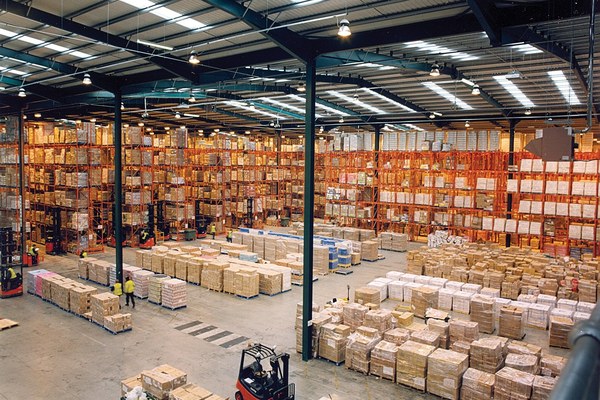
Understanding what inventory depth actually signals helps buyers ask better supplier qualification questions.
What Large, Organized Inventory Tells You About a Supplier
A supplier with deep physical stock has made capital commitments that brokers haven't. That changes their incentive structure and their operational reality in ways that matter to buyers:
- They can fulfill orders from stock, not from promises. Lead times are based on what's in the yard, not on sourcing timelines.
- They have recurring inspection and maintenance processes. Managing 200 trucks requires systematic workflows, not ad hoc attention.
- They've done this before, repeatedly. Volume inventory means volume transaction history — suppliers with this profile have shipped to many buyers and have reputational skin in the game.
- They can offer genuine substitutions if a first-choice unit doesn't pass inspection. A supplier with one or two matching units has no flexibility. A supplier with a deep yard has options.
At Caanass, our 12,000㎡ warehouse holds more than trucks. We also carry over 1,000 engines, 1,000+ gearboxes, and thousands of spare parts. For buyers who are sourcing both vehicles and parts for maintenance support, that depth matters operationally — it means we can often source complementary inventory in the same shipment.
Verifying Inventory Claims Before You Commit
Warehouse size and stock depth can be claimed as easily as anything else. The difference is they're verifiable. Here's how buyers can confirm supplier inventory claims:
- Request a live video tour of the warehouse and yard. A real yard with 200 trucks looks very different from a small lot with 10 vehicles.
- Ask for current stock lists with unit IDs, year, mileage, and condition notes. A supplier managing real inventory can produce this quickly. A broker cannot.
- Cross-reference unit IDs against photos and videos. If the chassis numbers in the stock list match the numbers visible in walkaround footage, you have corroborating evidence.
- Ask how long they've operated at this facility. Established warehouse operations have history. New setups with large claims deserve more scrutiny.
- Ask about fulfillment on recent orders. A supplier who can describe recent container-load shipments — routes, unit counts, delivery outcomes — is describing operational reality, not theory.
The Broker Risk in Used Truck Procurement
When we talk with procurement managers who've had difficult past experiences, the most common pattern is this: they placed an order with a supplier who didn't hold physical stock, got a substituted unit with different specs than agreed, and had no recourse once the container was at sea.[6]
That's not a fraud story — it's a structural mismatch story. A broker sourcing on demand is making their best effort to match your requirement, but they have limited control over what they source and limited accountability for mismatches. The risk isn't bad intention. It's misaligned capability.
Buyers who ask "can you get me a truck like X?" and buyers who ask "do you have X in stock right now?" are asking about two fundamentally different procurement relationships. Knowing which question you're actually asking — and what the honest answer is — is the first step in supplier qualification.
Which OEM Numbers Should You Verify Before Ordering?
Inventory depth only helps if the numbers match. For Chinese heavy trucks, the parts that fail most often in service are electrical and instrumentation items, and those are also where a wrong number is hardest to spot by eye: the connector looks right, the housing fits, and the gauge still reads wrong.
The table below lists OEM numbers we keep in stock for HOWO and Sinotruk electrical and cab items, with the check that has to happen before the carton is sealed.
| Component | OEM number | Typical application | What to verify before shipping |
|---|---|---|---|
| Combination instrument (CMIC) | WG9716580005 | HOWO A7 / T7H, including CNG variants | VDO versus non-VDO variant; connector pinout; odometer and hour-meter state |
| Combination instrument, VDO variant | WG9716580005/1 | HOWO A7 / T7H with VDO cluster | Same as above, plus software version on the label |
| Central body control unit (CBCU) | WG9716580023 | HOWO A7, T7H, C7H | Software variant and donor chassis number, return terms after installation |
| CBCU / ECU, VDO variant | WG9716580023/1 | HOWO series with VDO electronics | Coding requirements; whether the unit ships blank or coded |
| Mini controller (common rail) | WG9716582001 | HOWO with common-rail engines | Part-number supersession; mounting bracket included or not |
| LED headlamp, left / right | WG9719720001 / WG9719720002 | HOWO cab facelift models | Left/right pairing; plug type; beam pattern for the destination market |
| Rear-view mirror assembly | WG1771770035 / WG1771770036 | HOWO cab | Heated versus manual; arm length; left/right pairing |
| Starter motor | 612600090340 | Weichai WD615 engines | Gear teeth count; voltage; whether the solenoid is included |
Two rules sit under that table. First, the OEM number has to be quoted on the invoice, not just the description, because a description like "instrument cluster for HOWO" covers at least four different units. Second, if a supplier cannot tell you which variant they are shipping before payment, the stock is not really verified, no matter how full the warehouse looks.
Note: OEM numbers above are cross-checked against published Sinotruk electrical-system parts lists and supplier catalogues. Always confirm the final number against the chassis number before ordering, because Scania-style and Sinotruk-style supersessions both changed within model years.
Frequently Asked Questions
Can I rely on supplier photos and videos instead of arranging a physical inspection?
Photos and videos reduce uncertainty but don't eliminate it. They can confirm a truck exists and show obvious condition details, but they can't replace hands-on inspection for detecting oil leaks, frame damage, clutch wear, or hidden repairs. For high-value or multi-unit orders, documented supplier inspection with engine testing provides significantly more certainty than visual media alone.
What should I ask a supplier to prove their inventory is real and ready to ship?
Ask for unit-specific photos with visible chassis numbers, a current stock list with mileage and condition notes, and a live video walkthrough of the specific unit you're considering. Cross-referencing chassis numbers across documents and media is the most reliable way to confirm a unit is physically present and matches its listing.
How do I know if a supplier is a real warehouse operator or a broker?
Ask directly: "Is this unit physically in your yard right now, or will you source it after I confirm?" A warehouse operator can answer immediately with unit-level documentation. A broker will describe a sourcing process. Also request a live facility video — 200 trucks in a 12,000㎡ yard looks distinctly different from a small lot or a reseller's office.
Is third-party inspection worth the cost for used truck purchases?
For container-load or multi-unit orders, yes — clearly. The cost of a qualified third-party inspector in China is small relative to the cost of receiving unusable trucks thousands of kilometers from the seller.[7] Third-party inspection gives buyers an independent, documented assessment that neither relies on nor conflicts with the seller's own claims.
What does pre-shipment inspection typically cover for used trucks?
A thorough pre-shipment inspection should cover visual condition of the cab, frame, and body; undercarriage and suspension check; brake system condition; tire condition; running engine test including oil pressure, temperature, and exhaust; transmission function; and documentation of any visible defects.[8] At Caanass, engine testing under running conditions is a standard part of our inspection process — not optional.
Conclusion
Warehouse inventory verification and physical inspection are not procurement formalities — they are the primary tools buyers have to separate verifiable facts from supplier claims before committing to an international purchase. Used truck procurement without warehouse evidence is structurally blind: you don't know whether the truck exists as described, matches its stated condition, or is actually available. Physical or documented inspection gives buyers a known baseline, real decision options, and meaningful protection against the most common and costly sourcing failures.
At Caanass, we operate a 12,000㎡ warehouse with 200+ trucks and 1,000+ engines in physical stock — not sourced on demand. Pre-shipment inspection, including running engine tests, is part of our standard process. If you're evaluating a container-load order and want to understand what verification we can provide before you commit, contact our sourcing team for a direct conversation about your specific requirements.
Image credits
- Photo: FEMA / Wikimedia Commons (public domain) — source
- Photo: Sulthan Naufal / Wikimedia Commons (CC BY-SA 4.0) — source
- Photo: Spielvogel / Wikimedia Commons (CC0) — source
- Photo: Axisadman / Wikimedia Commons (CC BY-SA 3.0) — source
- [1]"Asymmetric Information, Adverse Selection and Online ...", https://dash.harvard.edu/bitstreams/7312037c-81b8-6bd4-e053-0100007fdf3b/download. Economic research on used vehicle markets, building on Akerlof's foundational work on information asymmetry, documents systematic gaps between seller-provided descriptions and actual vehicle condition, supporting the argument that independent verification is necessary for reliable procurement decisions. Evidence role: general_support; source type: research. Supports: That online listings and specification documents in used vehicle markets are subject to information asymmetry and do not reliably verify physical condition, availability, or accurate description of individual units.. Scope note: Academic literature on information asymmetry in used vehicle markets focuses predominantly on passenger vehicles; direct empirical data on listing accuracy for used commercial trucks in international B2B contexts is limited. ↩
- [2]"Used Truck Market Signals & Secondary Market Analysis", https://www.actresearch.net/resources/us-freight-sector/secondary-market. Research on used commercial vehicle supply chains documents the prevalence of intermediary and broker models in which dealers source units from auctions or secondary suppliers following buyer enquiries, rather than maintaining standing physical inventory. Evidence role: general_support; source type: research. Supports: That broker and intermediary models are common in used commercial vehicle supply chains, with suppliers frequently sourcing on demand rather than holding physical stock.. Scope note: Direct empirical data on the proportion of used truck suppliers operating without physical inventory is limited; supporting sources may address used vehicle markets broadly rather than heavy trucks specifically. ↩
- [3]"Measuring the Effectiveness of Vehicle Inspection ...", https://subasish.github.io/ait_lab/pdfs/2019%20(A)%20Das%20TRR%20Measuring%20the%20Effectiveness%20of%20Vehicle.pdf. Industry inspection standards and engineering guidance for used commercial vehicles identify physical examination and operational testing as necessary to detect defect categories — including frame cracks, seal failures, and drivetrain wear — that are not discernible from vehicle documentation or specification sheets. Evidence role: expert_consensus; source type: institution. Supports: That physical inspection of used commercial vehicles identifies mechanical and structural defects — including frame damage, drivetrain wear, and fluid leaks — that cannot be determined from documentation or specifications alone.. Scope note: Quantitative data on defect detection rates comparing inspection versus documentation review is sparse in publicly available literature; supporting sources may reflect general vehicle inspection practice rather than heavy truck export contexts specifically. ↩
- [4]"Trade Guide: WTO PSI", https://www.trade.gov/trade-guide-wto-psi. Trade facilitation and supply chain risk literature documents that pre-shipment inspection fees in international procurement are substantially lower than the combined costs of freight, customs, dispute resolution, and replacement associated with non-conforming goods received at destination. Evidence role: general_support; source type: institution. Supports: That pre-shipment inspection costs represent a small fraction of the total financial exposure associated with receiving non-conforming goods in international B2B transactions, including freight, dispute resolution, and replacement costs.. Scope note: Precise cost comparisons vary significantly by commodity, shipment volume, and trade route; available data may not reflect used commercial vehicle transactions specifically. ↩
- [5]"The Impact of Supplier Inventory Service Level on Retailer ...", https://www.hbs.edu/ris/Publication%20Files/11-034_95f981a4-388b-40f3-9751-fb654b05162e.pdf. Supply chain management literature on supplier qualification identifies physical asset commitments — including inventory holdings and warehouse infrastructure — as observable proxies for operational capacity and financial stability that reduce buyer uncertainty in B2B sourcing decisions. Evidence role: general_support; source type: research. Supports: That physical inventory holdings and warehouse capacity serve as observable signals of supplier operational capability, financial stability, and fulfillment reliability in B2B procurement contexts.. Scope note: Research addressing inventory depth as a supplier reliability signal in used commercial vehicle markets specifically is limited; supporting sources may address supplier qualification criteria in manufacturing or general goods procurement contexts. ↩
- [6]"How to Resolve B2B Disputes with Arbitration", https://www.adr.org/news-and-insights/resolving-b2b-disputes-with-arbitration/. International trade dispute literature and export compliance guidance document that specification substitution — the delivery of goods materially different from those contracted — is a recurring risk in cross-border B2B transactions, with buyer recourse significantly constrained after shipment due to jurisdictional complexity and transfer of risk under standard trade terms. Evidence role: case_reference; source type: institution. Supports: That specification substitution in international B2B goods transactions is a documented risk, and that buyer recourse is substantially limited once goods have been shipped and title transferred.. Scope note: Documented case data specific to used commercial truck export transactions is limited in publicly available literature; supporting sources may address international trade disputes across commodity categories more broadly. ↩
- [7]"Used Vehicle Inspection", https://www.sgsgroup.com.cn/en-cn/services/used-vehicle-inspection. Trade facilitation organizations and inspection service providers document that pre-shipment inspection fees for used vehicles in China typically represent a small fraction of total shipment value, supporting the cost-benefit case for inspection relative to the financial exposure of non-conforming goods received at destination. Evidence role: statistic; source type: institution. Supports: That third-party pre-shipment inspection fees for used vehicles in China are substantially lower than the freight, replacement, and dispute costs associated with non-conforming goods in international container shipments.. Scope note: Publicly available fee schedules for used commercial vehicle inspection in China are limited; cost comparisons depend on shipment volume, destination, and specific inspection scope, and may vary significantly across providers. ↩
- [8]"Used Commercial Truck Inspection Checklist: 2026 Guide", https://pacommercialtrucks.com/used-commercial-truck-inspection-checklist/. Industry inspection standards and guidance documents for used commercial vehicles — including those issued by vehicle inspection bodies and trade associations — define pre-shipment inspection scope to include structural assessment of cab and frame, undercarriage and suspension, brake system, tire condition, and operational testing of engine and drivetrain under running conditions. Evidence role: definition; source type: institution. Supports: That recognized inspection standards or industry guidance for used commercial vehicles define a scope of pre-shipment or pre-purchase inspection encompassing structural, mechanical, and operational assessment across the component categories listed.. Scope note: No single universally adopted international standard for used commercial truck pre-shipment inspection exists; applicable standards vary by jurisdiction, vehicle class, and trade route, and the checklist presented may reflect common practice rather than a codified requirement. ↩