Finding suppliers of Chinese truck parts is easy — open Alibaba right now and you will see thousands of listings before your coffee gets cold. The hard part is not the finding. It is knowing which supplier deserves your money when you are sitting in Nairobi, Hanoi, or Lima and cannot walk into their warehouse yourself.
You can find suppliers of Chinese truck parts through B2B platforms (Alibaba, Made-in-China, Global Sources), trade fairs (Canton Fair, Automechanika Shanghai[1]), Google searches, industry referrals, and direct outreach to exporters in Guangzhou or Jinan. But the real challenge is not discovering suppliers — it is evaluating, shortlisting, and de-risking them before you commit funds to a first order.
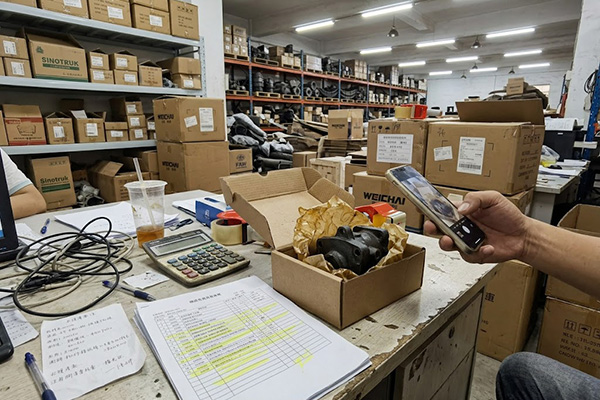
I have spent more than 20 years on the supply side of this equation, handling inquiries from wholesalers, fleet managers, and repair-shop owners across four continents. Below, I will walk you through the sourcing channels briefly — then spend most of our time on what actually matters: how to separate trustworthy suppliers from the noise.
What Are the Main Channels for Finding Chinese Truck Parts Suppliers?
Every buyer starts with the same question, and every article online gives the same answer: a list of platforms and events. Let me cover these quickly so we can move to the evaluation steps that most guides skip entirely.
The five primary channels for finding Chinese truck parts suppliers are B2B marketplaces, trade exhibitions, search engines, industry referrals, and direct factory or exporter outreach. Each channel has different strengths depending on your order volume, urgency, and comfort level with remote purchasing.
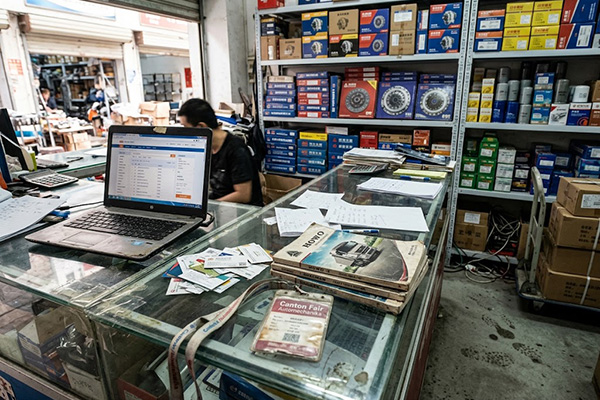
B2B Marketplaces
Platforms like Alibaba, Made-in-China, and Global Sources are the most accessible starting point. They let you search by product category, OE number, or truck model. You can compare listed prices, read company profiles, and initiate conversations with multiple suppliers simultaneously.
However, these platforms are discovery tools, not verification tools. A Gold Supplier badge on Alibaba means the company paid for a membership — it does not confirm product quality, inventory depth, or export experience[2]. In our experience, many buyers contact 10–15 suppliers on Alibaba and receive wildly different prices for what appears to be the same part. The price variation usually reflects different quality tiers, not different profit margins.
Trade Fairs and Exhibitions
The Canton Fair (held biannually in Guangzhou) and Automechanika Shanghai are the most relevant events for truck-parts buyers. Walking a supplier's booth lets you see physical samples, meet the sales team face-to-face, and compare multiple suppliers in a single trip.
The limitation is cost and timing. Flying to China twice a year is not practical for every buyer, especially small and mid-sized distributors in emerging markets. If you do attend, treat it as a shortlisting exercise — collect samples, business cards, and catalogs, then validate everything after you return home.
Search Engines and Direct Outreach
A targeted Google search — for example, "HOWO brake drum supplier Guangzhou export" — can surface exporters with their own websites who may not invest heavily in marketplace listings. Direct outreach via email or WhatsApp is common in our industry. Many of our long-term partnerships started with a buyer finding our website and sending a parts list for quotation.
Industry Referrals
Word of mouth remains powerful, particularly in close-knit markets. A fellow wholesaler in Addis Ababa or a fleet operator in Phnom Penh who has already tested a supplier's parts and communication can save you months of trial and error. The caveat: their requirements may differ from yours, so always conduct your own verification.
| Channel | Best For | Limitations |
|---|---|---|
| B2B Marketplaces | Broad discovery, initial price comparison | Listings can be misleading; no quality guarantee |
| Trade Fairs | Face-to-face evaluation, physical samples | Expensive, infrequent, time-consuming |
| Google / Direct Outreach | Finding niche or specialized exporters | Harder to compare multiple suppliers quickly |
| Industry Referrals | Pre-vetted options, trust transfer | Another buyer's needs may not match yours |
The honest truth is that all of these channels will give you a list of 20+ potential suppliers within a day. The channel you use matters far less than what you do next.
How Do Different Buyer Types Need Different Suppliers of Chinese Truck Parts?
One of the biggest mistakes I see is buyers treating "find a supplier" as a single task. A wholesaler filling a 40-foot container with mixed HOWO and SHACMAN parts has fundamentally different needs than a fleet operator who needs 50 brake pads by next week. Choosing the wrong supplier structure for your buying pattern costs more than any price premium.
Wholesalers need broad catalogs, mixed-container consolidation, and accurate OE matching across multiple brands. Fleet operators need fast turnaround on specific high-wear parts and consistent batch quality. Repair shops need competitive small-order pricing, correct fitment, and manageable lead times. Match your supplier to your buying profile before comparing prices.
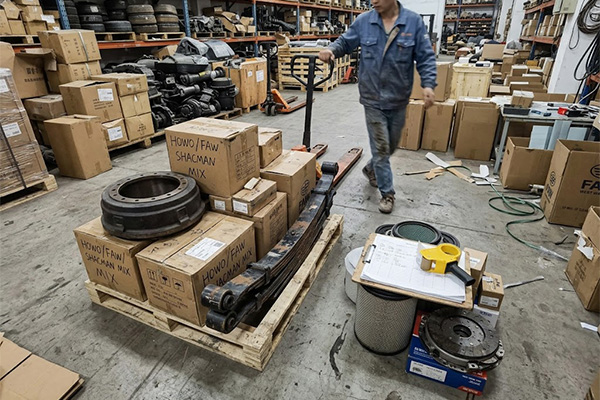
Wholesalers and Distributors
If you run a regional warehouse stocking parts for HOWO, SHACMAN, FAW, FOTON, and DONGFENG trucks, your core requirement is catalog breadth and consolidation capability. You need a supplier who can source engine components, brake parts, transmission assemblies, suspension pieces, electrical items, cabin parts, and filters — ideally from one procurement point.
Why does this matter? Because shipping five separate containers from five separate suppliers in five different Chinese cities destroys your logistics budget and multiplies your coordination headaches. A supplier with access to 40,000+ SKUs across multiple brands[3] lets you build one consolidated order, one set of export documents, and one shipment.
Key evaluation criteria for wholesalers:
- Product range: Can the supplier cover at least 80% of your purchasing list from one source?
- Mixed-container capability: Will they pack different brands and categories into a single container?
- OE-number accuracy: Do they cross-reference your OE numbers against multiple databases, or just search their inventory?
- Export documentation: Can they prepare commercial invoices, packing lists, certificates of origin, and fumigation certificates to your country's requirements?
Fleet Operators
If you manage a fleet of 50–200 Chinese trucks in a mining operation or logistics company, your priority is uptime. Every day a truck sits idle costs money — often far more than the replacement part itself[4]. You need a supplier who keeps critical parts (brake drums, clutch plates, air filters, king pins) in ready stock and can quote and ship within days, not weeks.
Key evaluation criteria for fleets:
- Stock availability of high-wear items specific to your truck models
- Consistent quality across repeat orders (same factory, same spec, every time)
- Preventive-maintenance kits or bundled parts packages for scheduled servicing
- Responsive communication — can you reach them during your working hours?
Repair Shops and Retailers
If you place smaller, recurring orders — perhaps $2,000–$10,000 at a time — your challenge is that many large suppliers will not prioritize small orders. You need a supplier willing to handle lower MOQs, provide accurate vehicle-compatibility matching, and maintain short quotation turnaround times.
| Buyer Type | Primary Need | Supplier Must-Have |
|---|---|---|
| Wholesaler / Distributor | Broad catalog, consolidation | Multi-brand sourcing, mixed-container logistics |
| Fleet Operator | Uptime, consistency | Ready stock of critical parts, fast response |
| Repair Shop / Retailer | Correct fitment, small orders | Low MOQ flexibility, OE-number matching |
Identifying your buyer type first dramatically narrows your supplier shortlist. A supplier that excels at mixed-container consolidation for wholesalers may be a poor fit for a fleet operator needing emergency shipment of 20 injector nozzles.
How Do I Evaluate a Chinese Truck Parts Supplier Before Sending Money?
This is where most online guides fail you. They say "check reviews" and "ask for samples" without explaining what to look for or what red flags to watch. After two decades of fielding buyer inquiries — and watching some buyers learn expensive lessons — I want to give you a concrete evaluation framework.
Evaluate a Chinese truck parts supplier by testing their OE-number accuracy, measuring response time and communication quality, verifying export documentation capability, requesting real product photographs (not catalog renders), placing a small trial order, and checking whether they can explain the quality tier of their products. Price alone is not a reliable indicator.
Test OE-Number Accuracy First
This is the single most revealing test you can perform, and it costs nothing. Send the supplier a list of 10–15 OE numbers for parts you already know well. Include a few tricky ones — perhaps a part number that covers multiple variants depending on the production year, or a number commonly confused with a similar part.
A competent supplier will:
- Confirm which OE numbers they can supply and which they cannot (beware suppliers who claim 100% availability on every list)
- Ask clarifying questions about truck model, chassis number, or engine series when the OE number alone is ambiguous
- Flag potential mismatches — for example, noting that a particular brake drum number applies to an older HOWO model and confirming your truck's production year
A weak supplier will simply reply with prices for every item without asking a single question. In our daily work, we frequently encounter situations where a buyer sends an OE number that matches two different physical parts depending on the truck's axle configuration. If a supplier does not catch this, they will ship the wrong part — and the cost of a return shipment from Lagos or Phnom Penh is far higher than the part itself.
Measure Response Time and Communication Quality
Set a baseline: how long does the supplier take to respond to your initial inquiry? In our experience, 24 hours is a reasonable benchmark for a first reply (accounting for time zones). Longer than 48 hours on a straightforward inquiry is a warning sign — if they are slow before they have your money, imagine the response time when you have a post-delivery problem.
Beyond speed, evaluate communication substance:
- Do they answer your actual questions, or send generic company introductions?
- Do they proactively provide packing details, lead times, and shipping options?
- Can they communicate in your preferred language at a functional level?
Verify Export Documentation Capability
Ask the supplier to list the export documents they routinely provide. For most destination countries in Africa, Southeast Asia, and the Middle East, you will need some combination of:
- Commercial invoice
- Packing list
- Bill of lading
- Certificate of origin
- Fumigation certificate (for wooden packing)
- Form E, Form F, or other preferential trade certificates[5]
A supplier experienced in your target market will know exactly which documents your customs authority requires. If they hesitate or ask you to handle all documentation yourself, they may lack export experience — which increases your risk of port delays and additional costs.
Request Real Product Photographs
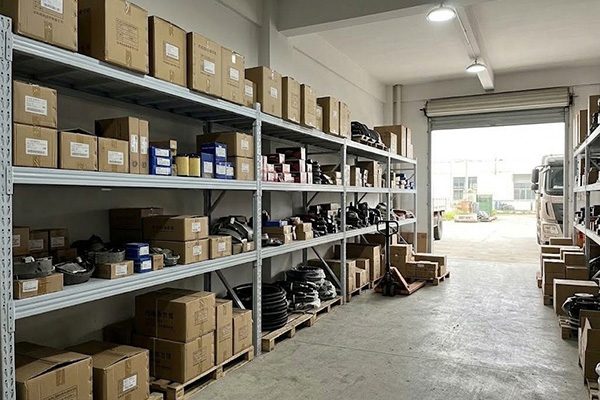
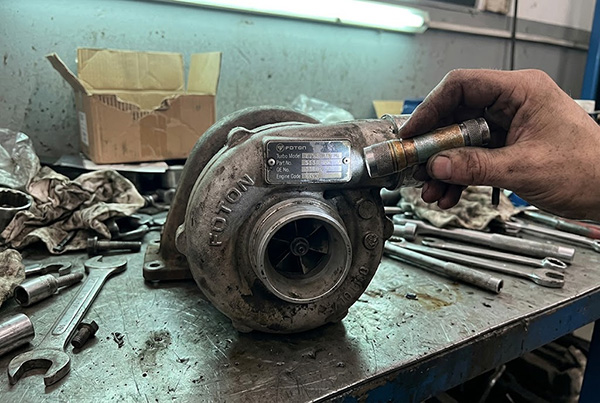
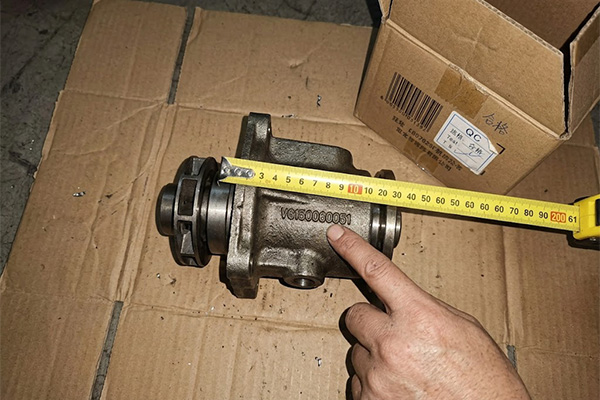
This sounds simple, but it is surprisingly effective at separating serious suppliers from resellers working off catalog images. Ask for photos of the actual product in their warehouse, including packaging, markings, and any stamped part numbers. Compare these against OE reference images.
Pro tip: Ask for a photo of the product next to a ruler or known object for scale. We regularly send buyers photos showing stamped OE numbers, packaging labels, and physical dimensions to confirm fitment before shipment.
Place a Small Trial Order
No amount of online research replaces a physical test. Order a small batch — enough to verify quality, packaging, labeling accuracy, and delivery timeline without committing major capital. A reputable supplier welcomes trial orders because they understand it is the beginning of a relationship, not a one-time transaction.
Evaluate the trial on:
- Part accuracy: Did the delivered parts match the OE numbers and specifications quoted?
- Packaging quality: Were parts protected adequately for ocean freight?
- Documentation accuracy: Did the paperwork match the actual contents?
- Delivery timeline: Did the order ship within the promised window?
Why Is Parts Mismatch a Bigger Risk Than Price When Sourcing Chinese Truck Parts?
Many buyers searching for suppliers of Chinese truck parts focus their evaluation almost entirely on unit price. I understand the pressure — margins are tight, competition is fierce, and a lower landed cost directly improves profitability. But in our experience, the costliest mistakes in this industry are not overpaying by 5% — they are receiving the wrong parts entirely.
Parts mismatch, incompatible fitments, and post-payment communication failure cost far more than any price premium. A single container of mismatched brake drums shipped to East Africa can cost $3,000–$8,000 in return logistics, customer refunds, and lost business[6] — dwarfing any unit-cost savings. Prioritize accuracy and accountability over lowest price.
The True Cost of a Wrong Part
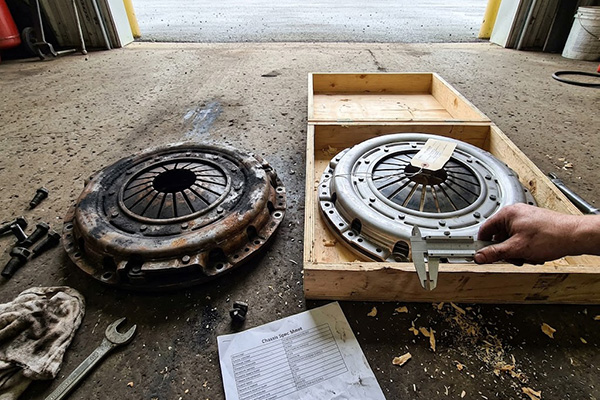
Let me walk through a real-world scenario we see regularly. A buyer in Tanzania orders 200 units of a specific HOWO clutch pressure plate. The supplier quotes an attractive price and ships promptly. When the container arrives in Dar es Salaam and the buyer's mechanic opens the first box, the bolt pattern does not match — the supplier sent a variant for a different HOWO transmission series.
The direct costs:
- Customs duties and taxes already paid on parts that cannot be sold
- Warehousing costs for inventory that sits unsold
- Return shipping (if the supplier agrees, which is rare for low-value items)
- Replacement order from a different supplier, with fresh shipping and customs costs
- Lost sales and damaged reputation with the buyer's own customers
These costs frequently exceed 20–40% of the original order value. Compare that to the 3–8% you might have saved by choosing the cheapest quote.
Why Mismatches Happen
Parts mismatches in Chinese truck parts sourcing typically occur because:
- The buyer provided an incomplete or ambiguous OE number, and the supplier did not ask clarifying questions
- The supplier stocks multiple quality tiers and shipped the cheapest version without disclosing the difference
- Chinese truck manufacturers revised part specifications across production years, and neither party confirmed the truck's build date
- The supplier is a trading company that forwarded the order to a sub-supplier without verifying the product themselves
A good supplier acts as a technical filter between you and the factory. In our workflow, when a buyer sends a parts list, we cross-reference OE numbers against our database, flag ambiguities, and often ask for chassis numbers or photographs of the old part. This slows the quotation process by a few hours but prevents errors that take months to resolve.
How to Protect Yourself
- Always confirm OE numbers with vehicle model, chassis number, and production year
- Request a product data sheet or dimensional drawing for critical parts
- Ask the supplier what happens if the part is wrong — a clear return/replacement policy signals accountability
- Photograph your old parts and send them alongside OE numbers for visual cross-reference
What Do "Factory Direct" and "OEM Quality" Actually Mean for Chinese Truck Parts?
If you browse any B2B marketplace for Chinese truck parts, you will see "factory direct" and "OEM quality" in nearly every listing. These phrases have become so overused that they have lost practical meaning. Understanding what lies behind them helps you avoid overpaying for commodity parts — or underpaying for parts that will fail prematurely.
"Factory direct" means the supplier claims to source from the manufacturer without intermediaries — but many self-described factories are actually trading companies or assemblers. "OEM quality" suggests the part meets original-equipment specifications, but this claim is rarely backed by verifiable documentation. Treat both phrases as marketing starting points, not quality evidence.
The Quality Spectrum Is Real
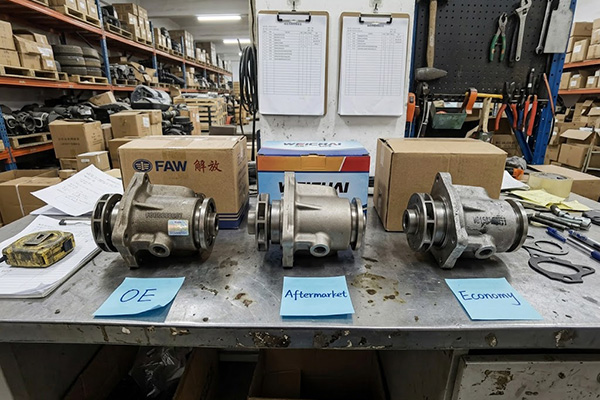
Not all Chinese truck parts are equal, and a responsible supplier will acknowledge this openly. In the Chinese truck-parts market, products generally fall into three tiers:
| Quality Tier | Description | Typical Buyer |
|---|---|---|
| OE-grade / Genuine | Produced by the truck manufacturer's authorized supplier, bearing the OEM brand | Fleets requiring exact-spec replacements; warranty-sensitive applications |
| Aftermarket-standard | Produced by independent factories to OE specifications, often with comparable materials | Wholesalers and distributors seeking good quality at moderate cost |
| Economy / Low-cost | Produced to lower material or tolerance standards, priced significantly below OE | Price-sensitive markets with lower performance expectations |
The supplier's sourcing network determines which tier you actually receive. A supplier with established relationships across Weichai, Fast Gear, Hande Axle[7], and other major component ecosystems can source across all three tiers — and more importantly, can tell you which tier they are quoting.
How to Probe Quality Claims
When a supplier claims "OEM quality," ask:
- Which factory produces this part? A transparent supplier will name the manufacturer or at least describe their sourcing relationship.
- Can you provide the OE cross-reference number? Genuine OE-grade parts should carry traceable part numbers.
- Do you have actual product photos showing stampings, packaging, and labels? Catalog renders are marketing material, not evidence.
- What is the documented return or defect rate on this product from previous shipments?
When a supplier claims "factory direct," ask:
- Is your company the manufacturer, or do you source from manufacturers? Both models are valid, but the distinction matters for pricing and accountability.
- Can you provide factory audit reports or export records? Buyers should verify these documents through independent channels where possible.
- How do you handle quality control before shipment — visual inspection, dimensional checks, or third-party testing?
In our business, we position ourselves as a sourcing and consolidation specialist, not as a factory. We source from a network of verified manufacturers and conduct our own checks before shipment. I mention this not to claim superiority, but to illustrate that honest positioning is itself a trust signal. A supplier who accurately describes their role in the supply chain is more likely to accurately describe their products.
Frequently Asked Questions
What is the minimum order quantity for Chinese truck parts suppliers?
MOQ varies widely. Large consolidation suppliers often accept mixed orders starting at a few hundred dollars per SKU, with total order values typically ranging from $5,000 to $50,000 for cost-effective container shipping. Some suppliers accommodate smaller trial orders. Always clarify MOQ per item and per shipment upfront.
How long does shipping take from China to Africa or Southeast Asia?
Ocean freight from Guangzhou or Shanghai typically takes 15–35 days depending on the destination port. Southeast Asian ports like Ho Chi Minh City or Manila are on the shorter end. East African ports like Mombasa or Dar es Salaam are on the longer end. Add 5–10 days for customs clearance on the receiving end.
Can I mix different truck brands in one container order?
Yes, many experienced Chinese truck parts suppliers offer mixed-container consolidation. This means you can include HOWO brake parts, SHACMAN engine components, and FAW filters in a single shipment. This is one of the key advantages of working with a multi-brand sourcing supplier rather than going to individual factories.
How do I verify if a Chinese supplier is legitimate?
Request their business license (can be verified through China's National Enterprise Credit Information Publicity System[8]), check their export history through customs data services, ask for references from buyers in your region, and start with a verifiable small order. A qualified trade professional or sourcing agent can also assist with on-site verification.
Should I use a sourcing agent or buy directly from a supplier?
Both approaches work. A good sourcing agent adds value if you are new to Chinese procurement and need on-the-ground support. However, if the supplier already offers consolidated sourcing, OE matching, export documentation, and logistics coordination, you may be paying for services you do not need. Evaluate whether the agent's fee is justified by the complexity of your order.
Conclusion
The question of where to find suppliers of Chinese truck parts has an easy answer — platforms, fairs, referrals, and search engines will surface more options than you need within hours. The harder, more valuable question is how to evaluate those suppliers so your first order arrives correct, on time, and at a quality level that matches what you were quoted.
Focus your evaluation on OE-number accuracy, communication responsiveness, export documentation capability, and honest quality-tier disclosure. Match your supplier's structure to your buyer type. And always validate with a trial order before scaling.
At Caanass (Guangzhou Grand Auto Parts Co., Ltd.), we specialize in one-stop sourcing for HOWO, SHACMAN, FAW, FOTON, and DONGFENG truck parts, with access to over 40,000 items and more than 20 years of B2B export experience. If you have a parts list, OE numbers, or chassis information you need matched, send it to us — we will provide a detailed quotation with real product photos and honest quality-tier guidance.
Email: grand@caanass.com WhatsApp: +86 19924698529
- [1]"Automechanika Shanghai", https://automechanika-shanghai.hk.messefrankfurt.com/shanghai/en.html. Automechanika Shanghai, organized by Messe Frankfurt, is the leading international trade fair for automotive parts, equipment, and service suppliers in Asia, hosting thousands of exhibitors and attracting global buyers from the automotive aftermarket sector (Messe Frankfurt event profile). Evidence role: general_support; source type: institution. Supports: Automechanika Shanghai is a major international trade fair for the automotive parts and aftermarket industry held annually in Shanghai.. Scope note: Organizer-published statistics may reflect promotional framing rather than independent assessment. ↩
- [2]"Alibaba Gold Supplier & Verified Supplier: Can I Trust Them?", https://jingsourcing.com/b-alibaba-gold-supplier/. Alibaba's Gold Supplier program requires an annual membership fee and includes a third-party authentication of the supplier's business registration, but it does not independently verify product quality, manufacturing capability, or export track record (Alibaba.com Supplier Membership Terms). Evidence role: definition; source type: other. Supports: Alibaba's Gold Supplier status is a paid membership tier that includes basic business verification but does not constitute a guarantee of product quality or export competence.. Scope note: Platform terms may be updated; the specific scope of verification included with Gold Supplier status should be confirmed against current Alibaba documentation. ↩
- [3]"Chinese Truck Parts: Sourcing Guide in 2026", https://china.docshipper.com/en/sourcing/chinese-trucks-parts-sourcing-guide/. Major Chinese heavy-truck platforms such as Sinotruk HOWO, SHACMAN, FAW Jiefang, Foton Auman, and Dongfeng each maintain parts catalogs comprising thousands of individual SKUs spanning engine, drivetrain, braking, suspension, electrical, and cabin components; a multi-brand sourcing operation aggregating across five or more platforms could plausibly reference 40,000 or more distinct part numbers (industry estimates based on OEM parts catalog analysis). Evidence role: general_support; source type: research. Supports: The Chinese heavy-truck aftermarket encompasses tens of thousands of distinct part numbers across major OEM platforms, making large SKU counts plausible for multi-brand consolidation suppliers.. Scope note: No single published source provides a definitive total SKU count across all Chinese truck brands; the figure is consistent with industry scale but represents the supplier's own claim. ↩
- [4]"Long-Haul Truck Idling Burns Up Profits", https://afdc.energy.gov/files/u/publication/hdv_idling_2015.pdf. Fleet management studies and industry surveys consistently estimate unplanned heavy-truck downtime costs at $500–$1,500 or more per vehicle per day when accounting for lost revenue, idle labor, and cascading logistics disruptions, often exceeding the cost of the failed component by an order of magnitude (American Transportation Research Institute, operational cost analyses; TMC/ATA fleet benchmarking reports). Evidence role: statistic; source type: research. Supports: The daily cost of unplanned heavy truck downtime—including lost revenue, driver wages, and contractual penalties—typically far exceeds the cost of the replacement part that caused the stoppage.. Scope note: Most published downtime cost data originates from North American or European fleet studies; figures for emerging-market operations in Africa or Southeast Asia may differ due to lower labor costs and different revenue structures. ↩
- [5]"National Voter Registration Application Form for U.S. Citizens", https://www.eac.gov/sites/default/files/eac_assets/1/6/Federal_Voter_Registration_ENG.pdf. Form E is the preferential certificate of origin issued under the ASEAN-China Free Trade Agreement (ACFTA), enabling reduced or zero tariff rates on qualifying goods traded between China and the ten ASEAN member states; Form F serves a similar function under the China-Chile Free Trade Agreement (ASEAN Secretariat; China General Administration of Customs documentation guidelines). Evidence role: definition; source type: government. Supports: Form E is a certificate of origin issued under the ASEAN-China Free Trade Agreement (ACFTA) that entitles qualifying goods to preferential tariff rates when exported from China to ASEAN member states.. Scope note: Specific tariff concessions and documentation requirements vary by product HS code and destination country; buyers should consult their national customs authority for current requirements. ↩
- [6]"The impact of container shipping costs on import and ...", https://www.oecd.org/content/dam/oecd/en/publications/reports/2025/08/the-impact-of-container-shipping-costs-on-import-and-consumer-prices_dfc467b3/957f0c0c-en.pdf. Industry analyses of international trade logistics indicate that the cost of returning or re-routing a misdirected or non-conforming container shipment—including port storage, re-export customs procedures, and return freight—can range from $2,000 to $10,000 or more depending on the route and cargo type, consistent with the article's estimate (World Bank Logistics Performance Index reports; Freightos market data). Evidence role: general_support; source type: research. Supports: Return logistics costs for containerized cargo from East Africa to China, including port handling, re-export documentation, and freight charges, can amount to several thousand dollars, making incorrect shipments disproportionately expensive relative to the goods' value.. Scope note: Exact costs depend heavily on specific port charges, container type, and whether the goods are returned or disposed of locally; the cited range is an approximation rather than a documented case. ↩
- [7]"Weichai Group", https://en.wikipedia.org/wiki/Weichai_Group. Weichai Power Co., Ltd. is one of China's largest diesel engine manufacturers and a subsidiary of Weichai Holding Group; Shaanxi Fast Auto Drive Group (Fast Gear) is a leading heavy-duty transmission producer; and Hande Axle (a subsidiary of Shaanxi Automobile Holding Group) is a major heavy-duty axle manufacturer—together forming the core powertrain supply chain for Chinese commercial vehicles including HOWO and SHACMAN trucks (see Wikipedia entries for Weichai Power and Shaanxi Automobile Group). Evidence role: general_support; source type: encyclopedia. Supports: Weichai Power, Shaanxi Fast Gear, and Hande Axle are among the largest component manufacturers in China's heavy-duty truck industry, supplying engines, transmissions, and axles respectively to major OEMs.. Scope note: Wikipedia entries may not reflect the most current corporate structure or market share data. ↩
- [8]"China's National Enterprise Credit Information Publicity ...", https://www.qcckyc.com/blog-detail/china-necips-kyb-guide. The National Enterprise Credit Information Publicity System (NECIPS), administered by China's State Administration for Market Regulation (SAMR), provides publicly accessible records of registered enterprises including business license details, legal representative information, and administrative penalties (SAMR official portal, gsxt.gov.cn). Evidence role: definition; source type: government. Supports: China's National Enterprise Credit Information Publicity System (国家企业信用信息公示系统) is an official government platform operated by the State Administration for Market Regulation that allows public verification of registered business entities in China.. Scope note: The system is primarily in Chinese and may require the supplier's registered Chinese company name or unified social credit code for effective searches. ↩