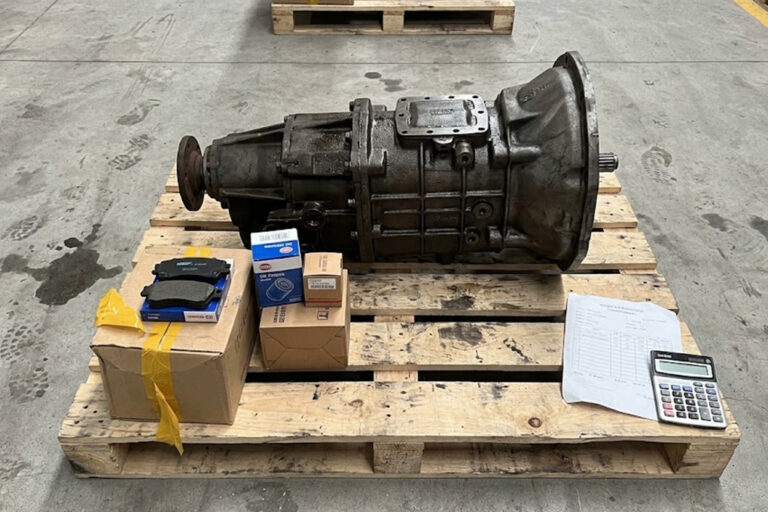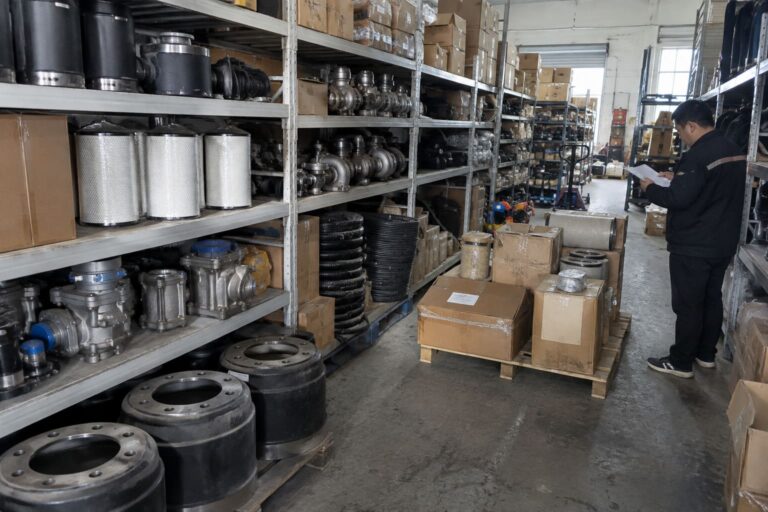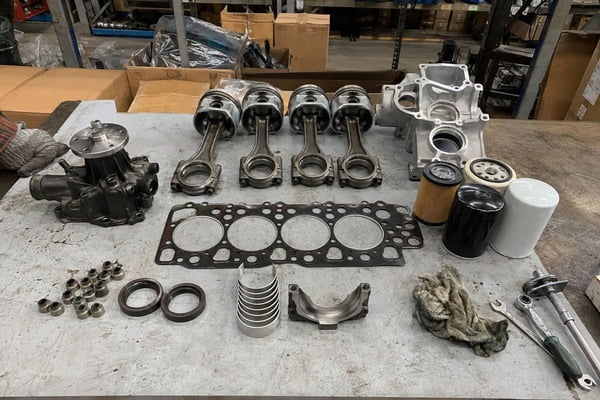
Who Sells International Truck Parts?
Sourcing international truck parts sounds straightforward until you're managing a mixed container order across three brands and two suppliers can't confirm stock. The wrong seller costs you more than margin — it costs you downtime. The right one matches parts accurately, consolidates SKUs, and ships at the scale your procurement structure actually needs.
The honest answer: several types of sellers offer international truck parts — trading companies, platform storefronts, manufacturers, and dedicated B2B exporters. But for overseas wholesalers and distributors sourcing Chinese commercial truck parts at volume, the most reliable option is typically a specialist B2B exporter with verifiable warehouse depth, multi-brand OE matching capability, and proven mixed-order consolidation. That's a narrow category, and knowing how to identify it matters.
Most buyers shortlist sellers before they ask the right questions. Understanding who is actually selling — and what their operational structure looks like behind the storefront — separates a vendor you can build a supply chain around from one that will struggle when your order gets complex. Let's work through that.
What Types of Sellers Actually Offer International Truck Parts?
The phrase "international truck parts" covers a wide range of sellers, and the category differences matter far more than most first-time importers realize.
When you search for international truck parts suppliers, you'll encounter at least four distinct seller types — each with different capabilities, limitations, and appropriate use cases. Choosing the wrong type for your procurement structure is one of the most common sourcing mistakes overseas distributors make.
Here's a working breakdown of who you'll encounter:
Trading Companies
Trading companies act as intermediaries. They don't manufacture and often don't stock. They source on demand, which creates variability in lead times and quality consistency. For small, occasional orders, this can work. For recurring replenishment or container-scale purchasing, the lack of stock depth is a genuine risk.
Platform Storefronts (Alibaba, Made-in-China, etc.)
Marketplaces surface a wide range of sellers under a uniform interface, which creates a visibility problem: you can't easily distinguish a specialist exporter from a general parts reseller.[1] Many storefronts on these platforms are trading accounts, not warehousing operations. The platform vetting covers basic legitimacy, not parts-matching expertise or fulfillment depth.
Manufacturers
Some truck parts manufacturers export directly. Their advantage is traceability — you can often verify part provenance. Their limitation is breadth: a single manufacturer typically covers one parts category (say, brake components) or one brand's ecosystem. If you're sourcing across HOWO, SHACMAN, FAW, FOTON, and DONGFENG in a single order, a single manufacturer can't consolidate that.
Dedicated B2B Exporters
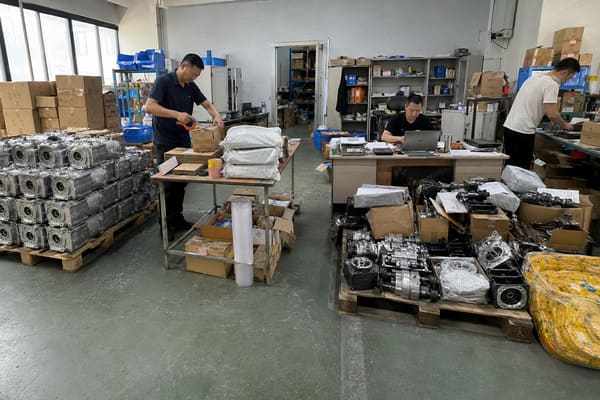
This is the category that fits most overseas wholesalers and distributors sourcing at volume. A dedicated B2B exporter operates their own warehouse stock, maintains multi-brand sourcing relationships, handles OE number matching, and coordinates international logistics under one commercial relationship.
| Seller Type | Warehouse Stock | Multi-Brand Capability | OE Matching | Mixed-Order Consolidation |
|---|---|---|---|---|
| Trading Company | Rarely | Sometimes | Inconsistent | Difficult |
| Platform Storefront | Varies | Varies | Varies | Rarely |
| Manufacturer | Single category | No | Yes (own parts) | No |
| B2B Specialist Exporter | Yes | Yes | Yes | Yes |
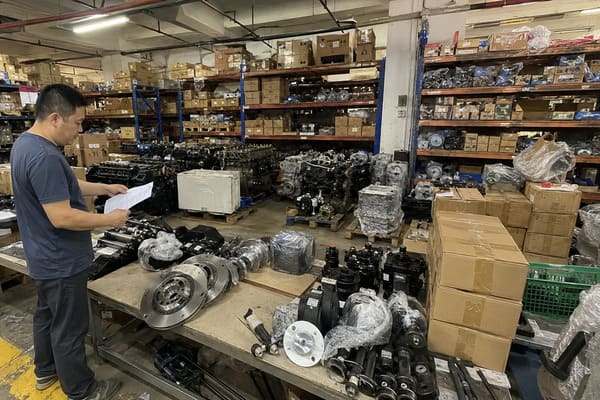
At Caanass, we operate as a dedicated B2B exporter with an 8,000 m² warehouse, 40,000+ SKUs, and active coverage across HOWO, SHACMAN, FAW, FOTON, and DONGFENG parts. In our experience, buyers who understand this distinction before they shortlist suppliers ask better questions and close better supply agreements.
How Do You Verify a Supplier's Actual Capability for International Truck Parts?
Most procurement problems start before the first order ships — they start during supplier evaluation, when buyers accept surface-level credibility signals without probing operational specifics.
Verifying a supplier's capability means asking specific, operational questions rather than reviewing a product catalog and assuming the rest. The right questions surface capacity gaps before they become fulfillment failures.

Here are the questions that matter in practice:
Can They Match Your OE Numbers to Your Vehicle Models?
Parts identification is not trivial. The same part description — say, a clutch release bearing — covers dozens of configurations across truck brands and production years.[2] A supplier without structured OE matching capability will ship what they have, not what you need.
Ask directly: Do you support OE number lookup? Can you cross-reference a chassis number or model year to confirm fitment? A supplier who hesitates or redirects to a generic catalog is telling you something.
What Is Their Actual Stock Depth?
A wide SKU count in a catalog is not the same as available warehouse stock. Ask for lead times on specific part numbers you know you'll need. A supplier drawing from live warehouse inventory gives you a different answer than one sourcing on demand after your order is placed.
At Caanass, when the customers we work with typically ask for lead time confirmation, we reference our warehouse availability directly — not a theoretical catalog. That's the difference between an 8,000 m² stocking operation and a reseller.
Can They Handle Mixed-SKU Container Orders?
This is the real capability test for wholesalers and distributors. A mixed container order might include engine filters, brake shoes, cabin hardware, and electrical components — across two or three truck brands — consolidated into a single shipment.
Ask: Do you consolidate mixed-brand, mixed-category orders into container shipments? How do you handle packing lists and documentation for customs? A supplier who can't answer this operationally is not built for your procurement workflow.
What Export Markets Do They Regularly Serve?
A supplier with active customers across 100+ countries has navigated HS code classification, export documentation, and destination-country import requirements at scale. That's directly relevant to your clearance risk. Caanass currently exports to more than 100 countries — not as a marketing claim, but as operational evidence that the export logistics structure is functioning.
What Certifications and Quality Documentation Can They Provide?
Treat certifications as documents to verify, not claims to accept. Ask for specific documentation: ISO certificates with issuing body and validity date[3], test reports for specific part categories, and any quality grading transparency they can offer. A supplier who explains their quality tiers clearly — rather than describing everything as "OEM quality" — is giving you more useful information.
Is Quality a Concern When Sourcing International Truck Parts From China?
Quality anxiety is the single most common barrier for buyers evaluating Chinese truck parts for the first time. And it's partly justified — partly.
The real issue is that quality for international truck parts from China is not a fixed attribute. It's a selection outcome. The relevant question is not "are these parts good quality?" — it's "which quality grade is appropriate for my application, and does this supplier help me choose correctly?"
The Three Practical Quality Tiers
Most B2B suppliers in this market work across at least three quality tiers, even if they don't label them explicitly:
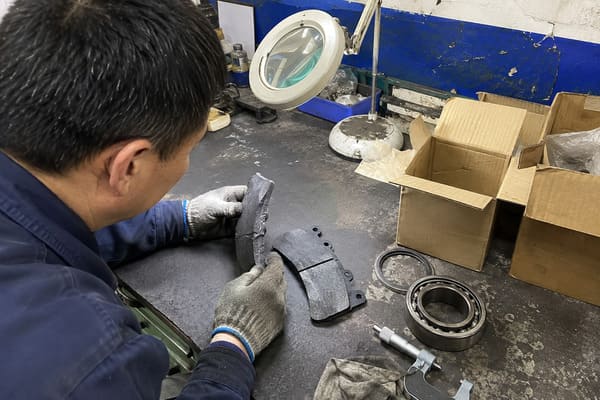
OEM-Equivalent / Branded Aftermarket These parts are manufactured to match the original specification, often by suppliers that also produce for vehicle assembly lines. They carry identifiable brand markings and are typically accompanied by documentation. Price is higher. For critical components — brake systems, steering, engine internals — buyers managing fleet safety should evaluate this tier.
Standard Replacement Grade These parts meet functional specifications but may use different material grades or tolerances than OEM. For high-turnover maintenance items — filters, gaskets, belts, cabin hardware — standard replacement grade is often the correct procurement decision on cost grounds. The risk is low, the replacement cycle is short.
Economy / Unbranded The lowest price tier. Appropriate for some applications, genuinely problematic for others. A supplier who sells only from this tier without explaining the distinction is not giving you enough information to make a safe procurement decision.
In our experience, buyers who tell us their application — fleet type, routes, average replacement cycle — get a more useful recommendation than buyers who just ask for the lowest price. We explain these tiers to the customers we work with regularly because the wrong grade selection costs more in the long run than the price difference suggests.
The "Chinese Parts" Assumption
The assumption that Chinese parts are uniformly low quality does not match the current manufacturing landscape.[4] China supplies parts to European and North American truck manufacturers under their own supplier programs. The quality range is wide. The selection decision is what matters — and that's a service a qualified supplier provides, not something a catalog conveys on its own.
Why Does Order Consolidation Matter for International Truck Parts Buyers?
For single-category purchases, almost any supplier can perform. The real complexity surfaces when you're sourcing across multiple brands, multiple part categories, and multiple units in a single procurement cycle.
Mixed-order consolidation is where most smaller or less-specialized suppliers fail. And for overseas wholesalers, this is often the highest-leverage operational capability a supplier can offer.
Why Fragmented Sourcing Is Expensive
Consider a distributor managing a mixed HOWO and SHACMAN fleet across a regional customer base. A single replenishment cycle might require:
- Engine air and oil filters (multiple engine codes)
- Clutch assemblies (different variants by year and gearbox type)
- Brake lining kits (front and rear, multiple axle configurations)
- Cabin weather seals and mirror assemblies
- Electrical components (relays, sensors, wiring harness sections)
Sourcing each category from a different supplier means:
- Multiple purchase orders and vendor communications
- Multiple lead times that may not align
- Multiple partial shipments with separate freight costs and customs entries
- Increased customs documentation complexity at destination
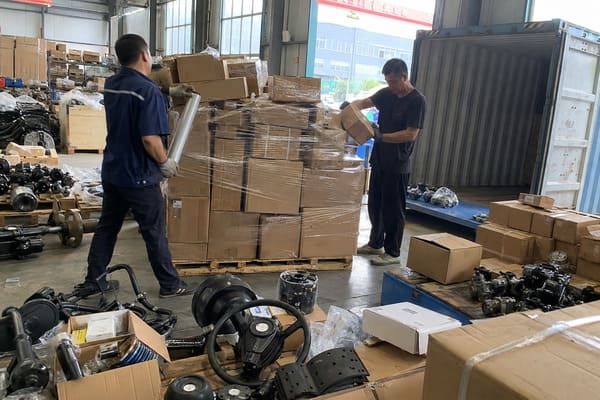
A single B2B exporter who can warehouse and consolidate all of this into one container shipment removes four of those five problems simultaneously.
What "Consolidation Capability" Actually Requires
True mixed-order consolidation requires:
- Physical warehouse inventory, not drop-ship or on-demand sourcing
- Multi-brand parts relationships, not single-brand specialization
- Packing and documentation control, so customs paperwork reflects the actual contents accurately
- Logistics coordination, including freight forwarding integration and export documentation
At Caanass, our 8,000 m² warehouse and 40,000+ SKU coverage across HOWO, SHACMAN, FAW, FOTON, and DONGFENG lines exist specifically to support this workflow. Buyers who bring us a full parts list — rather than a single part number — typically get more value from the relationship because we're built to fulfill at that complexity level.
Frequently Asked Questions
How do I find a reliable international truck parts supplier for Chinese truck brands?
Start by identifying suppliers with verifiable warehouse operations, multi-brand OE matching capability, and active export history across your destination region. Ask specific questions about stock depth, OE number lookup, and mixed-order consolidation before evaluating price. Reliable suppliers answer operational questions directly.
What Chinese truck brands can I source replacement parts for internationally?
The most widely exported Chinese truck brands with active aftermarket parts supply are HOWO (Sinotruk), SHACMAN, FAW Jiefang, FOTON Auman, and DONGFENG.[5] A qualified B2B exporter should cover all five with multi-brand sourcing capability under a single procurement relationship.
Are Chinese truck parts good enough quality for commercial fleet use?
Quality varies by supplier, part category, and grade tier selected. OEM-equivalent and branded aftermarket grades are appropriate for many fleet applications. The correct approach is to ask your supplier to explain the available quality tiers for the specific part and apply that to your application and replacement cycle — not to accept a blanket quality claim.
What documents should I request from an international truck parts supplier?
Request export certifications, product quality documentation (test reports where applicable), OE number cross-references for your specific models, packing list samples, and any applicable ISO or quality management certificates with issuing body details. Treat all certifications as documents to verify independently.
Can I place a mixed-brand order and have it consolidated into one container?
Yes — but only with suppliers operating their own warehouse stock with multi-brand coverage. Confirm this capability explicitly before placing your first order. Ask how they handle packing lists and export documentation for mixed-SKU shipments, and request a sample packing list format if helpful.
Conclusion
Finding sellers who claim to offer international truck parts is easy. Finding one built to handle your actual procurement structure — accurate OE matching, consistent stock depth, mixed-order consolidation, and export logistics coordination — is the harder and more important task. Quality is a selection decision, not a fixed outcome, and the right supplier helps you make that decision correctly for each application. At Caanass, we've supported buyers across more than 100 countries with 40,000+ SKUs across HOWO, SHACMAN, FAW, FOTON, and DONGFENG lines for more than 20 years. Start with your parts list. Send it to us and we'll match it, quote it, and tell you exactly what we can fulfill.
- [1]"Evaluating the drivers of B2B performance - PMC - NIH", https://pmc.ncbi.nlm.nih.gov/articles/PMC11244795/. Research on B2B online marketplaces identifies information asymmetry as a structural feature of platform-mediated trade, where uniform listing interfaces may obscure operational differences between seller types, limiting buyers' ability to assess fulfillment depth prior to transaction. Evidence role: mechanism; source type: research. Supports: That B2B e-commerce platforms create information asymmetry between buyers and sellers, making it difficult to assess true seller capabilities from platform listings alone.. Scope note: Findings may derive from general e-commerce or B2C marketplace studies; direct evidence specific to Chinese B2B industrial parts platforms is limited in peer-reviewed literature. ↩
- [2]"Vehicle Identification Number Requirements", https://www.federalregister.gov/documents/2008/04/30/08-1197/vehicle-identification-number-requirements. Industry standards bodies and automotive aftermarket associations document the complexity of parts cataloging, noting that a single functional part description may correspond to numerous OE part numbers across manufacturers and model years, necessitating structured cross-reference systems for accurate fitment verification. Evidence role: general_support; source type: institution. Supports: That automotive parts identification requires structured OE number cross-referencing due to the large number of fitment variants across vehicle models, brands, and production years.. Scope note: Formal documentation of this complexity is more developed for passenger vehicle markets; commercial truck parts cross-referencing, particularly for Chinese brands, is less standardized in publicly available literature. ↩
- [3]"Best Practices Procurement & Lessons Learned Manual | FTA", https://www.transit.dot.gov/funding/procurement/third-party-procurement/best-practices-procurement-manual. Guidance from accreditation bodies such as the International Accreditation Forum (IAF) and national certification authorities advises buyers to verify ISO certificate validity directly through accreditation databases, noting that self-reported certification claims are insufficient for procurement due diligence given documented instances of certificate misuse. Evidence role: expert_consensus; source type: institution. Supports: That independent verification of supplier ISO certifications is a recommended procurement practice due to risks of misrepresentation, expired certificates, or fraudulent documentation.. Scope note: Systematic data on certification fraud rates in Chinese automotive parts exports specifically is limited; the general guidance applies broadly to international supplier qualification. ↩
- [4]"A review of China's automotive industry policy", https://www.sciencedirect.com/science/article/pii/S2095756424000989. Research on China's automotive components industry documents significant quality upgrading over the past two decades, with leading manufacturers achieving international certifications and supplying to global OEMs, indicating that blanket low-quality characterizations do not reflect the heterogeneous current landscape. Evidence role: expert_consensus; source type: research. Supports: That China's automotive parts manufacturing sector has achieved quality levels spanning a wide range, including tiers compatible with international commercial vehicle standards.. Scope note: Quality distribution remains wide across the sector; the finding applies to segments of the industry and does not imply uniform high quality across all Chinese parts producers. ↩
- [5]"China Bodies for tractors, buses, trucks and special exports by ...", https://wits.worldbank.org/trade/comtrade/en/country/CHN/year/2023/tradeflow/Exports/partner/ALL/product/870790. Trade statistics from Chinese customs authorities and industry reports from bodies such as the China Association of Automobile Manufacturers (CAAM) identify Sinotruk (HOWO), SHACMAN, FAW Jiefang, FOTON, and DONGFENG among the top Chinese heavy commercial vehicle exporters by volume to overseas markets. Evidence role: statistic; source type: institution. Supports: That HOWO/Sinotruk, SHACMAN, FAW Jiefang, FOTON Auman, and DONGFENG are among China's leading heavy commercial truck brands in international export markets.. Scope note: Export rankings fluctuate by year and destination region; figures should be verified against current trade data as market positions shift with economic conditions and regional demand. ↩