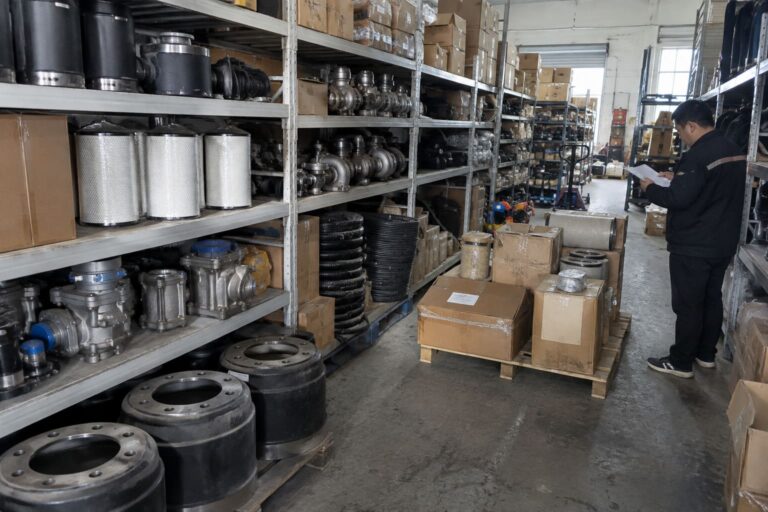
Pricing for Chinese truck spares in South Africa is one of the most common questions I receive from buyers across the continent[1] — and almost always, the question is being asked the wrong way. Buyers who search for a number first, without understanding the variables behind it, routinely end up with mismatched parts, blown budgets, or both.
The price of Chinese truck spares in South Africa depends on at least four interacting variables: part category, quality grade, order structure, and logistics arrangement. There is no single market price. A filter and a gearbox assembly are not comparable. An OEM-equivalent part and a generic aftermarket part are not comparable. A full-container order and a single-SKU purchase are not comparable. Any quote that ignores these variables is not a price — it is a guess.
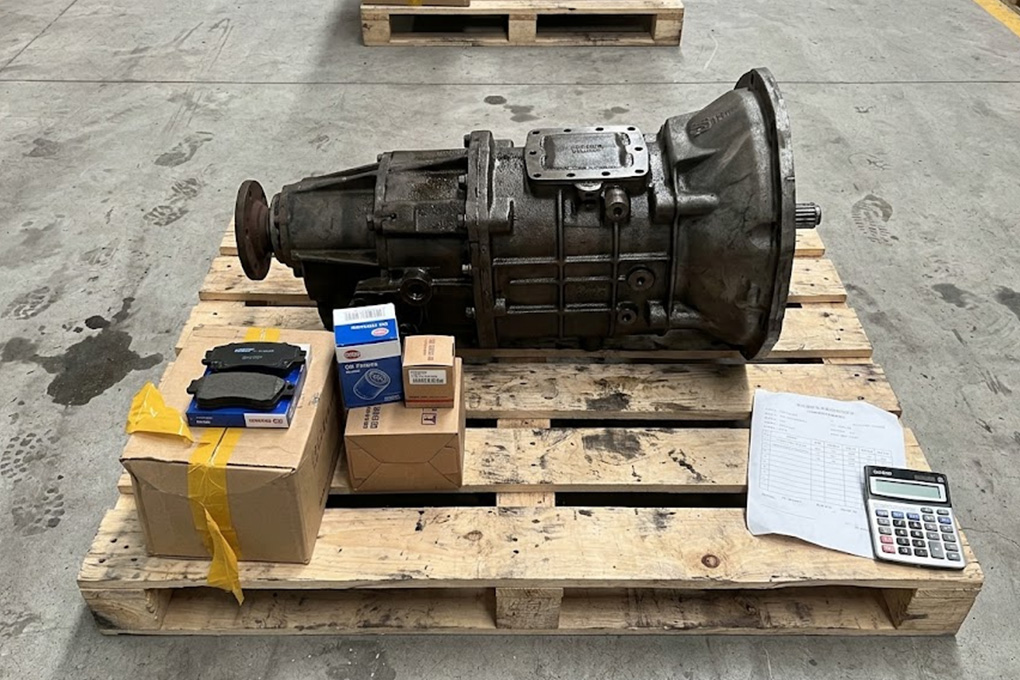
Understanding why there is no single price is the first step. The more useful question is: what makes a price credible, and how do I know I am buying the right part at a fair cost? The sections below break that down systematically, from part category to supplier evaluation.
Do Part Categories Affect the Price of Chinese Truck Spares?
Buyers often ask for a blanket price on "Chinese truck parts." In practice, a cabin door handle and a crankshaft are both truck spares — but they sit in entirely different procurement risk categories, supply chains, and price bands.
Part category is the single largest driver of price variation for Chinese truck spares. Engine components, transmission assemblies, and brake systems carry both higher unit costs and higher fitment risk than filters, body parts, or maintenance consumables.[2] Treating all categories the same way leads to either overpaying for simple parts or underestimating the sourcing complexity of critical ones.
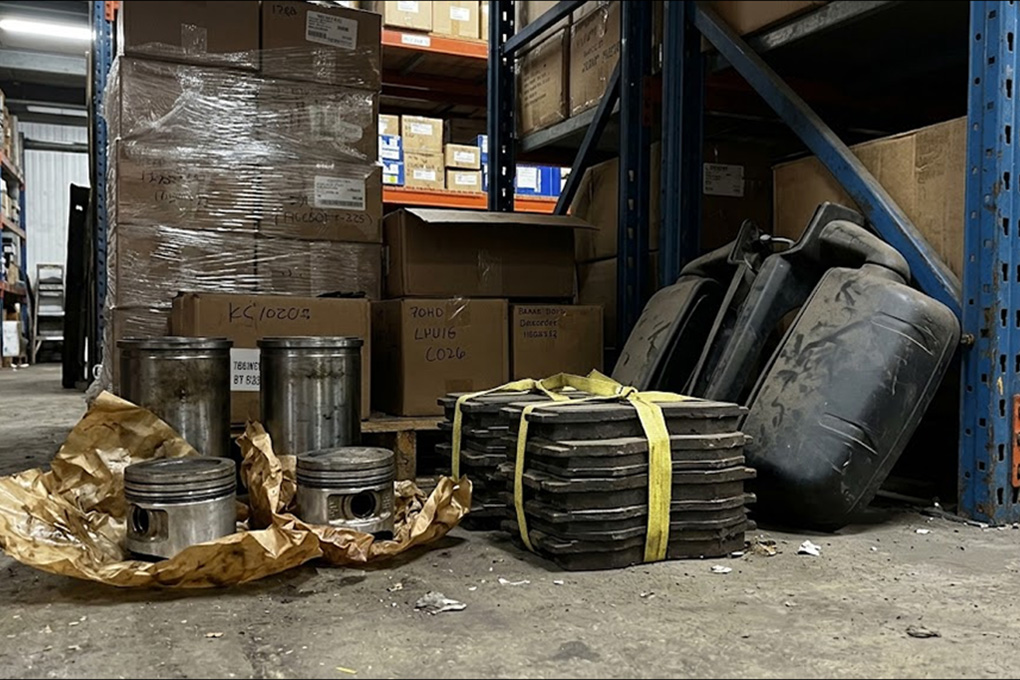
How Parts Fall Into Procurement Risk Tiers
From the inquiries we handle at Caanass for Africa-region buyers, parts naturally cluster into three procurement tiers:
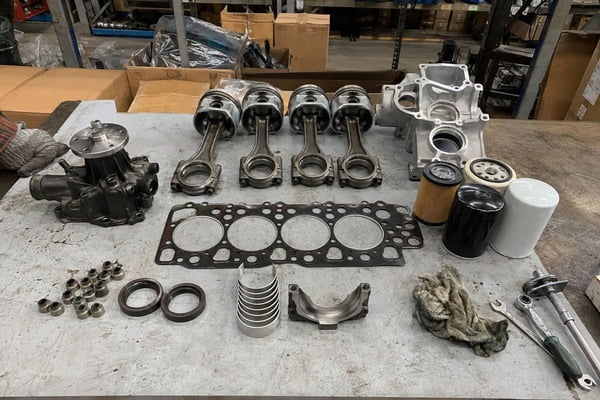
Tier 1 — Critical mechanical components These include engine parts (pistons, liners, camshafts, head gaskets), transmission components (gears, shafts, synchronizer rings), and brake system parts (calipers, master cylinders, ABS sensor assemblies). These parts require precise OE number matching, brand origin verification, and careful quality-tier selection. A wrong fitment here causes downtime or safety risk — and the procurement cost of getting it wrong dwarfs any price saving.
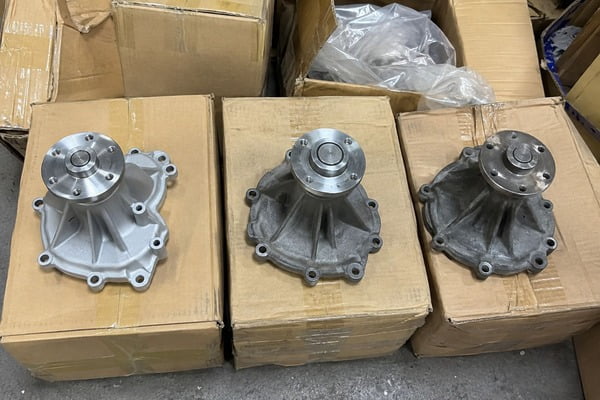
Tier 2 — Wear and replacement parts These include brake pads, clutch discs, water pumps, alternators, fuel filters, air filters, and suspension bushings. These move in higher volumes, have more established supply chains, and offer more room to compare quality tiers. They are also the parts where sourcing efficiency — bulk ordering, consolidated shipments — creates the most measurable cost advantage.
Tier 3 — Cabin, body, and maintenance consumables Mirrors, door panels, light assemblies, seals, gasket sets, and lubrication products. These have broader compatibility tolerance and lower fitment risk. Price variation here is mostly about brand and manufacturing quality, not about technical matching.
A Practical Comparison
The table below illustrates how part category shapes procurement logic — not as a price list, but as a framework for buyer decision-making. Specific prices vary with market conditions, brand, and order volume and should always be confirmed with current supplier quotations.
| Part Category | Example Parts | Primary Price Driver | Matching Risk |
|---|---|---|---|
| Engine components | Pistons, liners, gaskets | Quality grade + OE match | High |
| Transmission parts | Gearbox assemblies, synchro rings | Assembly origin + compatibility | High |
| Brake system | Calipers, master cylinders, pads | Brand tier + vehicle model | Medium–High |
| Suspension & steering | Leaf springs, tie rods, bushings | Material grade + fit | Medium |
| Filters & maintenance | Oil, air, fuel filters | Volume + brand | Low–Medium |
| Cabin & body | Mirrors, panels, lights | Style match + build quality | Low |
The key takeaway: procurement effort and quality scrutiny should scale with fitment risk, not just unit price.
How Does Quality Grade Change the Price of Chinese Truck Spares?
This is where most procurement mistakes happen. A South African buyer receives two quotes for the same part number — one is significantly lower. Without understanding quality tiers, there is no way to evaluate whether the difference is legitimate.
Quality grade is a real and meaningful variable in the pricing of Chinese truck spares. OEM-equivalent parts, branded aftermarket parts, and generic aftermarket parts can all share an OE number on a quote sheet but differ substantially in material specification, tolerance control, and expected service life. Price alone does not reveal which tier you are buying.
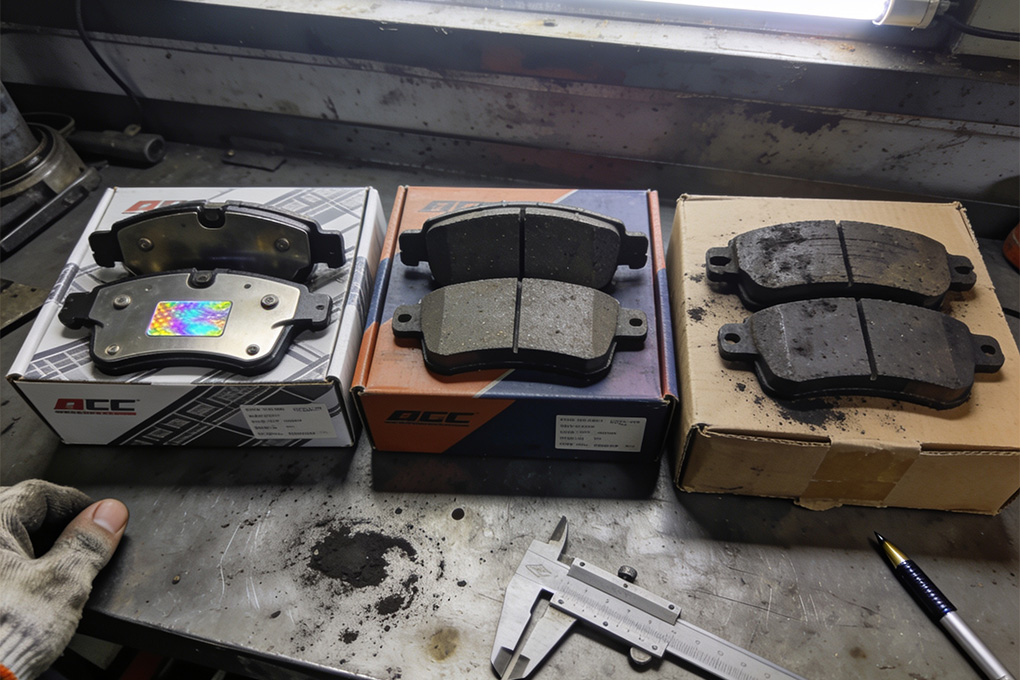
The Three Quality Tiers in Practice
OEM-equivalent (factory-supply or authorized brand) These are parts manufactured by or directly for the truck's original assembly suppliers — or by licensed factories with verified production standards. For HOWO trucks, this might mean parts from suppliers in the Sinotruk authorized supply chain. For SHACMAN, FAW, or DONGFENG, equivalent supply relationships exist. These parts carry the highest unit prices in the Chinese market but reduce the risk of premature failure and warranty complications.
In our experience sourcing for Africa-region buyers, OEM-equivalent parts are most critical for engine internals, injection systems, and safety-critical brake components — parts where a short service life causes direct operational cost or safety risk.
Branded aftermarket These are parts made by established Chinese component manufacturers — brands with documented production facilities, consistent quality records, and named supply chains. They are not OEM-authorized but are engineered to specification. For many part categories — filters, belts, hoses, suspension components — branded aftermarket offers a defensible balance of cost and reliability.
Generic aftermarket These are parts produced with minimal brand documentation, often at the lowest price point. They exist in every supply chain. For some low-risk part categories (non-critical body parts, some consumables), they are acceptable. For anything critical, the absence of traceability is a procurement risk, not just a quality risk: if something fails, there is no supply chain record to review.
Why Comparing Quotes Requires Grade Alignment
A common pattern in inquiries we receive: a buyer in South Africa requests a price for, say, HOWO brake pads, and receives quotes from three different suppliers. The prices differ by 30–50%[3]. This is not necessarily a sign that any supplier is dishonest — it may simply reflect that each quote is for a different quality tier, without that tier being clearly labeled.
The right procurement question is not "which price is lower?" It is "are these quotes for the same quality grade, and can the supplier verify that?"
Key verification questions to ask any supplier:
- What brand is the part, and what is the brand's manufacturing origin?
- Can you provide the OE number and confirm the vehicle model match?
- Do you have documentation (product photos, brand certificates, or test reports) to support the grade claimed?
How Does Order Structure Affect the Final Cost of Chinese Truck Spares?
South African buyers sourcing directly from China face a structural question that local purchasers do not: the economics of your order depend not just on part prices, but on how the order is assembled and shipped.
Order structure — the combination of volume, SKU diversity, and shipping arrangement — directly affects the unit cost of Chinese truck spares. A full container of a single fast-moving part looks very different on paper from a mixed container of 200 SKUs. Both approaches are valid, but they carry different cost profiles, lead times, and inventory risks.
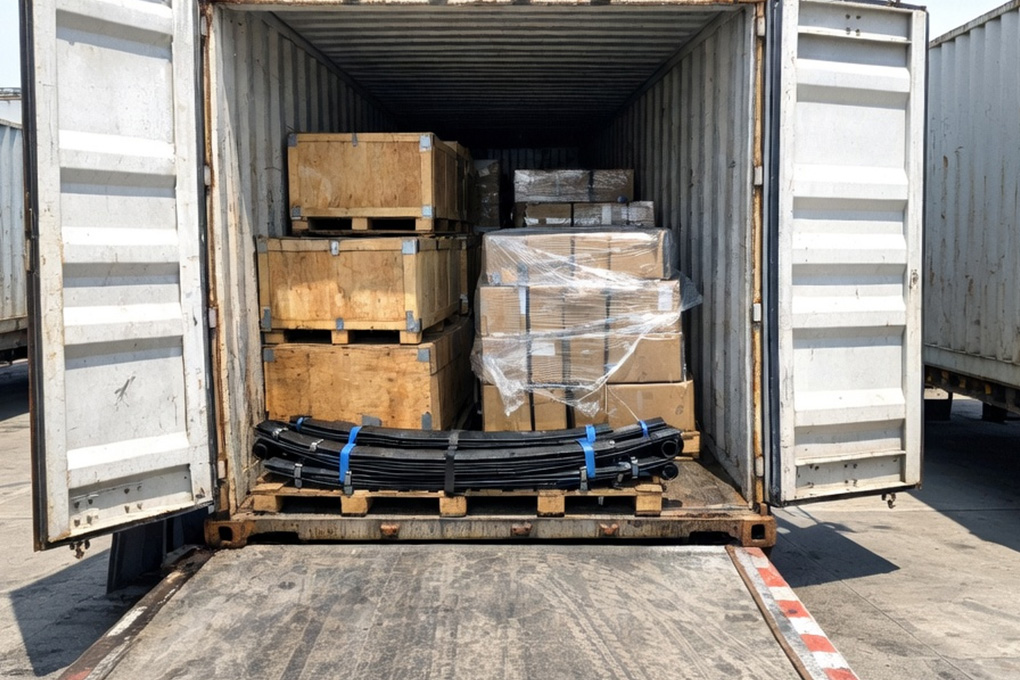
Full Container vs. Mixed Container Economics
Full container, single or few SKUs This approach minimizes per-unit freight cost and simplifies quality inspection. It works well for distributors with high turnover on specific parts — filters, brake pads, or belts for a dominant truck model in their market. The risk is inventory concentration: if demand forecasting is wrong, capital is tied up.
Mixed container, multiple SKUs This approach serves distributors who need broad product coverage across multiple truck brands (HOWO, SHACMAN, FAW, FOTON, DONGFENG) or multiple part categories. The logistics cost per unit is higher, but the working capital efficiency across the inventory may be better. It also requires a supplier capable of accurate multi-SKU identification and consolidated packing — not all suppliers manage this well.
FOB vs. Landed Cost: What Are You Actually Comparing?
When evaluating quotes, South African buyers are often comparing FOB (Free on Board) prices from Chinese ports — typically Guangzhou, Tianjin, or Shanghai — against local distributor prices that include freight, insurance, port handling, import duties, and local margin.
These are not directly comparable. A buyer evaluating direct sourcing from China needs to calculate the total landed cost at Durban or another South African port[4], including:
- FOB unit price
- International ocean freight (container or LCL)
- Marine insurance
- Port handling and clearing costs
- Import duties and VAT (note: specific duty rates and regulatory requirements should be confirmed with a South African customs broker or freight forwarder — these are outside our direct expertise)
- Local delivery and warehousing
Only when these costs are aggregated does a direct-source comparison become meaningful. In our experience working with Africa-region buyers, the landed cost calculation often surprises buyers — sometimes favorably, sometimes not — depending on order volume and the specific parts involved.
Consolidated Sourcing as a Cost Lever
One of the most consistent cost advantages we see for buyers sourcing Chinese truck spares directly from China is consolidated multi-brand sourcing — placing a single order that covers parts for HOWO, SHACMAN, FAW, and FOTON trucks together, with one shipping arrangement and one set of export documentation.
This reduces the per-unit logistics overhead and simplifies procurement administration. It requires a supplier with genuine multi-brand product access and reliable OE number matching — which is not universal across the Chinese export market.
How Do You Evaluate Whether a Chinese Truck Spares Supplier Is Quoting a Credible Price?
South African buyers evaluating direct sourcing from China face a practical problem: without a local reference price or a trusted industry benchmark, how do you know if a quote is legitimate?
A credible price for Chinese truck spares is not just a number — it is a number attached to a verified part, a documented quality tier, and a supplier with traceable supply chain relationships. Price credibility comes from procurement process, not from the figure itself.
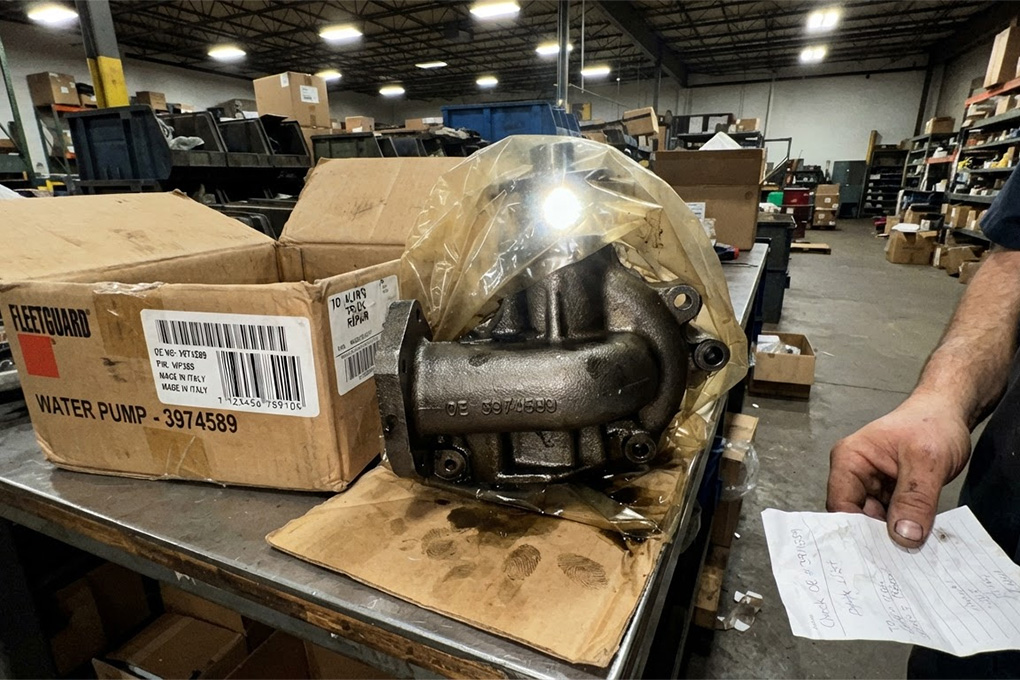
What Makes a Quote Credible
1. OE number confirmation A legitimate supplier quotes against a confirmed OE (Original Equipment) number — not just a description. The OE number allows the buyer to verify the part specification independently and compare like for like across suppliers[5]. A quote without an OE number match is a guess, regardless of the price.
Based on inquiries we handle regularly, buyers asking about HOWO brake parts or SHACMAN engine components often request a price before providing a chassis code or OE number. This leads to wrong-part quotes at any price level. Correct identification comes before price comparison.
2. Brand origin transparency The supplier should be able to name the brand or manufacturing source of the part they are quoting. "Chinese part" is not a brand. A credible supplier can tell you whether you are buying an OEM-equivalent from a named factory or a generic aftermarket alternative.
3. MOQ logic that reflects supply chain reality Minimum order quantities should reflect actual supply chain constraints, not artificial barriers. A supplier quoting very low MOQs on high-complexity assembly parts, or very high MOQs on common consumables, may not have the supply chain depth they claim.
4. Willingness to provide documentation Credible suppliers can provide product photographs, brand certificates, and in some cases, inspection reports. This is not a guarantee of part quality, but it is a sign of supply chain transparency.
Red Flags in Supplier Quotes
- No OE number provided or confirmed — the part may not match your vehicle model.
- Suspiciously low prices with no quality-tier explanation — may indicate generic aftermarket presented as OEM-equivalent.
- No clear brand or factory documentation — limits accountability if parts fail.
- Unwillingness to provide product photos before order — common with intermediary re-sellers without direct product access.
- All prices identical across very different part categories — suggests pricing is not based on actual procurement knowledge.
Frequently Asked Questions
Are Chinese truck spares cheaper than locally sourced parts in South Africa?
Direct-sourced Chinese truck spares often carry lower unit costs than locally stocked alternatives, but the comparison only holds when you include full landed cost — freight, duties, clearing, and logistics overhead. For high-volume buyers placing container orders, the economics often favor direct sourcing. For low-volume buyers, local distribution may be more cost-efficient once all costs are included.
What is the minimum order for direct sourcing from a Chinese truck parts supplier?
This varies significantly by supplier and part category. At Caanass, we support full-container orders, mixed-container orders, and consolidated multi-brand purchasing. The right order structure depends on your inventory turnover, budget, and product range. We recommend discussing order structure with your supplier before requesting a price, since it directly affects the unit cost you will receive.
How do I make sure I get the right part when ordering Chinese truck spares?
Provide your OE number, truck model, and chassis or VIN information before requesting a price. A supplier that confirms the OE match before quoting is operating correctly. If a supplier quotes without confirming the part identification, you are at risk of receiving the wrong part regardless of the price paid.
Can I mix parts for different truck brands in one container?
Yes — consolidated multi-brand orders covering HOWO, SHACMAN, FAW, FOTON, and DONGFENG parts together are entirely practical and logistically efficient. This is one of the core advantages of working with a supplier that has broad product coverage and multi-brand OE matching capability, rather than sourcing from multiple single-brand suppliers.
Should I verify supplier quality claims independently?
Yes. Treat supplier-provided certifications, brand claims, and quality documentation as information to be verified, not as a guarantee. For critical mechanical components, consider requesting product samples before placing large orders, and work with a freight forwarder who can arrange third-party inspection[6] if required for your market or fleet standards.
Conclusion
Pricing for Chinese truck spares in South Africa is not a number you look up — it is an outcome of decisions you make as a buyer. Part category, quality tier, order structure, and logistics arrangement all interact to determine what you actually pay and whether the parts you receive fit and perform. A buyer who anchors on a single price point, without understanding these variables, is exposed to mismatched parts, hidden costs, or both.
The most important shift in procurement thinking is this: correct identification comes before price comparison. An unverified OE number, a missing chassis code, or an undisclosed quality tier can make the cheapest quote the most expensive procurement decision you make.
At Caanass, we work with South African wholesalers, distributors, and fleet buyers every day to identify parts correctly, confirm OE matches, and structure orders that make logistical and commercial sense. If you are evaluating direct sourcing from China for your Chinese truck spares needs, we are happy to work through the specifics with you.
📧 Email: grand@caanass.com 📱 WhatsApp: +86 19924698529
- [1]"China-Africa Economic Bulletin, 2026 Edition", https://www.bu.edu/gdp/files/2026/05/GCI-China-Africa-Bulletin-2026-EN.pdf. UN Comtrade and African Development Bank trade data document a sustained increase in Chinese automotive components exports to sub-Saharan Africa over the past decade, corresponding with the expansion of Chinese commercial vehicle sales across the region and generating demand for compatible spare parts supply chains. Evidence role: historical_context; source type: institution. Supports: That Chinese automotive parts exports to Africa have grown substantially, making procurement of Chinese truck spares a significant trade issue across the continent.. Scope note: Aggregate trade data covers all automotive parts and does not isolate heavy truck spare parts specifically; country-level data quality varies across African nations. ↩
- [2]"The U.S. Automotive Industry Supply Chain", https://www.boisestate.edu/cobe/blog/2025/02/the-u-s-automotive-industry-supply-chain-challenges-and-transformations/. Research on commercial vehicle maintenance supply chains identifies powertrain and safety-critical components as higher-risk procurement categories due to precision fitment requirements and failure consequences, contrasted with consumables and body parts where tolerance ranges are broader. Evidence role: general_support; source type: research. Supports: That powertrain and brake components represent higher-risk procurement categories than consumables or body parts in commercial vehicle maintenance.. Scope note: Most supply chain risk literature addresses automotive broadly; direct empirical studies specific to Chinese truck spare parts procurement tiers are limited. ↩
- [3]"Cost pressures are driving change in the automotive ...", https://www.aftermarketmatters.com/national-news/cost-pressures-are-driving-change-in-the-automotive-aftermarket/. Studies on automotive aftermarket pricing have documented substantial price dispersion for identical part numbers across quality tiers, with variation commonly attributed to differences in material specification, manufacturing tolerance, and brand traceability rather than supplier margin alone. Evidence role: statistic; source type: research. Supports: That significant price variation exists between quality tiers for the same automotive part number in aftermarket supply chains.. Scope note: Published figures on price dispersion vary by part category and market; the specific 30–50% range cited in the article is drawn from the author's sourcing experience rather than a published dataset. ↩
- [4]"South Africa - Automotive - export.gov", https://legacy.export.gov/article?id=South-Africa-automotive. Transnet National Ports Authority data consistently identifies the Port of Durban as South Africa's highest-volume container port, handling the majority of the country's containerized import traffic and serving as the principal gateway for goods arriving from Asia. Evidence role: general_support; source type: government. Supports: That Durban is South Africa's largest container port and the primary entry point for containerized imports.. Scope note: While Durban dominates container throughput nationally, importers may also use Cape Town or Port Elizabeth depending on final destination and shipping line routing. ↩
- [5]"OEM Car Parts Catalog — 70 Brands, Diagrams & VIN ...", https://7zap.com/en/catalog/cars/. Original Equipment (OE) part numbers are manufacturer-assigned identifiers that specify a part's design, material, and fitment parameters; in automotive procurement, they function as a common reference enabling buyers to verify that parts from different suppliers meet the same specification, provided the number is accurately assigned and not misappropriated. Evidence role: definition; source type: encyclopedia. Supports: That OE part numbers serve as standardized identifiers enabling specification verification and cross-supplier comparison in automotive procurement.. Scope note: OE number misuse — including the application of legitimate OE numbers to non-conforming parts — is a documented issue in aftermarket supply chains, meaning OE number matching is a necessary but not sufficient condition for part quality verification. ↩
- [6]"What is Third-Party Inspection in Export Import Business? Hello ...", https://www.facebook.com/PareshSolankiOES/posts/what-is-third-party-inspection-in-export-import-businesshello-friends-before-shi/1710394373979275/. International inspection bodies and trade facilitation organizations recognize pre-shipment inspection as a standard risk mitigation tool for cross-border procurement, particularly for goods sourced from markets where buyer and seller cannot conduct direct quality verification; inspection protocols typically cover quantity, specification conformance, and packaging integrity. Evidence role: mechanism; source type: institution. Supports: That pre-shipment third-party inspection is an established quality assurance mechanism for goods imported from China.. Scope note: Third-party inspection reduces but does not eliminate quality risk; inspection scope is limited to observable characteristics at the time of inspection and does not assess long-term durability or material composition without laboratory testing. ↩