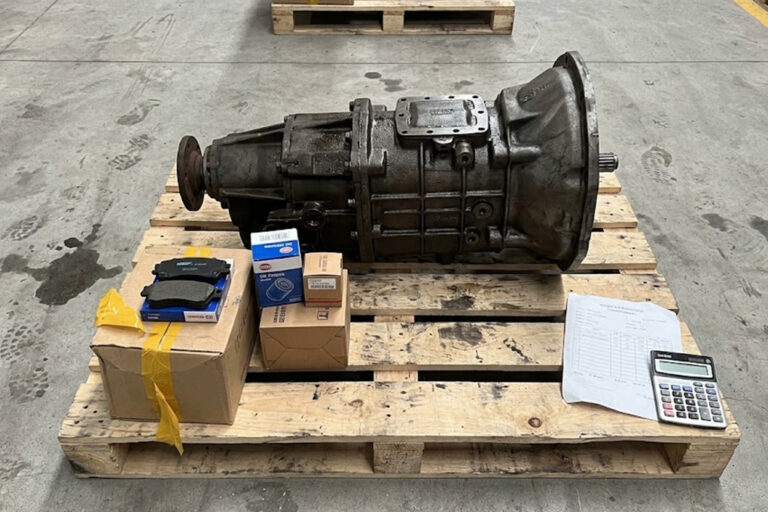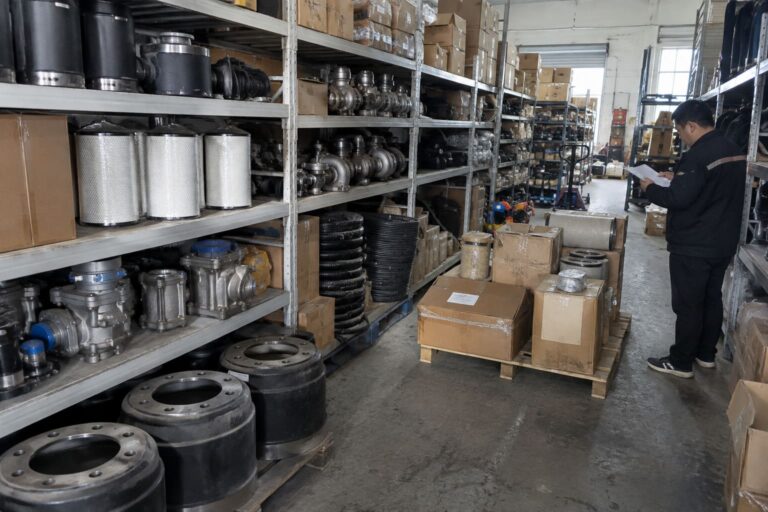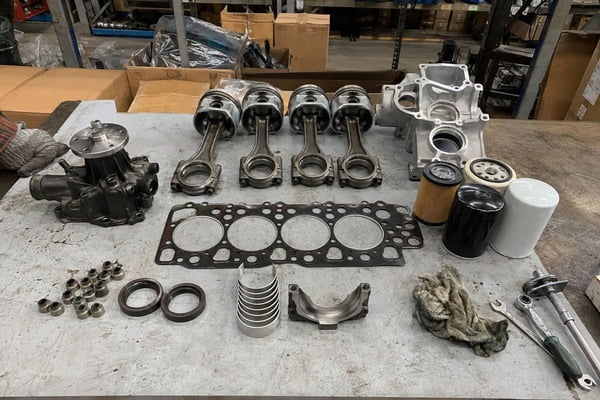
Finding reliable China truck parts is one of the most common sourcing challenges I hear from fleet operators and distributors worldwide. You search "near me," scroll through vague listings and local resellers with thin stock, and still can't confirm whether the part will fit your specific HOWO or SHACMAN chassis. The frustration compounds when downtime is already costing you money.
"Near me" is actually the wrong question to ask. The right question is: which sourcing channel — local stock, a trading intermediary, or direct supply from China — best matches your specific buying scenario? A fleet operator needing one urgent part, a distributor filling a container, and a retailer doing weekly replenishment all type the same search query, but each needs a completely different answer.
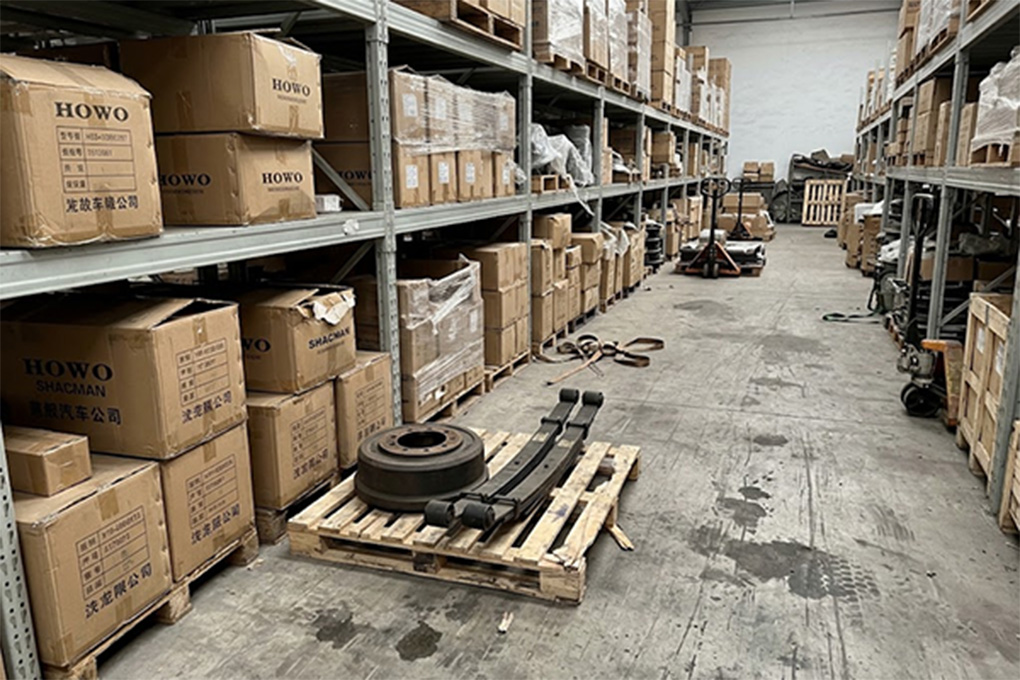
That distinction matters more than geography. Before you commit to a supplier — local or overseas — it helps to understand what you're actually solving for: speed, price, coverage, or reliability. Each sourcing path has a different risk profile, and none of them is automatically safer just because of where the warehouse sits.
What Does "Near Me" Actually Mean When Sourcing China Truck Parts?
Most buyers who search for China truck parts near them aren't literally demanding a warehouse on their street. They want three things: short lead times, verifiable parts compatibility, and a supplier who stays reachable after payment clears.
"Near me" almost always signals urgency and trust, not a hard geographic requirement. A truck sitting idle costs real money per day.[1] What buyers actually need is a supplier who can confirm part compatibility quickly, process the order without back-and-forth delays, and provide reliable delivery timelines — regardless of where that supplier is based.
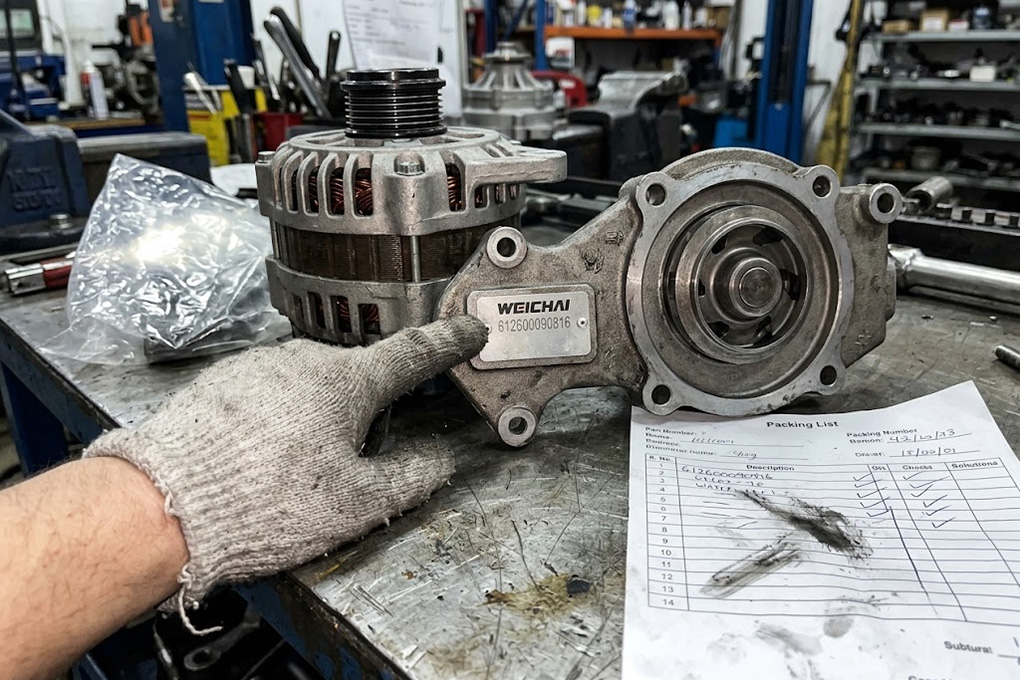
Understanding this distinction changes how you evaluate your options. Geography is a proxy for trust and speed — but it's a poor one if you're sourcing parts for Chinese truck brands.
Why Geography Is a Poor Proxy for Chinese Truck Parts
Chinese truck brands — HOWO, SHACMAN, FAW, FOTON, DONGFENG — are sold in volume across Africa, Southeast Asia, the Middle East, and South America. But local parts networks in most of these markets haven't caught up with fleet sizes[2]. Here's what that creates in practice:
- Thin local inventory. Local resellers often stock only the fastest-moving items — air filters, brake pads, belts. Less common parts (specific transmission components, cabin assemblies, electrical modules) are simply unavailable locally, or they're sitting in someone else's container on order from China anyway.
- Markup on markup. Local distributors buy from regional wholesalers who bought from Chinese exporters. By the time the part reaches a repair shop, two or three margins have been added.[3]
- Compatibility gaps. A local reseller may not know whether a part fits a WD615 engine versus a WD618[4], or the difference between a HOWO A7 and T7H cab[5]. Based on inquiries we handle regularly, this is where wrong-part purchases happen most often — not because the part is counterfeit, but because nobody confirmed the spec before shipping.
The Three Buyer Types Hidden Behind One Search Query
Before evaluating any sourcing channel, identify which buyer scenario applies to you:
| Buyer Type | Primary Need | Typical Order Pattern | Risk Priority |
|---|---|---|---|
| Fleet operator | Fast availability for critical parts | Small, frequent, urgent | Minimize downtime |
| Wholesale distributor | Broad coverage, container economics | Large, periodic, planned | Price + product range |
| Parts retailer / repair shop | Competitive price, reliable replenishment | Regular, moderate volume | Availability + lead time |
Each of these buyers is searching the same phrase. Each one needs a different solution.
Should You Buy China Truck Parts Locally or Source Direct from China?
This is the real decision most buyers are trying to make. Local sourcing feels safer and faster; direct sourcing from China feels risky or complicated. Neither assumption holds up under scrutiny once you match the channel to the actual buying scenario.
For urgent, single-part purchases, local stock is often genuinely faster — provided the part is in stock and correctly identified. For planned replenishment, container orders, or hard-to-find components, direct sourcing from a specialist China supplier frequently offers better price, broader coverage, and more reliable compatibility verification than any local intermediary can provide.
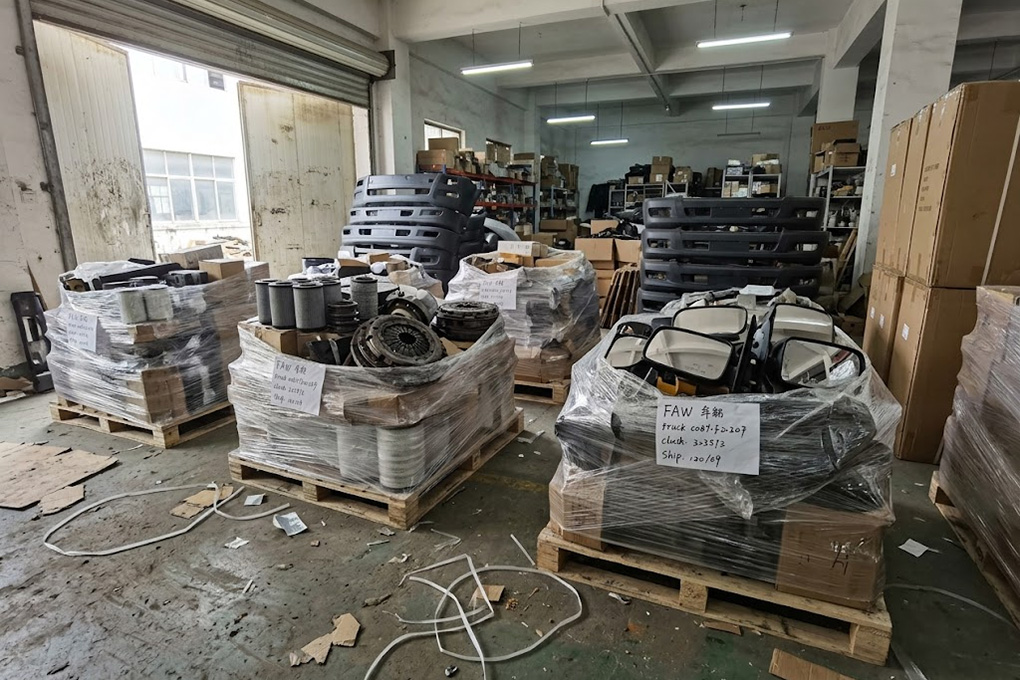
The trade-off isn't simply local versus imported. It's about which channel can reliably deliver the right part, at the right time, for your specific operating context.
When Local Sourcing Makes Sense
Local stock is the correct choice in a narrow set of circumstances:
- Genuine emergency downtime where a day's shipping delay is more expensive than a price premium.
- Commodity consumables — oil filters, fuel filters, fan belts, brake linings — where local stock is usually adequate and the risk of compatibility error is low.
- Markets with mature local distribution networks for Chinese truck brands (certain corridors in Southeast Asia, for example, have developed solid regional parts networks for HOWO).
Even in these cases, buyers should verify the part against an OE number before purchasing. "Fits HOWO" is not a compatibility specification.
When Direct China Sourcing Makes More Sense
Customers in East Africa and parts of the Middle East who run mixed fleets — say, 30 HOWO tractors and 15 SHACMAN dump trucks — tell us the same thing consistently: no single local distributor can cover both brands with depth. They end up splitting orders across multiple local suppliers, paying multiple margins, and still waiting weeks for slow-moving parts.
Direct sourcing from a China-based specialist with broad brand coverage solves this in one order:
- Single-source convenience. One supplier, one invoice, one consolidated shipment covering HOWO, SHACMAN, FAW, FOTON, and DONGFENG parts simultaneously.
- Container economics. For distributors placing container orders, the landed cost per part sourced directly from China often undercuts local wholesale pricing significantly, even after freight and import duties.
- Access to the full catalog. Local resellers stock a fraction of available SKUs. A supplier with 40,000+ items across brands can fulfill slow-moving or model-specific parts that simply don't exist in local markets.
- Specification control. A direct supplier who works from OE numbers, chassis data, and product photos gives buyers a more reliable compatibility confirmation than a local counter salesperson working from a shelf description.
How Do You Verify Quality When Buying China Truck Parts Remotely?
This is the question I hear most often from buyers considering their first direct China order — and it's the right question to ask. The concern is legitimate, but it's framed incorrectly most of the time. Quality risk isn't a geography problem. It's a sourcing-channel and verification problem.
Quality verification for China truck parts comes down to four checkpoints: OE number matching, chassis and model confirmation, product photo review before shipment, and supplier track record. Buyers who skip these steps — whether buying locally or from overseas — are the ones who receive wrong or substandard parts. Geography doesn't protect you; process does.
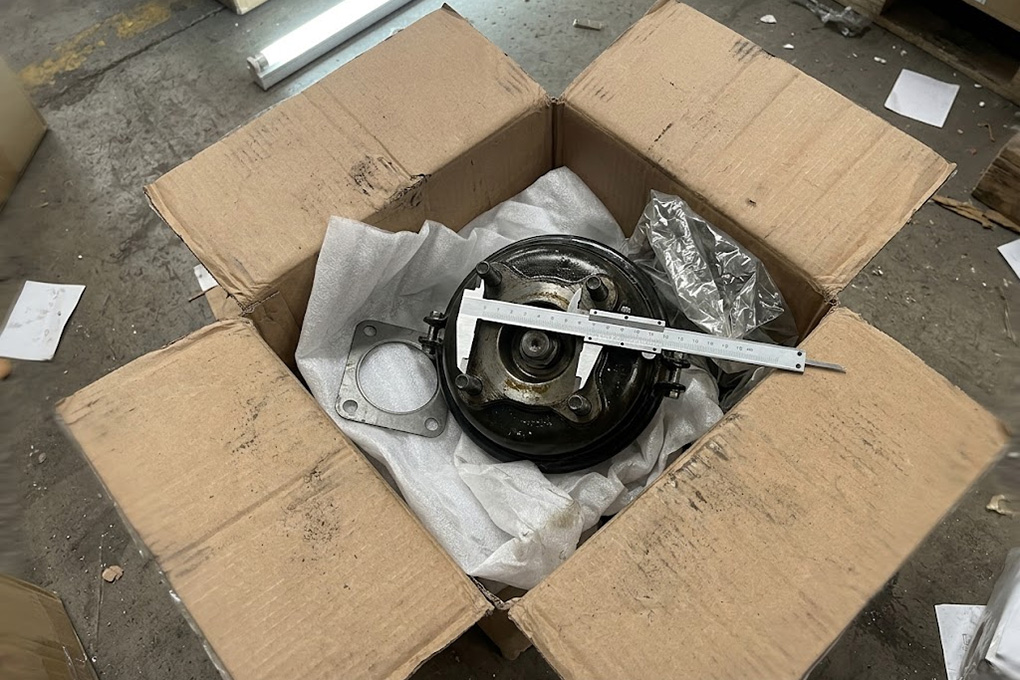
Most quality failures I see in customer feedback aren't counterfeit parts — they're compatibility failures. The part is real, it may even be fine quality, but it was ordered against the wrong model year or engine variant.
What Verification Actually Looks Like
A reliable sourcing process involves more than trusting a catalog description. Here's what a rigorous pre-order verification looks like:
Step 1 — OE Number Confirmation The OE (original equipment) number is the most precise identifier for a part. If a supplier can't match your OE number to their stock — or can't explain why they're offering a substitute — that's a red flag. Provide your OE number. Ask for theirs. Compare.
Step 2 — Chassis and Model Data For many parts, the same part number covers multiple variants. Provide your truck's chassis number, engine model, and production year. A competent supplier will use this to cross-check compatibility, especially for parts where fitment depends on production batch differences (common in cab parts, engine accessories, and brake components).
Step 3 — Product Photos Before confirming a large order, request product photos of the actual item — not catalog images. Check mounting points, connector types, dimensions, and part markings. This is standard practice for professional B2B buyers and any legitimate supplier should accommodate it.
Step 4 — Supplier Track Record Ask for references from buyers in your region operating similar truck models. Review how a supplier handles inquiries — do they ask clarifying questions about your application, or do they confirm availability without any verification? Based on our own inquiry patterns, buyers who receive wrong parts almost always dealt with a supplier who never asked for chassis data[6].
Red Flags to Watch For
- Supplier confirms availability for any OE number without cross-checking
- No product photos available or only stock images offered
- Inability to distinguish between OEM, OE-equivalent, and aftermarket specifications
- Vague responses to questions about production batches or model-year applicability
- No established export experience with buyers in your region
What Should a Distributor Consider Before Sourcing a Container of China Truck Parts?
Wholesale distributors face a different problem from fleet operators. They're not solving a single urgent repair — they're building inventory that will turn over weeks or months later, across a customer base with mixed truck models.
A distributor sourcing a container of China truck parts should evaluate four variables before committing: product breadth across the truck brands in their market, OE number accuracy for their regional model mix, supplier capacity for mixed-container consolidation, and export logistics coordination. Getting any of these wrong affects the entire inventory, not just one repair.
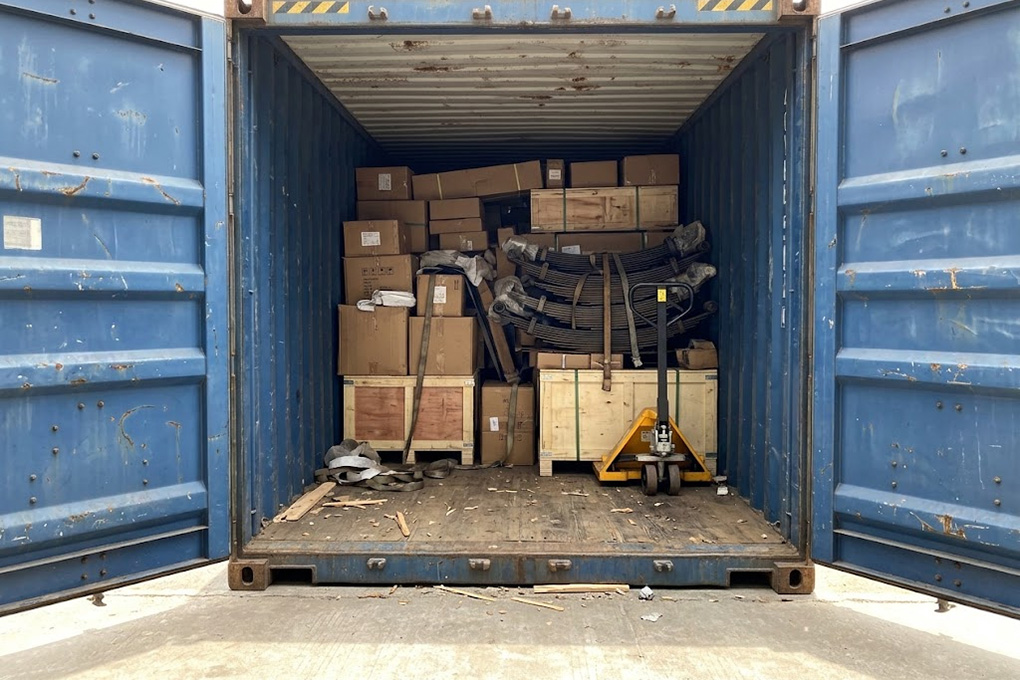
Container economics make direct sourcing compelling for distributors, but only if the supplier has the infrastructure to support a mixed-product, multi-brand order efficiently.
Planning a Container Order: Key Decision Points
Brand coverage first. Map the truck brands and models in your customer base before building a sourcing list. A distributor serving a market with mostly HOWO and DONGFENG fleets needs a supplier with genuine depth in both — not one that lists both brands but only stocks HOWO reliably.
Parts prioritization by failure rate. The fastest-turning inventory items across Chinese truck fleets are predictable:
- Engine consumables: oil filters, fuel filters, air filters
- Brake components: brake pads, brake drums, brake chambers
- Suspension wear parts: leaf springs, shock absorbers, U-bolts
- Electrical: starter motors, alternators, sensors
- Cabin wear items: door seals, mirrors, step assemblies
Build your container around high-turnover items first, then add model-specific parts based on your customer inquiry data.
Mixed-container efficiency. A single 40-foot container can carry parts across multiple product categories and truck brands.[7] Suppliers who can consolidate orders across 40,000+ SKUs and manage export documentation from a single point of contact reduce your procurement overhead significantly compared to sourcing from multiple vendors.
Lead time and replenishment cycle. Work backwards from your stockout risk tolerance. If your average parts order takes 30–45 days from China by sea, your reorder point needs to account for that transit time plus a safety buffer. Suppliers who provide consistent lead time estimates and communicate proactively about delays are operationally more valuable than suppliers who simply offer lower unit prices.
Frequently Asked Questions
How do I confirm a China truck part will fit my specific truck model?
Always provide your OE number, truck model, chassis number, and engine variant to your supplier before ordering. A competent supplier will cross-reference these against their inventory. If a supplier confirms fitment without asking for this information, treat that as a warning sign and request explicit confirmation before payment.
Is it cheaper to buy China truck parts locally or direct from China?
For single-part urgent purchases, local pricing may be competitive when you factor in shipping cost and wait time. For container orders or recurring replenishment, direct sourcing from China typically offers lower landed cost per part, broader product availability, and better coverage across multiple Chinese truck brands.
What information do I need to place an order with a China truck parts supplier?
At minimum: OE part number, truck brand and model, engine model, chassis number, and approximate production year. For complex assemblies (cab parts, engine components), product photographs from multiple angles help confirm fitment. The more data you provide upfront, the lower the risk of receiving an incompatible part.
How long does shipping take for China truck parts?
Sea freight from China typically takes 20–45 days depending on the destination port, routing, and customs clearance. Air freight is faster (5–10 days) but significantly more expensive per kilogram[8], making it practical only for urgent, low-weight parts. Most wholesale distributors plan container orders on a sea freight schedule.
Can one supplier cover parts for HOWO, SHACMAN, FAW, FOTON, and DONGFENG?
Yes — specialist suppliers with broad catalog coverage can source across all major Chinese truck brands from a single point of contact. This is a meaningful operational advantage for distributors or fleets operating mixed-brand equipment, as it eliminates the need to manage multiple supplier relationships and consolidated shipments.
Conclusion
The search for China truck parts "near me" is really a search for three things: the right part, delivered reliably, by a supplier you can trust. Geography is a shortcut answer to that question — and usually an imprecise one. The more useful frame is matching your buying scenario to the sourcing channel that minimizes your combined risk of wrong parts, delayed delivery, and supplier problems.
Fleet operators managing urgent downtime, wholesale distributors building container inventory, and parts retailers doing regular replenishment all face different constraints. Each deserves a sourcing strategy calibrated to those constraints, not a default assumption that local is safer or that overseas is cheaper. Verification process, OE number accuracy, supplier responsiveness, and product breadth matter more than the location of the warehouse.
If you're evaluating direct sourcing from China for HOWO, SHACMAN, FAW, FOTON, or DONGFENG truck parts — whether for a first container order or an ongoing replenishment program — Caanass works with wholesale distributors, fleet operators, and parts retailers across Africa, Southeast Asia, the Middle East, and South America. We're happy to start with your OE numbers and truck model data and work through the compatibility questions before you commit to anything.
📧 Email: grand@caanass.com 📱 WhatsApp: +86 19924698529
- [1]"The True Cost of Vehicle Downtime", https://www.model1.com/resources/blog/vehicle-downtime-cost/. Studies on fleet maintenance economics consistently report that unplanned heavy commercial vehicle downtime generates direct and indirect costs ranging from several hundred to several thousand dollars per day, depending on vehicle utilization rate and cargo value; see, e.g., fleet maintenance cost analyses published by transport research institutions. Evidence role: statistic; source type: research. Supports: Quantified daily cost of commercial vehicle downtime for fleet operators.. Scope note: Exact figures vary widely by region, vehicle type, and operational context; a general citation provides order-of-magnitude support rather than precise validation. ↩
- [2]"An examination of emerging technologies in supply chain ...", https://digitalcommons.pepperdine.edu/cgi/viewcontent.cgi?article=2537&context=etd. Research on automotive aftermarket supply chains in sub-Saharan Africa and Southeast Asia documents persistent gaps between vehicle fleet expansion and the development of formal spare parts distribution infrastructure, including limited inventory depth among local distributors and reliance on informal import channels. Evidence role: general_support; source type: research. Supports: Aftermarket parts distribution networks in developing regions are structurally underdeveloped relative to vehicle fleet growth.. Scope note: Available studies tend to address the broader automotive aftermarket rather than Chinese truck brands specifically; applicability to the HOWO/SHACMAN segment is inferential. ↩
- [3]"An Examination of Pharmaceutical Supply Chain Intermediary ...", https://www.ncbi.nlm.nih.gov/books/NBK611843/. Research on automotive spare parts supply chains in sub-Saharan Africa and Southeast Asia documents multi-tier distribution structures in which parts pass through national importers, regional wholesalers, and local retailers before reaching repair shops, with each tier adding a margin that cumulatively raises end-user prices significantly above landed import cost. Evidence role: mechanism; source type: research. Supports: Multi-tier intermediary distribution chains in developing markets add successive markups that substantially increase end-buyer prices for imported spare parts.. Scope note: Quantified margin data varies by country, product category, and competitive intensity of local markets; the two-to-three tier characterization reflects a common structural pattern rather than a universally measured figure. ↩
- [4]"Weichai WD615 Dimensions, Specifications & Technical ...", https://www.lectura-specs.com/en/model/components/engines-weichai/wd615-11689840. The WD615 and WD618 designations refer to separate engine families produced by Weichai Power, differing in displacement and internal configuration; parts interchangeability between the two families is limited, and correct engine identification is a prerequisite for accurate parts sourcing, as documented in Weichai technical service manuals. Evidence role: definition; source type: other. Supports: The WD615 and WD618 are distinct Weichai engine families with differing displacement, configuration, and parts compatibility.. Scope note: Detailed English-language technical specifications for Weichai engine families are not comprehensively available in open academic sources; the most authoritative references are manufacturer service documentation. ↩
- [5]"HOWO A7 Dump Truck Specs: 6×4, 8×4 & How to Verify", https://genrontrucktrailer.com/howo-a7-dump-truck/. Sinotruk's HOWO product line encompasses multiple cab platform generations, including the A7 and T7H series, which differ in cab dimensions, mounting configurations, and electrical architecture; these distinctions are documented in Sinotruk's official technical specifications and parts catalogues, and are relevant to fitment verification for cab assemblies and associated components. Evidence role: definition; source type: other. Supports: HOWO A7 and T7H are distinct cab platform variants produced by Sinotruk with differing specifications relevant to parts compatibility.. Scope note: Publicly available English-language technical documentation for Sinotruk model variants is limited; the most authoritative sources are manufacturer parts catalogues, which may require direct access. ↩
- [6]"Vehicle identification number", https://en.wikipedia.org/wiki/Vehicle_identification_number. Research on automotive aftermarket quality failures identifies incomplete vehicle identification — including failure to collect VIN, chassis number, engine code, and production year — as a primary root cause of parts misidentification and incorrect fulfillment, particularly for markets with multiple model variants sharing similar part numbers. Evidence role: mechanism; source type: research. Supports: Inadequate vehicle identification data collection at the point of sale is a leading cause of incorrect parts fulfillment in the automotive aftermarket.. Scope note: Published research on this mechanism is more extensively documented for Western automotive aftermarket contexts; direct evidence specific to Chinese truck brand parts supply chains in developing markets is limited in the academic literature. ↩
- [7]"Intermodal container", https://en.wikipedia.org/wiki/Intermodal_container. A standard 40-foot ISO dry container provides approximately 67 cubic metres of internal volume and a maximum payload of approximately 26,500 kg, as specified in ISO 668 and documented by major container leasing and shipping organizations; these dimensions are sufficient to accommodate consolidated shipments of mixed automotive parts across multiple product categories. Evidence role: general_support; source type: institution. Supports: Standard 40-foot ISO containers provide sufficient volume and payload capacity for consolidated multi-category automotive parts shipments.. Scope note: Actual usable capacity depends on parts packaging density, weight distribution, and carrier-specific loading requirements; the cited figures represent nominal ISO specifications. ↩
- [8]"International Freight Gateways", https://data.bts.gov/stories/s/International-Freight-Gateways/4s7k-yxvu/. International air cargo from Chinese airports to major hubs in Africa, the Middle East, and Southeast Asia typically transits in 3–7 business days for direct services and 5–10 days including customs clearance; IATA and freight forwarder rate data consistently show air freight rates per kilogram exceeding ocean freight equivalents by a factor of four to ten or more on comparable China-origin lanes. Evidence role: statistic; source type: institution. Supports: Air freight transit times from China and the cost premium relative to sea freight.. Scope note: Cost differentials are highly route- and commodity-specific; the cited range reflects general industry benchmarks rather than current spot rates for automotive parts. ↩